
Small and medium‑sized enterprises (SMEs) are the lifeblood of the global economy; they make up around 90% of businesses worldwide and employ more than half of the global workforce. Yet despite their importance, access to capital remains a persistent challenge.
Traditional bank loans often require collateral, high credit scores, or interest‑based terms that aren’t compatible with Islamic finance. In recent years,s crowdfunding has emerged as an innovative alternative, allowing everyday people to back the businesses and causes they believe in.
By pooling many small contributions through online platforms, entrepreneurs can reach funding goals without relying on a single large investor. In this article, we see how crowdfunding for small businesses works.
What Is Crowdfunding?
Crowdfunding involves raising capital by collecting small amounts from a large number of people, usually via online platforms. Instead of approaching a bank for a single loan, a business can present its idea to the crowd, friends, family, customers, and strangers, and invite them to contribute.
The crowd may give money because they believe in the project, expect a product in return, or hope to earn a profit. This form of financing can validate ideas, build community, a nd provide marketing momentum.
Crowdfunding Types include:
Donation: Supporters contribute purely out of goodwill to help a cause or business succeed.
Reward: Backers receive a non‑financial reward, such as early access, a special edition, or a thank‑you gift. Rewards may be unrelated to the amount donated.
Debt (Peer‑to‑Peer): Investors lend money and expect repayment with interest or profit‑sharing.
Equity: Contributors buy shares in the business and become part‑owners.
Royalty-Based Crowdfunding: Royalty-based crowdfunding is a lesser-known but increasingly interesting model

Pros and Cons of Crowdfunding for Small Businesses
Crowdfunding for Small Businesses has its advantages and disadvantages. Below, we will examine the advantages and disadvantages of crowdfunding to determine whether small businesses should use crowdfunding.
Advantages of Crowdfunding for Small Businesses
Here are the advantages of crowdfunding for small businesses:
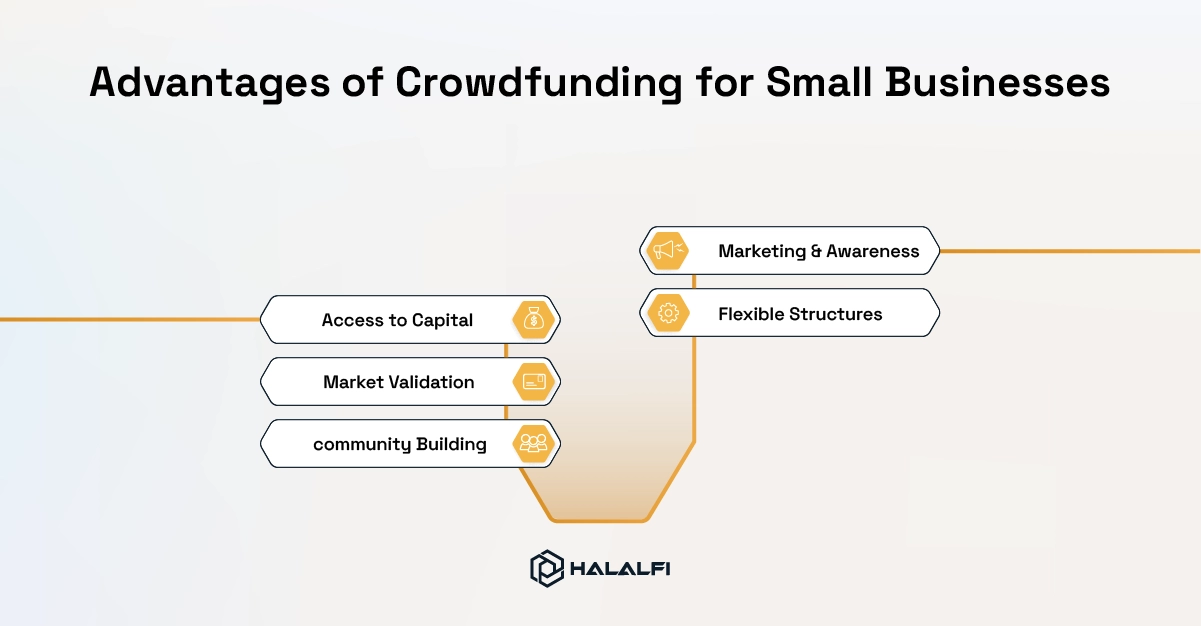
Access to Capital: Crowdfunding opens doors to funding when banks say no. Entrepreneurs can tap into a global network and raise money without pledging collateral or incurring high‑interest debt.
Market Validation: A successful campaign demonstrates demand. If hundreds of people are willing to back your idea, that’s a strong signal to future investors and partners.
Community Building: Crowdfunding is as much about relationships as it is about money. Especially in crypto crowdfunding, supporters become brand ambassadors, sharing your story on social media and providing feedback that refines your product.
Marketing & Awareness: Campaigns often feature videos, storytelling, and updates that create buzz. Even unsuccessful campaigns can generate leads and connections.
Flexible Structures: Different models cater to different needs. Donation and reward crowdfunding are ideal for creative and social projects; debt crowdfunding offers alternative lending; equity crowdfunding allows growth‑stage businesses to sell shares.
Considerations & Challenges of Crowdfunding for Small Businesses
Here are the challenges of crowdfunding for business startups:
Competition & Noise: Thousands of campaigns compete for attention. Without a compelling story and strong outreach, your campaign may get lost.
Time & Effort: Preparing a campaign requires strategic planning, video production, a persuasive pitch, and sustained engagement on social media and email.
All‑or‑Nothing Risks: Some platforms use an all‑or‑nothing model: if you don’t reach your funding goal, you receive nothing. It is stressful, but it also protects backers from incomplete projects.
Regulatory Compliance: Equity and debt crowdfunding must comply with securities laws. Entrepreneurs need legal advice to avoid unintentional violations.
Potential Dilution: With equity crowdfunding, founders give up a stake in their company. It’s crucial to weigh the benefits of community ownership against the reduction in control.
Benefits and limits of all crowdfunding models are:
Crowdfunding Model | How It Works for Small Businesses | Benefit | Limitation |
Donation-Based | People support a business idea without expecting returns | Builds community trust and early support | Limited funding potential |
Reward-Based | Backers receive products, perks, or early access | Helps validate and pre-sell products | Fulfillment pressure on the business |
Debt-Based (P2P Lending) | Small investors lend money to be repaid with interest or a profit share | No ownership dilution | Repayment is required regardless of success |
Equity-Based | Investors receive shares in the business | Strong funding for growth-stage SMEs | Ownership is shared (dilution) |
Hybrid / Ethical (e.g., Halal models) | Profit is shared based on real business performance | Aligns investor and business interests while supporting responsible financing. | Fewer platforms are available, and projects often undergo stricter eligibility and due diligence requirements. |
How to Launch a Successful Crowdfunding Campaign for Small Businesses
According to Vox, as Kickstarter co‑founder Perry Chen explains, the platform wasn’t designed to make anyone rich but to bring creative projects to life.
This community‑driven ethos resonates with younger generations who value transparency, participation, and purpose. To maximize your chances of success, consider the following tips:
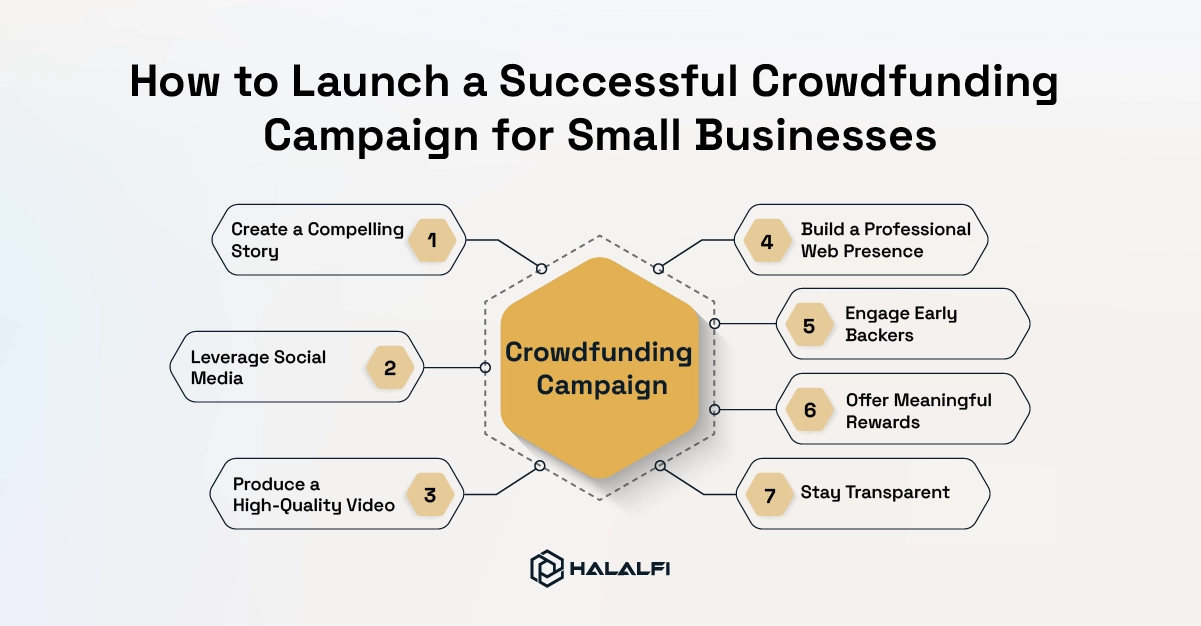
Create a Compelling Story: People invest based on emotion. Share the origins of your business, the problem you’re solving, and why it matters. Authentic storytelling builds trust and engages supporters.
Leverage Social Media: A strong social strategy amplifies your reach. Use multiple platforms to share behind‑the‑scenes updates, respond to comments, and encourage followers to spread the word.
Produce a High‑Quality Video: Video brings your campaign to life. Invest in good visuals, clear narration, and a personal touch. Don’t cut corners; a polished video boosts credibility.
Build a Professional Web Presence: While not strictly necessary, a clean website and landing page can enhance legitimacy. It gives potential investors more information and shows that you’re serious.
Engage Early Backers: Reach out to your closest supporters before launching publicly. Early momentum can trigger platform algorithms and attract strangers.
Offer Meaningful Rewards: For reward campaigns, tailor perks to your audience. Early‑bird discounts, exclusive experiences, and personalized shout‑outs can motivate higher contributions.
Stay Transparent: Here, you know clearly how to start crowdfunding. After that, you should provide regular updates, show how the funds will use, and be honest about challenges. Transparency fosters trust and encourages long‑term relationships.
HalalFi: Next-gen crypto crowdfunding for Startups
HalalFi is a sharia‑compliant crowdfunding platform designed to connect conscious investors, Muslim and non‑Muslim, with real, cash‑flowing businesses.
Unlike many platforms that promise fixed returns, HalalFi uses performance‑based profit‑sharing built on smart contracts; profits aren’t guaranteed, which avoids riba.
Here, investors fund projects using USDT and earn performance-based profit-sharing rather than fixed interest, keeping their investments free from riba.
To protect investors, a blockchain-based guarantor locks funds in a smart contract. If a project doesn't succeed or meet its funding conditions, the investment is automatically returned, helping protect the principal and offering a low-risk, transparent crowdfunding experience.
The platform emphasizes transparency and audits through these mechanisms:
Project Application & Due Diligence
Dual Audits
Guarantors Marketplace
Inclusive for Investors, Demanding for Businesses
Blockchain Transparency
HalalFi recognizes that many people want their wealth to grow without compromising their beliefs. It offers performance‑based profit sharing that avoids riba and excessive uncertainty.
The halal crowdfunding market is largely untapped, especially in Web3. With dual audits, blockchain transparency, and a guarantor's marketplace, HalalFi combines ethical finance with Web3 innovation to build trust for both businesses and investors.
Step‑by‑Step to Launching Your HalalFi Campaign
Now you know how does crowdfunding work. So, if you want to run your campaign in HalalFi, go step by step below:
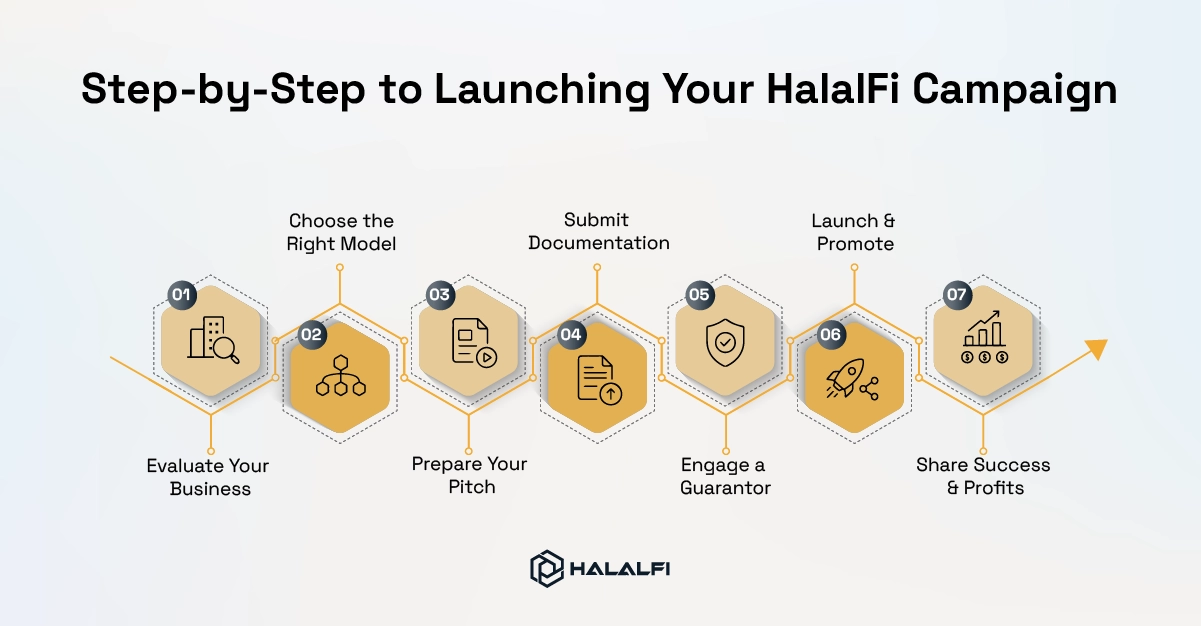
Evaluate Your Business: Ensure your enterprise is halal and has transparent revenue sources. Understand whether you’re raising for expansion, working capital, or a new project.
Choose the Right Model: If you’re running a social enterprise or non‑profit, donation or reward crowdfunding may be the best fit. For profit‑oriented ventures, consider HalalFi’s performance‑based profit‑sharing instead of interest‑based debt.
Prepare Your Pitch: Develop a concise narrative that explains who you are, what problem you’re solving, and how your contributions will be used. Highlight the social or environmental impact of your business.
Submit Documentation: Gather financial statements, projections, business registration documents, and, if applicable, Sharia certificates. HalalFi’s platform requires these for the board audit.
Engage a Guarantor: Explore the guarantors marketplace if you want to offer investors principal protection. Vet potential guarantors carefully and be transparent about their role.
Launch & Promote: Once approved, launch your crowdfunding campaign. Use social media, email lists, community groups, and press releases to attract investors. Share updates regularly and respond to questions promptly.
Share Success & Profits: After reaching your funding goal, deploy capital responsibly. Keep investors informed of progress and share profits in accordance with the agreed‑upon scheme. Take advantage of HalalFi’s on‑chain transparency to build long‑term trust.
Conclusion
Crowdfunding offers small businesses an accessible, community‑driven path to capital in a world where traditional finance often feels out of reach.
Donation, reward, debt, and equity models each serve different needs, enabling entrepreneurs to validate ideas, build brand loyalty, and raise funds without excessive reliance on banks.
For ethical financing, HalalFi provides a sharia‑compliant solution grounded in real‑world businesses, transparency, and community governance.
By replacing interest with performance‑based profit‑sharing and offering risk‑mitigation tools like guarantor marketplaces, HalalFi bridges the gap between faith and financial opportunity.
If you’re ready to grow your business while staying true to your values, explore HalalFi’s platform, craft a compelling story, and invite the community to join your journey.
Frequently Asked Questions
What makes crowdfunding different from traditional small business financing?
Crowdfunding raises money from many individuals instead of a single lender or investor. It also helps validate business ideas, build brand awareness, and attract early customers.
How much funding can a small business realistically raise through crowdfunding?
Funding ranges from a few thousand dollars to hundreds of thousands of dollars, depending on the campaign and audience. Success depends on strong storytelling, marketing, and community engagement.
What are the biggest reasons crowdfunding campaigns fail, and how can businesses avoid them?
Most campaigns fail due to poor planning, weak promotion, and unclear messaging. Businesses can improve their chances by building an audience before launch and keeping backers engaged.
Which type of crowdfunding is best for small businesses?
The best crowdfunding platform option depends on your goals, whether it's rewards-based, equity, debt, or donation crowdfunding. Choose a model that aligns with your funding needs and long-term strategy.
Do you need an existing audience to run a successful crowdfunding campaign?
While not essential, having an engaged audience significantly improves your chances of success. Building interest before launch helps generate early momentum and attract more backers.