If there’s a way to park your money in crypto without the roller coaster, would you choose it?
Investors often look at volatile assets like Bitcoin with mixed feelings. Stablecoins were born to solve this problem.
Stablecoin issuers design these digital tokens to track $1 closely, giving investors the liquidity of blockchain technology while maintaining the stability of traditional fiat currencies.
They are used for cross‑border payments, hedging, and yield, and are becoming a serious tool for short-term investment rather than speculation.
In this guide, we explain how stablecoin staking, liquidity pools, and DeFi lending work, who uses them, and how Islamic Platforms integrates them with real‑world business financing.
What is Stablecoin Investing?
Stablecoin investing means allocating part of your capital to stablecoins rather than holding cash or volatile cryptocurrencies.
Unlike Bitcoin, stablecoins aim to maintain a stable value by pegging each token to a reserve asset such as US dollars, Treasuries, or other collateral.
Popular examples include USDT and USDC, which together control about 85 % of the market. The Federal Reserve notes that the market capitalization of stablecoins grew by over 50% in 2025, reflecting rising adoption in payments and DeFi activities.
Stablecoins offer more than price stability. They allow businesses and individuals to preserve value, earn predictable yields through lending protocols, and move money across borders instantly.
A 2025 report from TRM Labs found that stablecoins accounted for 30% of all on‑chain crypto transaction volume and recorded over $4 trillion in just eight months.
In emerging markets, they function like money market funds, a place to park funds while waiting for an opportunity.
How Do Stablecoin Mechanics Influence Investor Behavior?
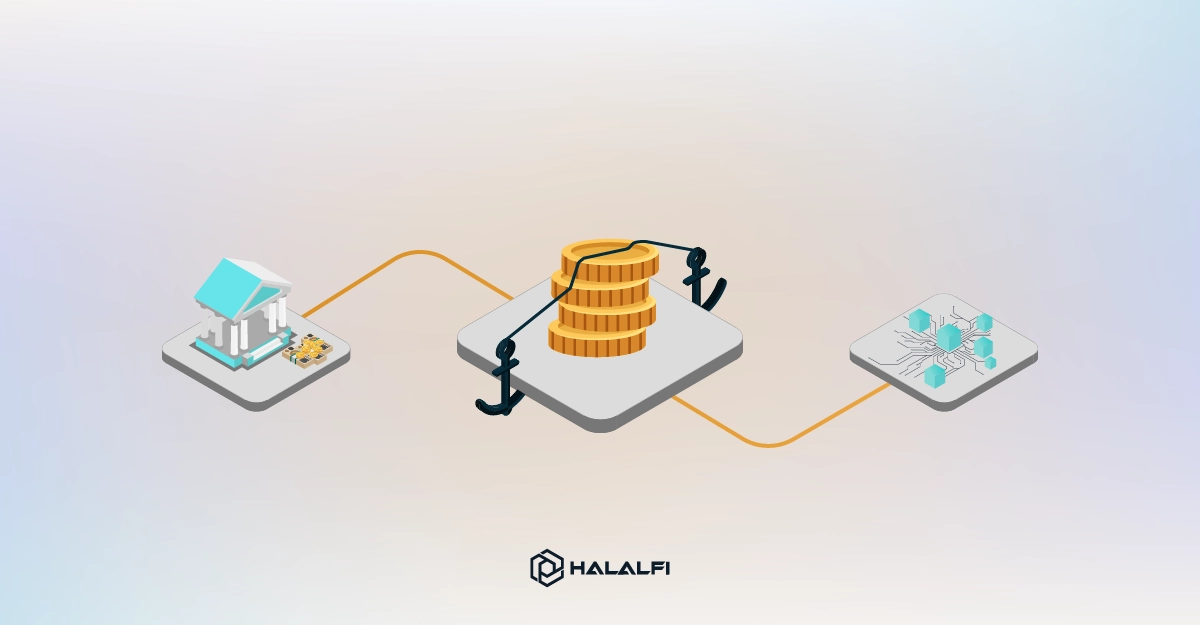
Different types of stablecoins use different mechanisms to maintain their pegs, and these differences shape investor confidence.
Off‑chain fiat‑backed coins like USDT and USDC hold cash and Treasury bills and depend on audits to reassure holders. That means USDT staking can be a safe investment.
The Federal Reserve reports that Tether holds 1.04× reserves per coin, though only about 0.74× are high‑quality reserves such as Treasuries and bank deposits.
In contrast, USDC maintains full 1× backing with high‑quality assets. Investors tend to favor coins with transparent, high‑quality reserves.
On-chain crypto-collateralized coins, such as DAI, use over-collateralization and automated liquidations to maintain stability.
This model appeals to decentralization enthusiasts but exposes investors to crypto market swings.
Algorithmic stablecoins attempt to control supply algorithmically; however, according to Weforum, the collapse of TerraUSD in 2022 wiped out over $40 billion in value and reminded everyone that incentive‑based pegs can fail. As a result, fiat‑backed and crypto-collateralized coins are the main options today.
What Platforms and Tools Help with Stablecoin Investment?
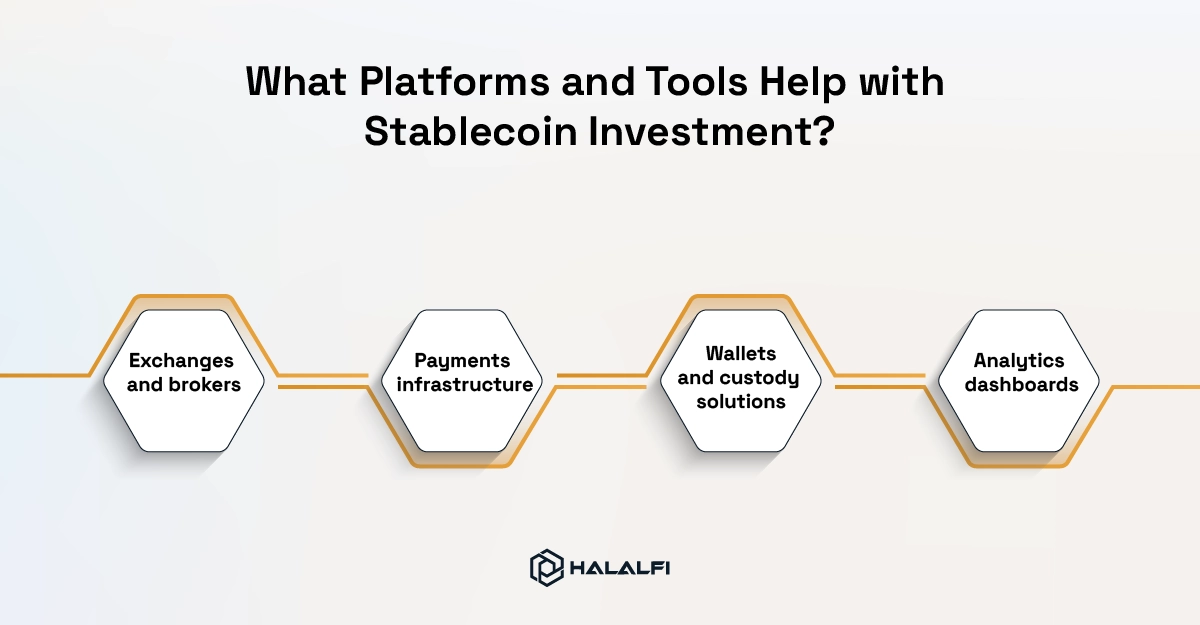
Some platforms and tools help with stablecoin investment, including:
Exchanges and brokers: Centralized exchanges and brokerage platforms let users buy, sell, and swap stablecoins at near‑par value.
Payments infrastructure: Companies such as Stripe have integrated stablecoins into checkout and payout systems, enabling near‑instant cross‑border settlement.
Wallets and custody solutions: Self‑custodial wallets and institutional custodians offer secure storage and management tools. Multi‑signature wallets and insurance products provide additional protection.
Analytics dashboards: Platforms include crowdfunding platform track yields, liquidity, collateral ratios, and risk across DeFi protocols, helping investors evaluate opportunities and mitigate risks.
How Can Stablecoin Investing Support Liquidity, Hedging, and Yield?
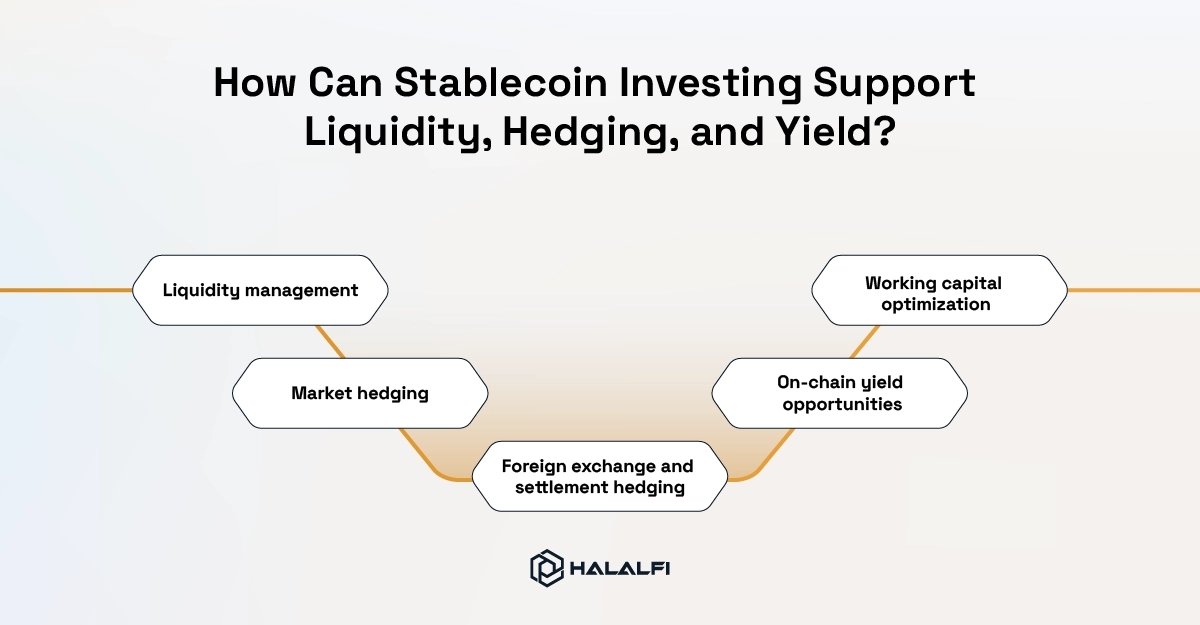
Stablecoins serve roles in a diversified portfolio:
Liquidity management: Because stablecoins settle in minutes, investors can exit volatile assets without wiring funds back to a bank.
Market hedging: Stablecoins let traders lock in profits or avoid short‑term volatility without leaving the crypto ecosystem. In countries with depreciating local currencies, USD‑pegged coins act as a hedge against inflation.
Foreign exchange and settlement hedging: For businesses, stablecoins bypass conversion fees and delays.
On‑chain yield opportunities: Lending platforms and liquidity pools pay interest on the stablecoins you borrow. Yields vary widely, from low single digits to double digits, depending on demand and risk.
Working capital optimization: Companies use stablecoin staking to finance payroll, vendor payments, and treasury management, thereby cycling funds faster and reducing friction.
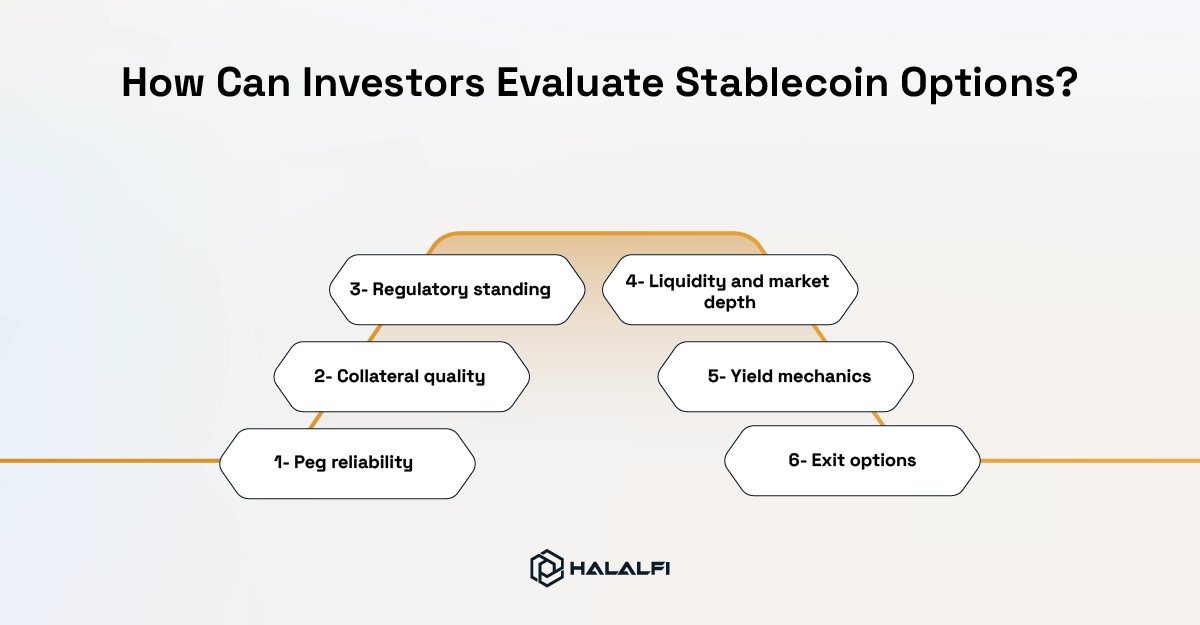
How Can Investors Evaluate Stablecoin Options?
Choosing a stablecoin isn’t just about picking the most popular name. Consider these factors:
Peg reliability: Review how a coin has held its peg during stress events.
Collateral quality: Check reserve reports and audits. Coins backed by cash and short‑term Treasuries tend to be more resilient.
Regulatory standing: Jurisdictions such as the U.S., Japan, the EU, Hong Kong, Singapore, and the UAE have enacted stablecoin laws. Clear regulations can reduce legal risk.
Liquidity and market depth: High trading volume and broad integration make it easier to enter and exit positions.
Yield mechanics: Understand how returns are generated, whether through lending demand or on‑chain incentives, and recognize that higher yields often entail higher risk.
Exit options: Make sure you can redeem or convert your stablecoin to fiat quickly and at a predictable cost.
Let's see a comparison of major USD‑Backed Stablecoins:
Stablecoin | Mechanism | Reserves / Collateral Quality | Typical Use Case |
USDT (Tether) | Fiat‑backed | Reserves equal to about 1.04× issuance; 74 % in high‑quality assets | Trading, cross‑border payments |
USDC (Circle) | Fiat‑backed | 1× backed by high‑quality reserves | Payments, corporate settlements |
DAI (MakerDAO) | Crypto‑collateralised | Over-collateralized by ETH and other crypto assets | DeFi lending and decentralized use cases |
Algorithmic models (e.g., TerraUSD) | Supply‑adjusting | No fiat reserves; uses incentive mechanisms | Cautionary tale; widely avoided |
Where Stablecoins Fit in a Portfolio? Where They Don’t?
Investors use stablecoins as a financial tool rather than a stand-alone investment because stablecoins do not increase in value on their own.
Returns come when others pay to borrow your stablecoins, whether through lending or liquidity pools. Many experienced investors treat stablecoins as an alternative to cash or a money market fund, shifting into them during periods of volatility.
However, investors should approach high yields with caution. Double-digit yields can expose them to token volatility, smart-contract vulnerabilities, and lending platform failures.
According to Reuters, Jeremy Allaire, CEO of Circle, said:
“There’s a tremendous opportunity for a yuan stablecoin,” noting that stablecoins make it easier to export a currency and integrate digital money into global trade.
HalalFi: A Smarter, Sharia-Compliant Way to Invest in "USDT" stablecoin
Enter HalalFi, a Sharia‑compliant crowdfunding platform that blends blockchain transparency with real‑world impact.
The company’s core mission is to align faith, impact, and profit by connecting investors with cash‑flowing businesses through short-term investment.
For many investors, USDT (Tether) is a convenient way to preserve value, move funds quickly, and reduce exposure to crypto market volatility.
However, simply holding USDT doesn't generate returns, and many traditional yield products rely on interest-based lending, which may not align with Islamic finance principles.
Instead of earning fixed interest on your USDT, you can invest it in carefully vetted, real-world businesses listed on the HalalFi platform.
HalalFi invests your USDT in Sharia-compliant crowdfunding opportunities, in which businesses generate returns through profit-sharing rather than interest (riba).
So your earnings are linked to the underlying business's actual performance, creating a more transparent and ethical investment model.
Let's see where stablecoins, savings accounts, and halal investment in HalalFi, as a crowdfunding platform, stand:
Feature | Savings Account | Stablecoin Investing | HalalFi Crowdfunding Platform |
Return source | Bank interest (fixed) | DeFi lending, liquidity pools (variable) | Profit‑sharing from cash‑flowing businesses |
Liquidity | High within banking hours | High (24/7 on‑chain) | Moderate (funds locked until project ends) |
Risk factors | Bank solvency, inflation | De‑pegging, smart‑contract risk | Business performance, but principal protection mechanisms |
Sharia compliance | Depends on the bank | Often unclear due to interest‑based yields | Designed to avoid riba, gharar, and mysir |
Ideal for | Long‑term savings | Short‑term positioning and hedging | Ethical, impact‑driven investors seeking halal investment |
Conclusion: Making Stablecoins and HalalFi Part of Your Story
Stablecoins combine the speed of blockchain with the familiarity of cash. They help manage liquidity, hedge against volatility, and earn modest yields when deployed carefully. Yet stablecoin investing isn’t without risk.
Mechanisms vary, collateral quality matters, and high yields come with trade‑offs. Investors should treat stablecoins as a short-term investment tool rather than a get‑rich‑quick scheme.
HalalFi offers a way to invest ethically in real businesses through transparent profit‑sharing and robust audits.
It turns the promise of stablecoins into a real‑world tool for building value and making a difference. If you’re curious about blending faith, impact, and financial flexibility, explore HalalFi’s projects and decide whether it deserves a place in your investment journey.
Frequently Asked Questions
Can stablecoins lose their peg?
Yes. Even fiat‑backed coins can temporarily deviate from $1 if reserve assets are exposed to market shocks or if confidence falters.
How do stablecoins earn yield?
Stablecoins themselves don’t generate returns. Yield comes from lending them out on DeFi platforms or participating in liquidity pools. Returns depend on borrowing demand and platform risk.
Is crypto staking halal?
Earning interest from staking may conflict with Sharia principles if it constitutes riba. Halal‑focused products like HalalFi use performance‑based profit‑sharing instead of fixed interest.
What are the tax implications of stablecoin staking?
In many jurisdictions, tax authorities treat interest or yield from stablecoins as taxable income. They may also impose capital gains tax when you convert your stablecoins into fiat currency.
How does HalalFi differ from other crowdfunding platforms for investing in stablecoins?
HalalFi combines Sharia compliance, business due diligence, and blockchain transparency. Profits are not guaranteed; they depend on business performance.