Is crypto halal or haram? Many Muslims and values‑driven investors want to see how the responsible use of crypto aligns with Islamic finance principles, thereby fostering trust and confidence.
Digital assets promise high returns and access to the world’s markets, but Islamic finance prohibits riba (interest), gharar (excessive uncertainty), and maysir (gambling).
The moral tension between opportunity and faith has sparked debates, emphasizing the importance of responsible engagement.
Let's see what makes a cryptocurrency or investment halal or haram, and shows how innovative platforms like HalalFi bridge faith, profit and social impact.
Everything about Islamic Finance Principles
Islamic finance principles promote ethical wealth creation by encouraging investments that generate real economic value, aligning with values-driven investing.
The Quran and Hadith prohibit riba (interest), gharar (excessive uncertainty), and maysir (gambling), ensuring that financial activities remain fair, transparent, and socially responsible, thereby appealing to ethical investors seeking Sharia-compliant options.
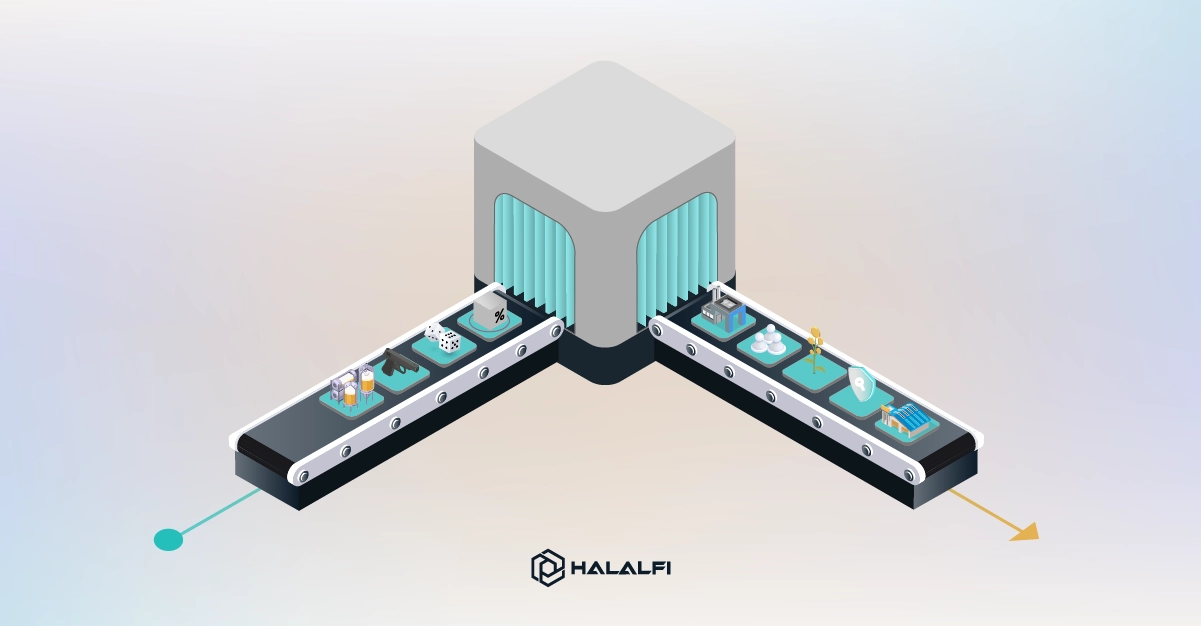
Investment instruments must also avoid businesses dealing in alcohol, pork, pornography, weapons, or conventional banking, activities considered haram.
A legitimate transaction must involve real ownership: you can’t sell what you don’t possess. These principles encourage investments that create tangible value for society rather than quick speculative gains.
Is Crypto Halal? Views From Scholars
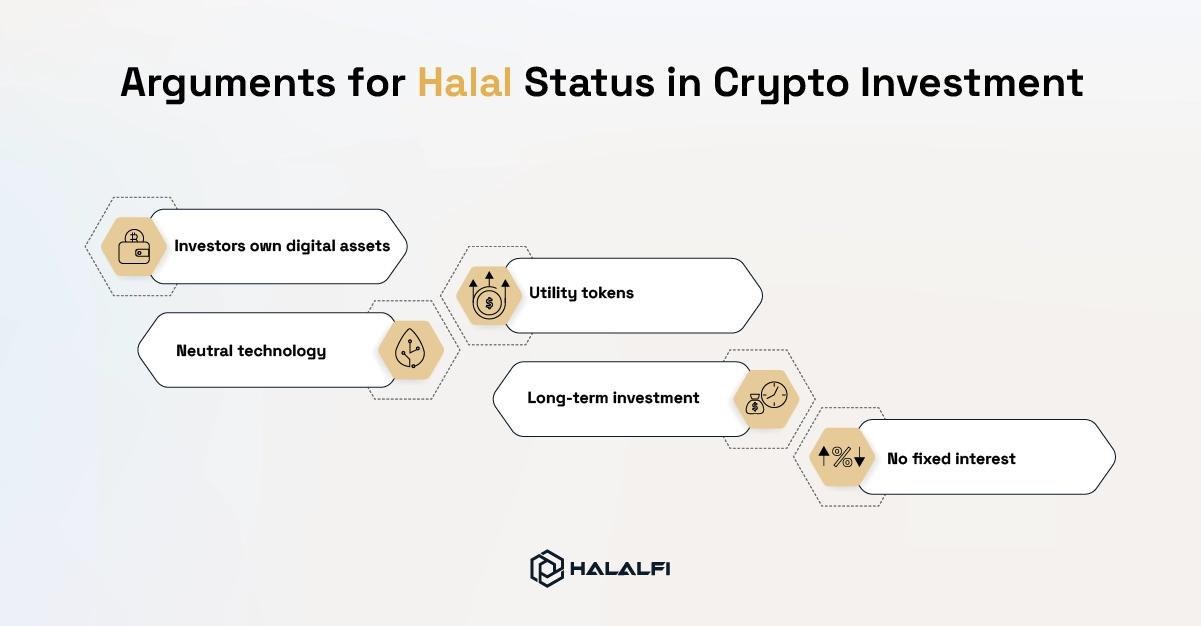
Many scholars argue that holding and trading mainstream cryptocurrencies like Bitcoin, Ethereum and tether can be a halal investment when done responsibly. Their reasoning includes:
Investors own digital assets: when you purchase a coin, you hold a verifiable share on the blockchain. It is akin to owning gold or foreign currency.
No fixed interest: buying Bitcoin at $30k and selling at $40k is a value‑based trade rather than earning interest; the profit comes from market appreciation, not guaranteed yield.
Neutral technology: blockchain is simply an accounting system. It can serve legitimate purposes such as remittances, smart contracts, or tokenizing real assets.
Utility tokens: Some projects grant access to a platform or represent ownership in a project. According to Arab News, Mufti Faraz Adam of Amanah Advisors explains that many cryptocurrencies create real value by giving holders access, ownership rights, or practical utility within a platform. For that reason, he considers them a form of māl (wealth) from a Sharia perspective.
Long‑term investment: buying crypto as a store of value or to support a useful project resembles investing in halal stocks or commodities.
Crypto halal or haram in islam: Arguments for Haram Status
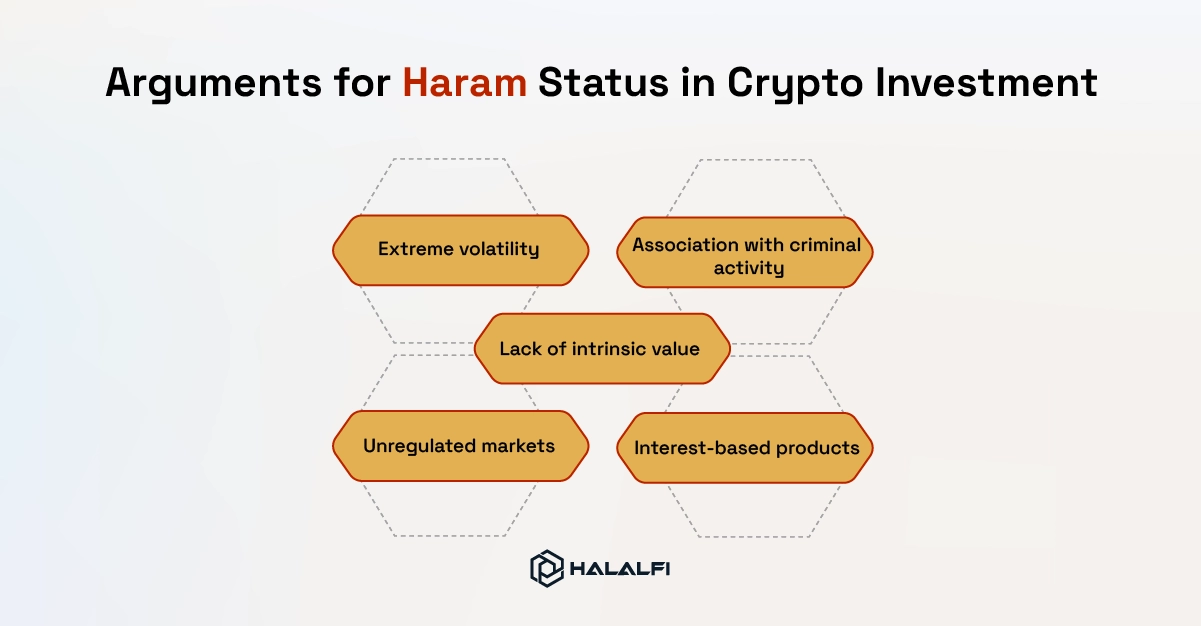
Other scholars warn against cryptocurrency investments, citing:
Extreme volatility: many investors treat crypto or a crypto crowdfunding platform as a casino, chasing meme coins and pump‑and‑dump schemes. The resulting speculation resembles maysir and introduces gharar.
Lack of intrinsic value: digital assets derive their value from collective belief rather than from tangible goods. Critics argue this makes them speculative instruments rather than commodities.
Association with criminal activity: anonymity can facilitate money laundering, terrorism financing, gambling, and other haram activities.
Unregulated markets: no central authority backs most coins; projects can vanish overnight. This systemic uncertainty is a form of gharar.
Interest‑based products: many crypto exchanges offer margin trading, futures contracts,s and leveraged products that involve borrowing and lending at interest. Such practices clearly violate Islamic prohibitions on riba.
Is crypto investment halal? Middle Ground: It Depends on Use
Most scholars evaluate cryptocurrency activities on crypto crowdfunding platform and other platforms based on their use.
Spot trading or holding established cryptocurrencies with real‑world utility can be permissible, while excessive speculation, leverage, and derivatives are generally considered haram, guiding investors toward compliant practices.
According to Arab News, Mufti Muhammad Abu-Bakar states:
“People have given Bitcoin value by accepting it as a payment method and using it in real-world transactions, but the industry is nascent, and prices are volatile”
Sheik Abdul Aziz Ibn Baz also says:
“The use of cryptocurrency under specific conditions is permitted, if decentralization and smart contracts align with Islamic finance principles.”
Comparison of Permissible vs. Prohibited Crypto Activities
Below is a comparison of common crypto activities, such as stablecoin staking, and their likely halal status under Islamic finance. Remember that scholars’ views differ, so always consult a trusted advisor.
Activity | Description | Scholary | Likely Status | Reason |
Spot trading of Bitcoin/Ethereum | Buying and selling coins you own using your own funds | Scholars such as Mufti Muhammad Abu-Bakar and Mufti Faraz Adam | Halal if done without leverage and for investment, not gambling | Treats crypto as an asset like gold; profit comes from market price change, not interest |
Staking proof‑of‑stake coins | Locking coins to secure a network and earn rewards | Mufti Faraz Adam | Contested, some compare rewards to profit‑sharing; others see it as interest | Check whether rewards derive from transaction fees (allowed) or lending (riba) |
Margin and leverage trading | Borrowing funds to amplify gains | Haram | Involves interest payments and excessive risk (riba and maysir) | |
Futures and options | Contracts to buy/sell assets you don’t own | The International Islamic Fiqh Academy, the Islamic Fiqh Academy of the Muslim World League, and AAOIFI Shariah Standard No. 20 | Haram | Selling what you don’t possess and speculative gambling |
Pump‑and‑dump schemes | Manipulating prices and exiting quickly | Diyanet, Dar al-Ifta, and MUI | Haram | Fraudulent and gambling‑like behavior |
Stablecoin remittances | Using USDT or USDC for cross‑border transfers | Mufti Faraz Adam | Halal if the coin is asset‑backed and the transaction is transparent | Provides real utility and avoids interest |
Investing in real‑world asset tokens | Owning tokenized shares of property or sukuk | Mufti Faraz Adam | Halal if the asset is halal and the documentation is clear | Emulates equity ownership in Sharia‑compliant assets |
How HalalFi Makes Crypto Investing More Sharia-Compliant?
Whether cryptocurrency is halal or haram depends less on the digital asset itself and more on how people use it.
HalalFi builds its ecosystem around USDT staking, a stablecoin that investors use to fund real businesses rather than speculate on volatile cryptocurrencies.
Rather than encouraging users to buy tokens in the hope that prices will rise, the platform directs USDT into trade, sourcing, manuFfacturing, export, and other productive business activities.
Investors earn returns only when these businesses generate profits, reflecting the Islamic principles of risk sharing and real economic participation.
Instead of generating rewards from lending or interest, the platform links investor returns to the performance of real commercial projects.
This profit-sharing model helps distinguish its investment structure from conventional interest-based crypto products.
To maintain these standards, HalalFi screens every project before listing it. Its Sharia advisors review each business to ensure it avoids interest-based financing, gambling, prohibited industries, and unethical practices.
At the same time, financial specialists evaluate the company's commercial viability and long-term sustainability. Only projects that satisfy both requirements can raise capital on the platform.
Conclusion
Halal investing for beginners across different investment models is challenging; the debate over whether crypto is halal or haram is nuanced.
Islamic finance principles outlaw interest, excessive uncertainty, and gambling, yet they encourage entrepreneurship, trade, and equitable profit sharing. Cryptocurrencies are neither entirely forbidden nor automatically permissible.
Their status depends on use: responsible, asset‑backed investments can be halal, while speculative trading and interest‑based products remain haram.
As QFC shows, the rise of Islamic fintech, growing at 11.5% annually, demonstrates that faith‑aligned finance is not only possible but thriving.
Platforms like HalalFi translate these principles into modern practice, using blockchain transparency and dual audits to connect capital with real businesses.
If you’re looking to grow your wealth without compromising your values, see HalalFi’s projects and see whether this innovative approach aligns with your financial journey. Your money doesn’t have to sacrifice meaning for profit; with the right platform, you can achieve both.
Frequently Asked Questions
Are stablecoins like USDT and USDC halal?
Stablecoins can be halal if they are fully asset‑backed, used for lawful transactions, and don’t pay interest. However, “staking” stablecoins on platforms that promise fixed yields may be haram if the returns derive from interest-bearing lending.
Is Bitcoin considered halal if used only for remittances?
When Bitcoin functions as a medium of exchange, for example, sending money to family abroad, and the transaction avoids interest or gambling, many scholars deem it permissible. The key is to use a transparent wallet and avoid illegal goods or services.
Is crypto day trading halal?
Day trading often resembles gambling due to its reliance on short‑term price swings and psychological factors. Scholars generally view frequent speculative trading as maysir and advise against it.
Can I participate in crypto crowdfunding?
Investors can participate in halal crowdfunding by supporting Sharia-compliant projects that reward them through profit sharing rather than fixed interest payments. HalalFi helps ensure compliance through rigorous audits and ongoing oversight.
What makes a cryptocurrency haram?
A coin becomes haram if it is tied to prohibited activities (e.g., gambling tokens), if its structure involves guaranteed interest, or if it encourages purely speculative behavior without real economic value.