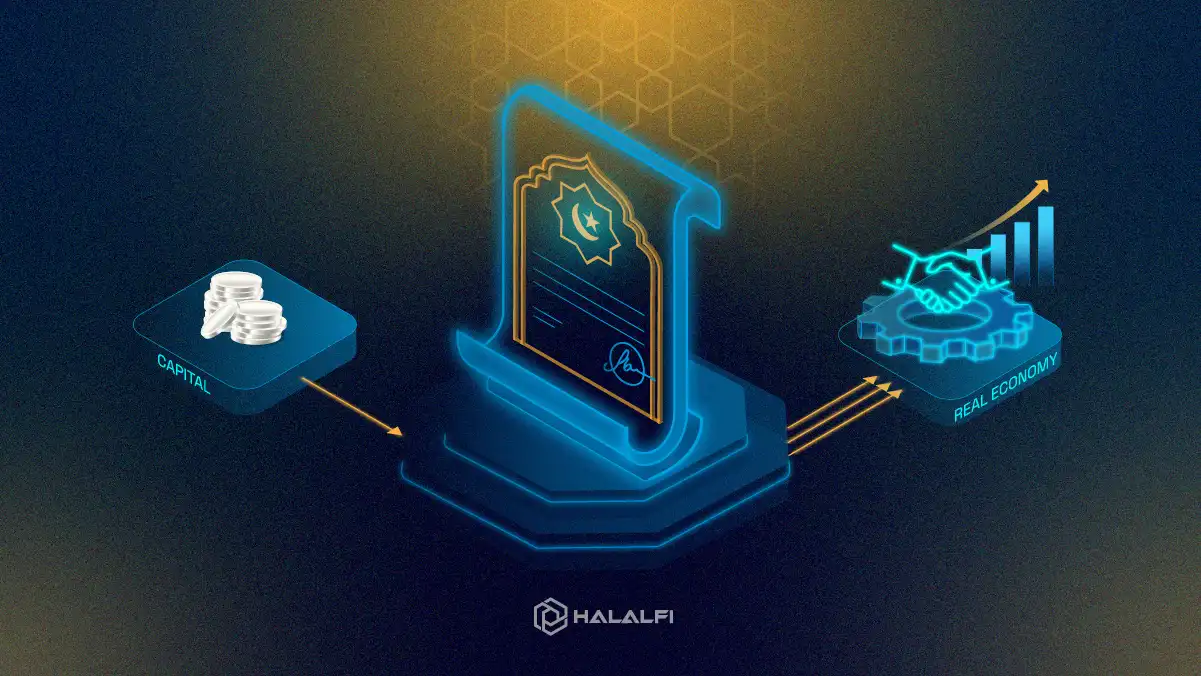
We have two financing deals that cost the same, yet one uses an Islamic finance contract, and the other involves interest.
In such a situation, many people get stuck. They compare the monthly payment, see similar numbers, and wonder what actually changed. The answer sits inside the contract.
Islamic finance does not prohibit earning money from capital. It changes the reason a person earns that money.
Profit may come from selling an asset, renting property, owning a business, managing an investment, or providing a service.
In this article, we explain everything you need to know about Islamic finance contracts.
What Makes an Islamic Financial Contract Different?
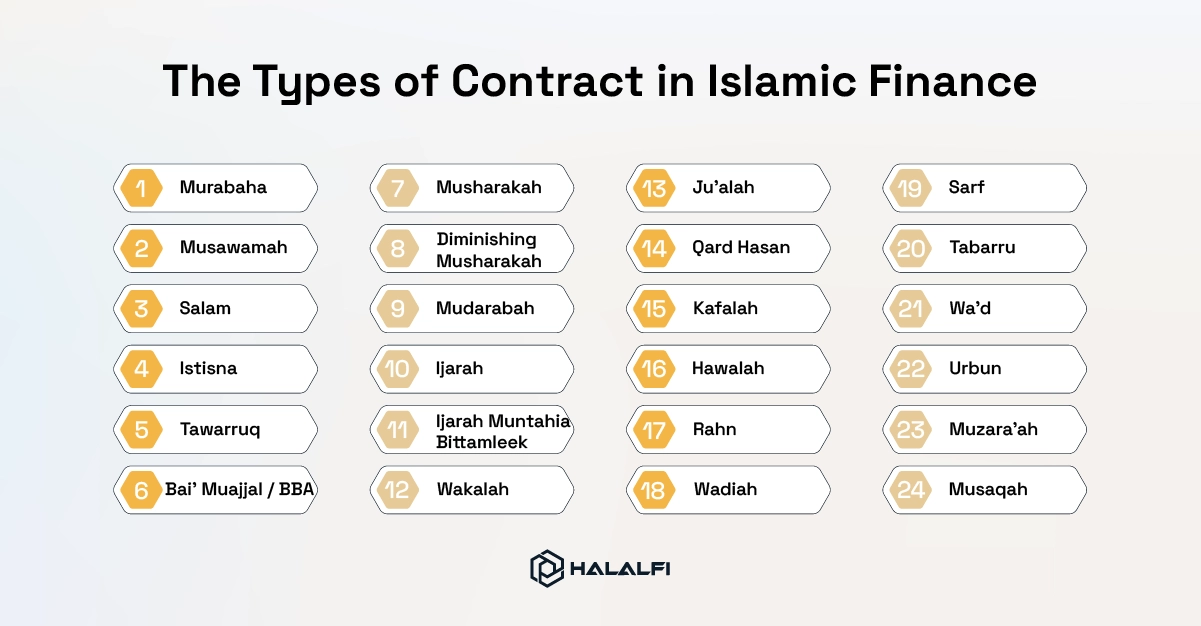
A conventional loan starts with money and ends with more money owed to the lender. An Islamic financial contract introduces another economic relationship.
Someone sells an asset, leases its use, enters a partnership, manages capital or performs a service.
That does not mean every deal carrying an Arabic name automatically complies with Shariah. Ownership, risk, sequence of transactions and contract terms still matter.
To understand riba in Islam, look outside the final price. Ask why the financier earns the return and what the financier actually does to earn it.
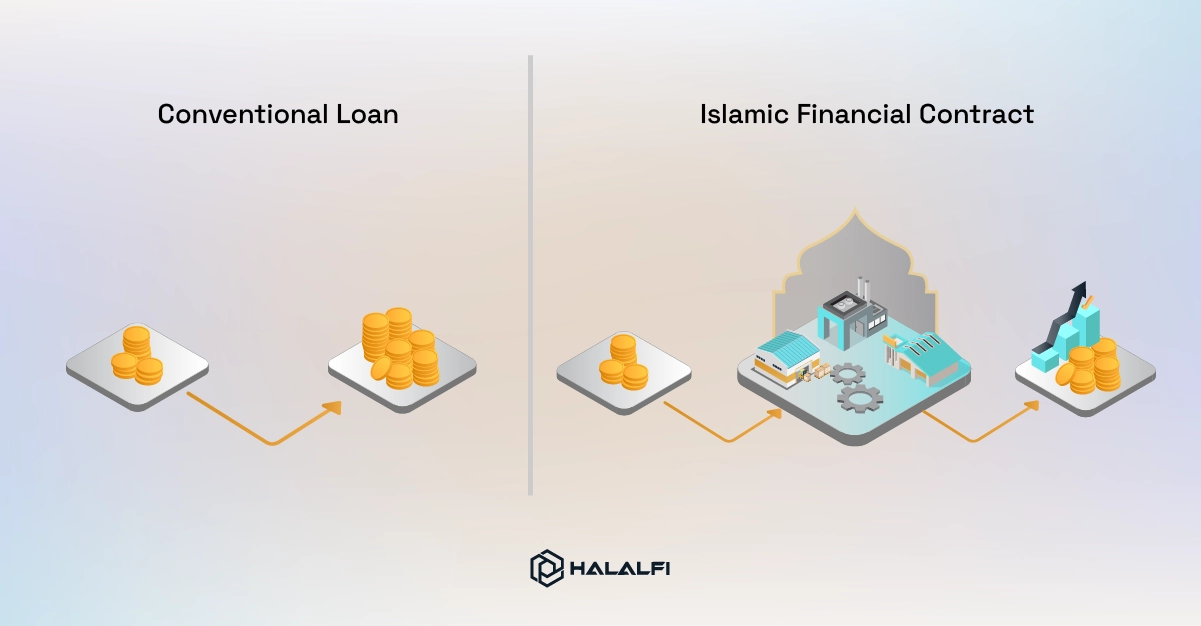
The Types of Contract in Islamic Finance
There is no single finite list that every jurisdiction classifies identically. Modern products also combine some contracts.
Still, the following table covers the main Shariah contracts for Islamic financial instruments, as well as the supporting contracts investors encounter most often.
Contracts | What creates the return or obligation? | Example |
Murabaha | Cost-plus asset sale | Bank buys machinery for $50,000 and resells it for $56,000 |
Musawamah | Negotiated sale without cost disclosure | Dealer negotiates one final deferred price |
Salam | Full payment now, goods later | Farmer receives cash now for wheat delivered after harvest |
Istisna | Manufacture or construction | Financier pays for a factory to build customized equipment |
Tawarruq | Commodity trades create cash financing | Customer buys commodity on deferred terms and resells it |
Bai’ Muajjal / BBA | Sale with deferred payment | Property sells today with payments over several years |
Musharakah | Joint capital and shared business result | Two parties fund a warehouse together |
Diminishing Musharakah | Gradual purchase of partner’s ownership | Homebuyer gradually acquires financier’s property share |
Mudarabah | Capital from one party, work from another | Investor funds an entrepreneur who manages the company |
Ijarah | Rent for use of an owned asset | Bank owns a vehicle and leases it to a company |
Ijarah Muntahia Bittamleek | Lease followed by ownership transfer | Customer rents equipment before eventually owning it |
Wakalah | Agency fee | Investor appoints a manager to invest funds |
Ju’alah | Fee for achieving a defined result | Firm pays an adviser after successful debt recovery |
Qard Hasan | Repayment of principal only | Interest-free emergency or social loan |
Kafalah | Guarantee | Guarantor backs a supplier’s payment obligation |
Hawalah | Transfer of debt | Creditor redirects a receivable to another party |
Rahn | Collateral | Customer pledges an asset against an obligation |
Wadiah | Safekeeping | Institution holds funds for a customer |
Sarf | Currency exchange | Dollars exchanged for ringgit under Shariah currency rules |
Tabarru’ | Voluntary contribution | Takaful participants contribute to a shared risk pool |
Wa’d | Unilateral promise | One party promises a later purchase under agreed conditions |
Urbun | Earnest money | Buyer pays a deposit to reserve an asset |
Muzara’ah | Agricultural partnership | Landowner and farmer share farm output |
Musaqah | Orchard-management partnership | Worker maintains trees for a share of produce |
Former Bank Negara Malaysia Governor Dr. Zeti Akhtar Aziz focused on what should sit underneath those solutions:
“Financial transactions must be supported by real economic activity.”
Murabaha: Price and Interest Are Not the Same Thing
A murabaha transaction starts with a sale. Suppose a bakery needs a $30,000 commercial oven.
The financier purchases the oven, takes ownership, then sells it to the bakery for $34,500 payable over two years. Both parties know the cost and markup before signing.
The $4,500 represents the agreed sale profit, not interest added to a cash loan.
The sequence is important. If the financier never owns the oven or carries the ownership obligations required by the contract, calling the paperwork Murabaha does not solve the Shariah problem.
Salam and Istisna Finance: Something That Does Not Exist Yet
Under Salam, the buyer pays the full agreed price now for clearly specified goods that the seller delivers later.
Imagine a food distributor paying $20,000 today for a defined quantity and grade of dates that a farm will deliver in six months.
Istisna works well for manufacturing and construction. A company might order 100 custom solar units for $80,000, with production specifications and staged payments written into the contract.
Unlike Salam, Istisna does not generally require the full price upfront. The parties can arrange advance, installment, or later payments. The IMF identifies both as deferred-delivery financing structures.
AAOIFI issued a new accounting standard for Istisna-based development contracts in August 2026.
Musharakah: Put Capital at Business Risk
Sale contracts create a known selling price. Partnership contracts behave differently. In musharakah, two or more partners contribute capital.
They agree how to divide profit, while financial losses generally follow their capital contributions.
Imagine a logistics company needs $200,000 for a new warehouse. The founder contributes $120,000 and an investor contributes $80,000.
They jointly own the venture rather than creating a standard lender-borrower relationship.
Ijarah Makes the Asset Owner Earn Rent
Ijarah creates income from the use of an asset. Consider a construction company that needs an excavator worth $100,000.
An Islamic financier buys the machine and leases it to the company for an agreed period. The company pays rent because it uses the financier’s asset.
Ownership still means something. The lessor carries responsibilities and risks that belong to the owner rather than shifting every ownership obligation to the customer.
An Ijarah Muntahia Bittamleek adds a later transfer of ownership. After the lease period, the customer may acquire the asset through a separate sale, gift, or transfer arrangement that follows the applicable Shariah structure.
The IMF defines Ijarah as lease-based financing in which the institution purchases an asset and then leases it to the customer.
Tawarruq: The Trade Behind the Cash
Tawarruq can seem strange to someone seeing it for the first time. The structure works like this:
A financier buys a commodity.
It sells that commodity to the customer at a deferred price.
The customer gains ownership.
The customer sells it to another buyer for immediate cash.
The customer later pays the original financier the deferred sale price.
This structure gives the customer liquidity without a direct interest-bearing cash loan. Tawarruq also attracts scholarly and practical debate, especially when commodity ownership exists only on paper or the same parties effectively automate every step.
Wakalah and Other Supporting Contracts
Some Islamic finance contracts never touch the asset itself. They define who acts for whom, who stands behind an obligation, and who earns a fee when a job gets done.
Wakalah: wakalah describes that a principal appoints an agent. An investment manager may invest money for an agreed fee.
Ju’alah: someone earns a specified reward after completing an agreed task or achieving a result.
Kafalah: a guarantor backs another party’s obligation.
Hawalah: parties transfer a debt or payment obligation.
Rahn: an asset secures an obligation as collateral.
Wadiah: one party places property or money with another for safekeeping.
Wa’d: one party makes a unilateral promise that can support a larger financial structure.
Urbun: a buyer provides earnest money connected with a purchase.
Sarf: governs currency exchange.
Tabarru’: participants make contributions that form the basis of many takaful arrangements.
Musawamah, Agricultural Contracts and Other Names You May Meet
A few contracts appear less often in retail banking but still belong on the map. Musawamah resembles an ordinary negotiated sale.
Unlike Murabaha, the seller does not need to disclose the original cost and exact profit margin.
Muzara’ah covers farming partnerships in which different parties provide land and labor, and they share the resulting crop. Musaqah focuses on caring for orchards or trees in exchange for part of the produce.
Some markets also use Bai’ Bithaman Ajil or broader deferred-sale structures. Bai’ al-Inah, a sale-and-buyback arrangement between the same parties, has been accepted under certain conditions in some jurisdictions but faces substantial disagreement among scholars elsewhere.
Debt-Based Contracts in Islamic Finance: Real Payment Obligations
Islamic finance does not mean “no debt.” Some permissible transactions can create debt after a genuine trade or financing event. Debt-based contracts in Islamic finance include:
Murabaha: the agreed-upon deferred selling price becomes payable after the asset is sold.
Salam: the seller is obligated to deliver the specified goods upon receipt of the advance payment.
Istisna: contractual payment and delivery obligations arise in connection with manufacturing or construction.
Tawarruq: linked commodity sales can create a deferred payment obligation while providing liquidity.
Bai’ Muajjal: the buyer owes the agreed deferred sale price.
Is There an Islamic Loan Contract?
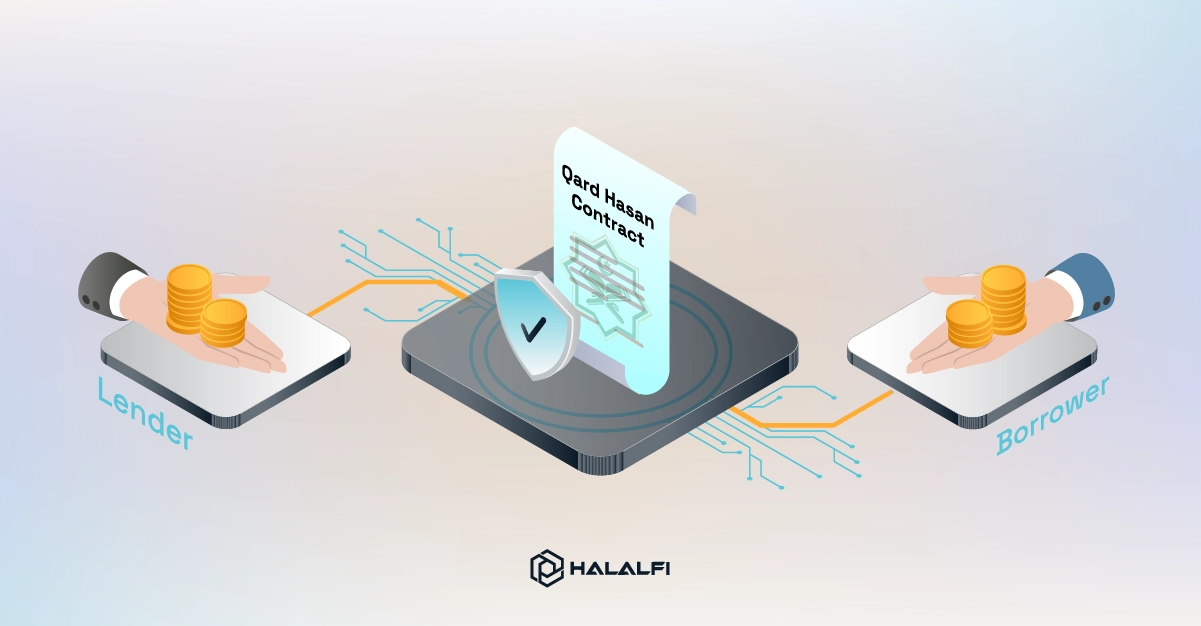
Yes, but it does not work like a commercial interest loan. Qard Hasan allows one party to lend money and recover the principal without earning a contractual return from the loan.
Institutions may recover genuine administrative costs under applicable rules, but they cannot make the fee depend on the amount or duration in a way that recreates interest.
The IMF describes Qard Hasan as a zero-return loan and notes that permitted service charges should cover administrative expenses rather than generate a return on the loan.
Sukuk Is an Instrument
People often place Sukuk beside Murabaha or Ijarah. Technically, that mixes two different levels.
Sukuk describes an Islamic investment certificate. Its structure uses an Islamic financial contract such as Ijarah, Musharakah, Mudarabah, Istisna, or Wakalah.
Sukuk may represent interests in leases, construction projects, partnerships, and other underlying structures rather than a conventional promise to repay interest on a bond.
According to Bank Negara Malaysia, Abdul Rasheed Ghaffour, about the value of contract variety, in a 2023 speech said:
“We have diverse Shariah contracts and instruments which can be tailored to engineer solutions.”
How HalalFi Makes Islamic Finance Contracts Easier to Inspect
A recurring problem in halal investment is distance. Investors see a percentage return but cannot always see which commercial activity generated it.
HalalFi comes to that problem through individual business projects rather than a pooled banking product.
The platform says every listed opportunity goes through both Shariah and business review before publication.
HalalFi project page shows the business, funding target, duration, expected return, and available protection mechanisms. That gives investors things to inspect before funding:
The real business activity producing the expected profit
The proposed funding and profit structure
Project duration and target capital
Shariah and business review
Selected collateral or guarantee arrangements
Blockchain records for funding and distributions
Which Islamic Contracts Best Fit HalalFi’s Model?
HalalFi doesn't rely on one contract for every project. It focuses on real commercial activity, performance-based profit, and project-specific Sharia structures.
Mudarabah-style profit sharing: Investors provide capital, while the business executes the project and returns profit according to the agreed structure.
Musharakah-style participation: It fits projects where capital and commercial risk are shared rather than replaced with fixed interest.
Murabaha-style trade finance can suit projects focused on purchasing, sourcing, importing, or distributing identifiable goods.
Wakalah structures: Can apply where a business manages capital for a defined commercial activity under agreed terms.
Kafalah or collateral arrangements: HalalFi adds commercial guarantees, property documents, bank-backed instruments, or business collateral as separate forms of protection.
The point is that HalalFi ties the return to real business activity and an agreed Sharia-aligned structure, rather than treating capital as an interest-bearing loan.
Conclusion
A valuable way to read an Islamic financial contract is to ignore its Arabic name for thirty seconds.
Follow the money and see:
Did the financier buy something and sell it?
Murabaha may fit. Does it own an asset and charge for its use?
Look at Ijarah. Do both sides own the business? Musharakah may make sense.
Does one side supply money while the other manages it? That points toward Mudarabah.
Is someone managing capital for a fee? Wakalah may sit underneath the arrangement.
Once the economic story makes sense, go back to the Shariah documentation and check whether the legal contract matches that story.
HalalFi gives project-based investors another place to apply it. Rather than investing because a project carries a halal label, open the project page, assess its economics, review its protections and contract terms, and then decide whether the opportunity warrants capital.
Frequently Asked Questions
Can an Islamic finance contract use SOFR or another interest benchmark to calculate a price?
Using a conventional benchmark does not automatically turn a transaction into an interest-bearing loan. Scholars and regulators look at the underlying contract, ownership, and obligations.
Can an Islamic bank charge a customer for paying late?
A creditor cannot turn late payment into extra profit the way conventional default interest can.
Can several Islamic finance contracts appear in one transaction?
Yes. Modern financing often combines contracts. A home-financing structure, for example, may use Musharakah for co-ownership, Ijarah for rent, and separate promises or sales for the gradual transfer of ownership.
Does a Shariah board guarantee that every financial product has zero risk?
No. A Shariah review evaluates compliance with Islamic rules. It does not promise profit, eliminate counterparty risk, or prevent a business from failing.
Can blockchain smart contracts replace Islamic finance contracts?
No. A smart contract executes coded instructions. Shariah rules determine whether the underlying transaction, ownership, profit,t and obligations comply with Islamic principles.
Why do some Islamic finance contracts look financially similar to conventional loans?
Pricing can produce similar cash flows, particularly when Islamic institutions operate alongside conventional banks.