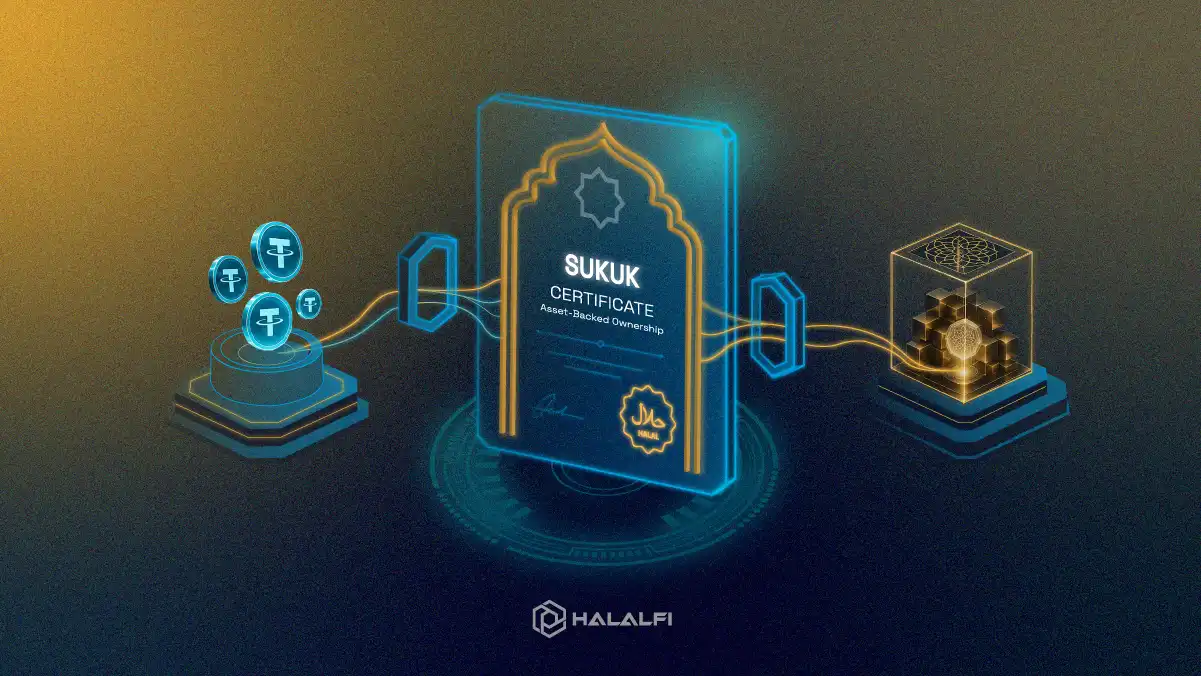
Can money grow without interest and still stay ethical, profitable, and connected to the real economy?
Modern Islamic finance can answer this question.
For decades, investors have faced a tension. They want returns, but they also want confidence that their money is not quietly funding harmful industries, speculative bubbles, or debt structures built entirely on interest. It is where sukuk enters the conversation.
In this article, we explain what a sukuk is, how it works, how it compares with bonds, why it continues to grow globally, and how modern platforms are applying the structure to crowdfunding and blockchain finance.
What Is Sukuk?
Sukuk is the Arabic plural of sakk, meaning "certificate" or "legal instrument".
Sukuk is a Sharia-compliant financial certificate that allows investors to participate in the ownership or financing of tangible assets or productive business activity.
The definition widely used by Islamic finance institutions comes from AAOIFI, the global Islamic finance standards body.
AAOIFI defines a sukuk as a certificate representing a proportional ownership interest in eligible assets or investment activities.
Here is the simple version. A bond means:
Investor → lends money → receives interest.
A sukuk means:
Investor → owns part of an asset or business arrangement → receives profit generated from real activity.
Sukuk, often called Islamic bonds, are among the most important innovations in Islamic finance. They allow governments and businesses to raise capital while respecting Sharia principles. But unlike conventional bonds, sukuk are not simply loans with interest attached.
A new generation of investors, Muslim and non-Muslim alike, is asking tougher questions:
Where does profit come from?
Is this investment tied to real value?
Can finance support ethics and growth together?
Sukuk holders, rather than receiving interest payments, earn returns linked to the performance of an underlying asset, lease, project, or commercial arrangement.
That makes sukuk part of the broader family of shariah-compliant investments.
The LSEG shows that the global sukuk market has surpassed US$1 trillion and continues to expand in Malaysia, Saudi Arabia, the UAE, Pakistan, Türkiye, and beyond. Islamic finance assets reached nearly US$6 trillion globally in 2024 and are projected to approach US$9.7 trillion by 2029.
Why Were Sukuk Created?
Islamic law prohibits riba, usually understood as predetermined or guaranteed interest. But Islamic finance does not reject profit.
It rejects profit generated purely from money lending without participation in productive activity. This distinction shaped the development of sukuk.
Traditional bonds, while efficient in global capital markets, involve debt obligations and fixed interest payments. That structure creates challenges under Sharia law.
Sukuk emerged to bridge this gap. They allow:
Governments to finance infrastructure
Companies to raise expansion capital
Investors to access fixed-income-like instruments
Markets to remain connected to real assets
ResearchGate shows that the modern sukuk market began in Malaysia around 2000, with Bahrain following in 2001. Since then, growth has accelerated dramatically.
Today, sukuk finances airports, hospitals, transportation systems, renewable energy, housing developments, and sovereign budgets worldwide.
How Does Sukuk Work?
Sukuk allows investors to finance real assets or business activities rather than lend money for interest. The easiest way to understand sukuk is through a simple story.
Imagine a company wants to build a logistics warehouse. Under conventional finance:
The company issues bonds.
Investors lend money.
The company pays fixed interest.
With sukuk, the structure changes.
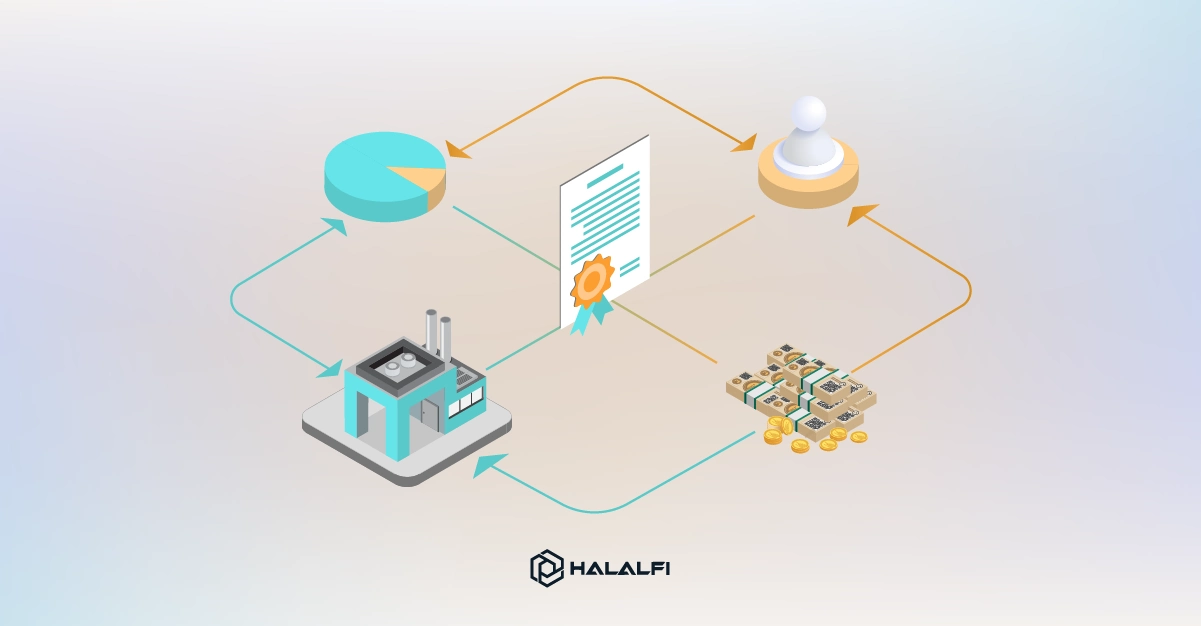
A special purpose vehicle (SPV) is often created. That SPV purchases or holds the warehouse asset and issues certificates to investors. Those investors now hold ownership interests connected to the warehouse.
The company leases or uses the warehouse. Rental income or business profits are then distributed to investors. At maturity, the asset arrangement is unwound and capital returned.
So investors are participating. This structure reflects the core philosophy of halal investment.
Money should participate in economic activity.
Numerical Example: How Sukuk Works in the Real World?
According to ISDB, ISDB’s 2019 Green Sukuk raised €1 billion for green financing, with a 5-year term and 0.037% annual profit rate.
Investor: An investor buys €10,000 worth of sukuk certificates.
Project / Asset: The funds support eligible green projects in IsDB member countries, such as sustainable infrastructure and climate-related financing.
Profit / Return: At 0.037% annually, the investor receives about €3.70 per year.
Risk: If the project or issuer faces problems, returns and repayment may be affected. Sukuk is not automatically risk-free.
Exit / Maturity: After 5 years, the sukuk matures, and the investor expects to receive the original €10,000 back, subject to the sukuk terms.
Sukuk vs Bonds: What Is the Difference?
People often call sukuk “Islamic bonds.” That description helps beginners, but it is incomplete. Here is the comparison.
Feature | Conventional Bond | Sukuk |
Legal nature | Debt obligation | Asset or project ownership |
Return source | Interest | Profit or asset income |
Sharia compliance | Often non-compliant | Structured for compliance |
Risk basis | Issuer credit | Asset + structure |
Tradability | Debt trading | Asset ownership transfer |
Interest involved | Yes | No |
This difference shapes incentives. When an investor buys a bond, the main concern is usually the issuer's credit rating.
With sukuk, investors often evaluate both the issuer and the underlying asset. That changes the conversation from debt alone to economic participation.
The 3 Core Principles Behind Sukuk
To understand sukuk, it helps to understand three Islamic finance concerns.
1. Riba
Riba in Islam refers to predetermined or guaranteed interest. Islamic finance seeks profit tied to productive activity instead. This is why sukuk avoids fixed interest structures.
2. Gharar
Gharar in Islamic finance refers to excessive uncertainty:
Hidden risks
Unclear contracts
Ambiguous terms
Sukuk aims to reduce this through transparent documentation and defined asset relationships.
3. Maysir
Maysir in Islamic finance refers to gambling or zero-sum speculation. Many markets increasingly resemble high-speed wagering rather than investment. Sukuk instead focuses on tangible activity and measurable economic value.
Why Sukuk Feels Relevant Again
Many people are uncomfortable with speculation-heavy markets. Not only Muslims, but also teachers, entrepreneurs, family offices, and impact investors increasingly ask whether finance has become too disconnected from real value creation.
According to LSEG, the global Islamic finance sector reached US$5.98 trillion in assets during 2024, growing 21% year-on-year. Meanwhile, the outstanding amount of sukuk globally surpassed US$1 trillion.
Types of Sukuk
Not all sukuk are identical. Different contracts create different structures. Some of the most common include:
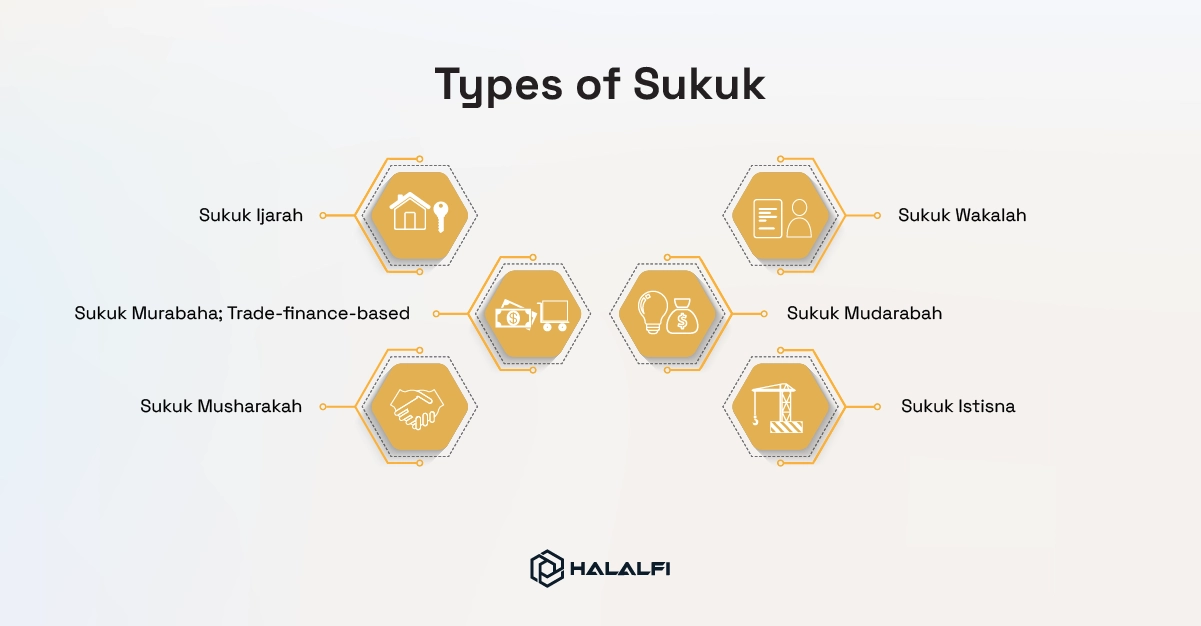
Sukuk Ijarah
Lease-based sukuk. Investors receive rental income. Often considered the most straightforward structure.
Ijarah sukuk are asset-backed lease structures. An SPV purchases an asset and leases it to the originator or another party. Investors hold beneficial ownership interests in the leased asset through the sukuk certificates.
Typical uses include financing infrastructure projects, airports, ports, real estate, utilities, and other income-generating physical assets.
Risks include:
Asset performance and maintenance risk
Lessee default risk
Residual value risk at maturity
Market risk if rental rates are not fixed
The source of return is rental income (lease payments) generated by the underlying asset. Periodic distributions to investors are typically funded from these lease payments.
Sukuk Murabaha; Trade-finance-based
Built on murabaha contracts. These structures involve cost-plus financing.
Murabaha sukuk are based on cost-plus sale transactions. The issuer purchases goods or commodities and sells them to the obligor at a marked-up price, with payment deferred.
Typical uses include working capital financing, trade finance, commodity transactions, and short-term corporate funding requirements.
Risks include:
Counterparty credit risk
Settlement and payment risk
Limited secondary market tradability in many jurisdictions due to Shariah restrictions
Returns are derived from the pre-agreed profit margin (markup) embedded in the murabaha sale transaction. Investors receive distributions funded by the buyer's deferred payments.
Sukuk Musharakah
Equity participation, based on musharakah. Investors share profit and risk. Often closer to partnership financing.
Musharakah sukuk are partnership-based structures. Investors contribute capital to a joint venture or business activity and share in profits according to an agreed ratio.
Uses include project finance, real estate development, infrastructure investments, and business expansion initiatives.
Risks are:
Business performance risk
Profit volatility
Potential capital losses if the venture underperforms
Management and operational risks
Returns come from the actual profits generated by the underlying partnership or business venture. Since investors participate in the venture, returns depend on its economic performance.
Sukuk Wakalah
Agency-based and built around wakalah structures. An agent manages investments on behalf of investors.
Trust certificates remain among the most common modern structures, usually involving SPVs and legal frameworks governed under English law.
Under a wakalah structure, investors appoint a wakeel (agent) to manage and invest funds in a portfolio of Shariah-compliant assets or activities.
Uses are widely used by sovereigns, financial institutions, and corporations seeking flexible asset portfolio structures.
And risks include:
Asset performance risk
Agency and operational risk
Counterparty risk associated with managed assets
Investor returns are generated by the income and profits from the underlying asset portfolio managed by the wakeel. The agent may receive a management fee, but does not generally guarantee returns.
Sukuk Mudarabah
Mudarabah sukuk are based on a trustee-style partnership. Investors provide capital (rab al-mal), while the mudarib manages the business or investment activity using their expertise.
Often employed for investment funds, business ventures, project financing, and entrepreneurial activities where managerial expertise is critical.
Risks include:
Business performance risk
Profit uncertainty
Operational and management risk
Potential loss of capital if the venture incurs losses
Returns arise from the profits generated by the mudarabah venture, which are shared according to a pre-agreed profit-sharing ratio. Investors do not earn a fixed return.
Sukuk Istisna
Istisna sukuk are construction or manufacturing-based structures. Funds are raised to finance the creation of an asset that does not yet exist, such as a building, factory, or infrastructure project.
Typical uses are for large-scale infrastructure projects, industrial facilities, transportation networks, housing developments, and public works.
Risks are:
Construction and completion risk
Cost overruns
Delays in delivery
Performance risk of contractors and developers
Returns are generally generated from the profit embedded in the istisna contract, often combined with lease or sale proceeds once the completed asset becomes operational. Investor payments ultimately depend on the economic value created by the completed project.
Asset-Based vs Asset-Backed Sukuk
One of the most misunderstood topics in sukuk is the difference between asset-based and asset-backed structures.
At first, they sound identical, but they are not. Understanding this difference helps investors understand where risk really sits.
Asset-Based Sukuk
Asset-based sukuk dominates today's market. Here, investors primarily rely on the issuer's credit quality rather than on the asset itself.
There is usually an underlying asset involved. However, investors often have limited or no practical legal recourse to that asset if something goes wrong.
Investors rely on the issuer's creditworthiness.
Legal title to the asset often remains with the originator.
Sukuk holders have limited or no direct claim over the asset if a default occurs.
Recovery of funds depends largely on the issuer rather than the asset itself.
Legal Ownership:
Although an asset exists within the structure, investors generally do not obtain true legal ownership of the underlying asset.
Their rights are closer to beneficial ownership, meaning they benefit economically from the asset without holding full legal title.
Investor Recourse:
If the issuer fails to make payments, investors pursue claims against the obligor or issuer rather than taking possession of the underlying asset. This makes asset-based sukuk economically similar to credit exposure.
Many sovereign sukuk issued by governments and large corporations follow an asset-based model.
For example, numerous GCC sovereign issuances use government-owned assets to support the structure, while investors ultimately rely on the government's credit quality rather than direct ownership of the assets.
Risks for Investors:
Credit risk of the issuer
Default risk
Refinancing risk
Limited recovery rights in bankruptcy
Shariah authenticity debates among scholars
Regulatory and legal enforcement risk
Market liquidity risk
Asset-Backed Sukuk
Asset-backed sukuk goes further. The underlying asset is genuinely transferred into the structure. Investors may hold legal recourse to those assets.
This creates stronger ownership characteristics. Returns and capital recovery become tied more directly to asset performance.
Investors evaluate:
Asset valuation
Commercial viability
Transfer structure
Liquidation value
Legal Ownership:
Unlike asset-based structures, legal ownership of the asset is transferred through a true sale arrangement.
Investors, usually through the SPV, become the legal owners of the underlying asset during the life of the sukuk.
Investor Recourse:
If the originator defaults, investors may enforce their rights against the underlying asset itself.
Depending on the legal structure and jurisdiction, they may be able to sell, liquidate, or otherwise realize value from the asset to recover part of their investment.
An example is an infrastructure asset transferred to an SPV that issues sukuk certificates. Investors receive income generated by that asset, and if the originator becomes insolvent, investors retain rights to the underlying asset through the SPV structure.
Risks for Investors:
Asset performance risk
Market value decline
Operational risk
Asset impairment risk
Liquidity risk
Legal transfer and enforceability risk
Maintenance and management risk
Shariah compliance risk
AAOIFI and market regulators continue to discuss how far future sukuk structures should move toward stronger asset-ownership requirements, with proposed standards seeking greater harmonization and authenticity in sukuk markets.
Some analysts believe these discussions may reshape sukuk markets over the coming decade.
Feature | Asset-Based Sukuk | Asset-Backed Sukuk |
Legal ownership of the asset | Beneficial or limited ownership | True legal ownership transferred to investors/SPV |
Investor recourse | Primarily against the issuer | Against the underlying asset itself |
Main source of protection | Issuer's creditworthiness | Asset value and cash flows |
Risk focus | Credit risk | Asset performance risk |
Market prevalence | Dominates the global sukuk market | Relatively rare |
Typical issuers | Governments and large corporations | Project finance and structured transactions |
Why Most Modern Sukuk Are Asset-Based?
Although Islamic finance emphasizes ownership and risk sharing, most modern sukuk are structured as asset-based rather than fully asset-backed. There are some reasons:
Governments are often unable to transfer legal ownership of strategic public assets.
Full asset transfers can create legal, tax, and regulatory complications.
Institutional investors frequently prefer the certainty of issuer credit support.
Asset-based structures are generally easier and less expensive to issue.
As a result, today's sukuk market often resembles a hybrid model: assets are used to support Sharia compliance, but investor protection frequently depends more on the issuer's credit strength than on direct ownership of the underlying asset.
Are Sukuk Safe?
Sukuk are often considered relatively stable compared with highly speculative investments, but they are not risk-free.
Their safety depends on the quality of the underlying assets, the financial strength of the issuer, the legal structure, and broader market conditions.
Unlike conventional savings accounts, sukuk do not guarantee capital protection or fixed returns. Investors may face credit risk, liquidity risk, market risk, and, in some cases, project-performance risk.
Some sukuk structures are backed by tangible assets, which can provide additional security, but losses remain possible.
Trust Certificates and SPVs: The Most Common Sukuk Structure
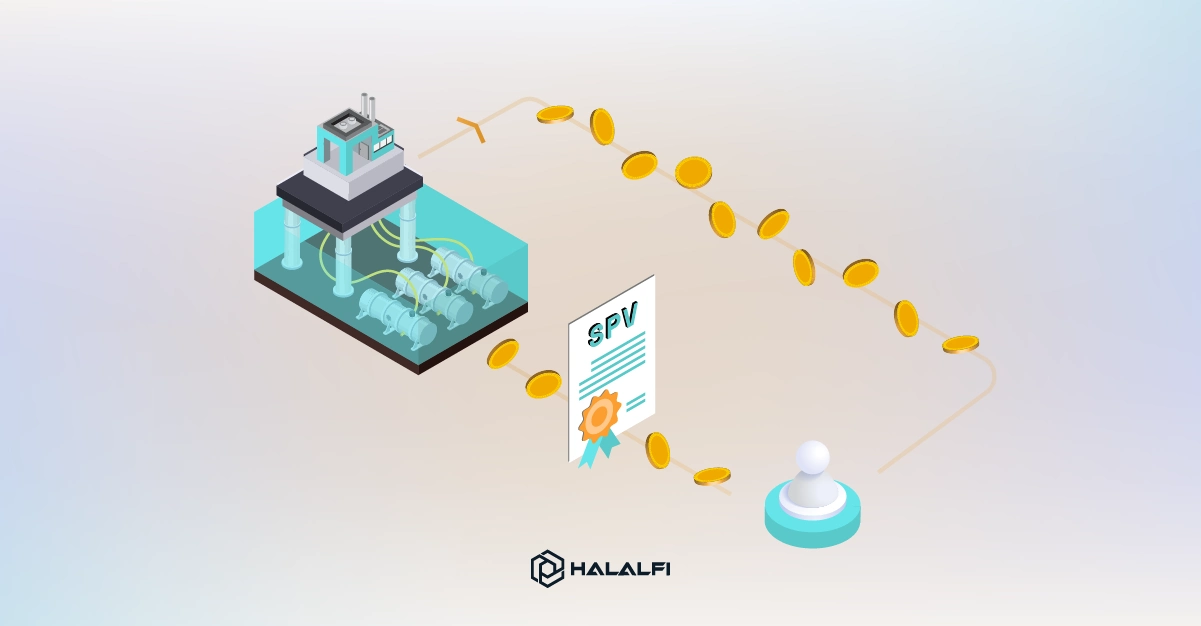
Most modern sukuk are issued through a trust certificate structure involving a Special Purpose Vehicle (SPV).
Instead of issuing conventional debt, the SPV raises funds from investors, acquires or finances an underlying asset, and distributes profits generated by that asset. This structure helps protect investor rights and is commonly governed by established legal frameworks.
The difference from traditional loans lies in how returns are generated. Conventional financing relies on fixed interest payments, regardless of business performance. Sukuk, by contrast, links investor returns to real economic activity and productive assets.
As a result, investors and issuers share a closer connection to commercial outcomes, creating a financing model that emphasizes participation, transparency, and alignment with business reality rather than pure debt-based lending.
That is a central idea behind Islamic finance.
The World Bank describes Islamic finance as asset-backed, ethical, and risk-sharing, emphasizing its connection to the real economy and financial inclusion.
Why Investors Are Looking Beyond Conventional Finance
The sukuk conversation is no longer limited to religious compliance.
Ethical investing is growing globally. Environmental, social, and governance investing expanded rapidly during the last decade.
Many investors now ask:
What does my capital support?
Is this productive or speculative?
Does this business create real value?
Islamic finance already asks similar questions. The International Federation of Accountants notes that Islamic finance emphasizes ethical standards and the wider social impact of financed transactions.
This explains why sukuk increasingly attracts:
Muslim investors
ESG investors,
Institutional funds, sovereign wealth funds, and family offices
Sukuk Growth Around the World
The sukuk market is global. Let's look at major markets.
Sukuk in Malaysia
Malaysia remains among the most developed sukuk ecosystems. Its regulatory environment, Sharia governance, and capital market infrastructure helped establish global leadership.
Malaysia pioneered the development of sovereign and corporate sukuk and remains a major issuance center.
Sukuk in Saudi Arabia
ArabNews reports that Saudi Arabia continues to expand sukuk issuance under Vision 2030. Sukuk plays a growing role in:
Infrastructure
Diversification
Capital market development
Sukuk in UAE
The UAE remains highly active. Dubai and Abu Dhabi position themselves as global Islamic finance hubs.
According to Mubasher Info, a recent example came from ADNOC. The company raised US$1.5 billion through a 10-year sukuk program, attracting more than US$3.8 billion in demand.
Sukuk in Pakistan
KINBIZ shows Pakistan continues to integrate AAOIFI standards and Islamic banking growth into its financial ecosystem.
Pakistan's central bank adopted sukuk-related standards to improve harmonization and confidence.
Sukuk in Indonesia and Türkiye
Indonesia remains active in sovereign retail sukuk. Türkiye developed civil-law alternatives using asset-leasing companies to support local issuance.
These innovations demonstrate how sukuk structures adapt across jurisdictions.
A Real-World Example: Malaysia's Sukuk Leadership
If Sukuk feels theoretical, Malaysia provides a practical example.
According to ScienceDirect Malaysia, it has developed one of the most sophisticated Islamic capital markets globally.
The first modern corporate sukuk appeared there in 1990. Since then, Malaysia has become a leading global issuer.
Government Investment Issues, or GII, are Malaysian sovereign sukuk used to finance public development expenditure.
These instruments support infrastructure and public investment while maintaining Sharia compliance.
Malaysia's regulatory ecosystem also supports:
Foreign currency sukuk
Corporate issuance
Sovereign participation
Secondary market trading
Institutional investment
This ecosystem helped transform sukuk from a regional product into a global asset class.
Expert Perspective on Sukuk Growth
According to Bashar Al-Natoor, Global Head of Islamic Finance at Fitch:
“We expect global sukuk issuance to sustain momentum in 2026.”
That statement reflects broader market confidence.
Fitch notes:
Over 80% of rated sukuk are investment grade
90.5% of issuers hold stable outlooks
No sukuk defaults recorded during the previous four years
That risk profile explains why sukuk increasingly attracts institutional investors.
Sukuk vs Speculation
Modern finance feels noisy:
Charts
Leverage
Memecoins
Rapid price swings
This environment creates a difficult question. Is everything called "investment" actually an investment?
Many Islamic scholars distinguish productive investment from speculative behavior associated with maysir in Islamic finance.
Sukuk structures aim to avoid zero-sum speculation by linking returns to:
Business activity
Leasing
Trade
Productive assets
That does not eliminate risk. But it changes the source of returns. Islamic finance focuses on commercial participation.
Advantages of Sukuk
Sukuk offers meaningful benefits for issuers and investors alike.
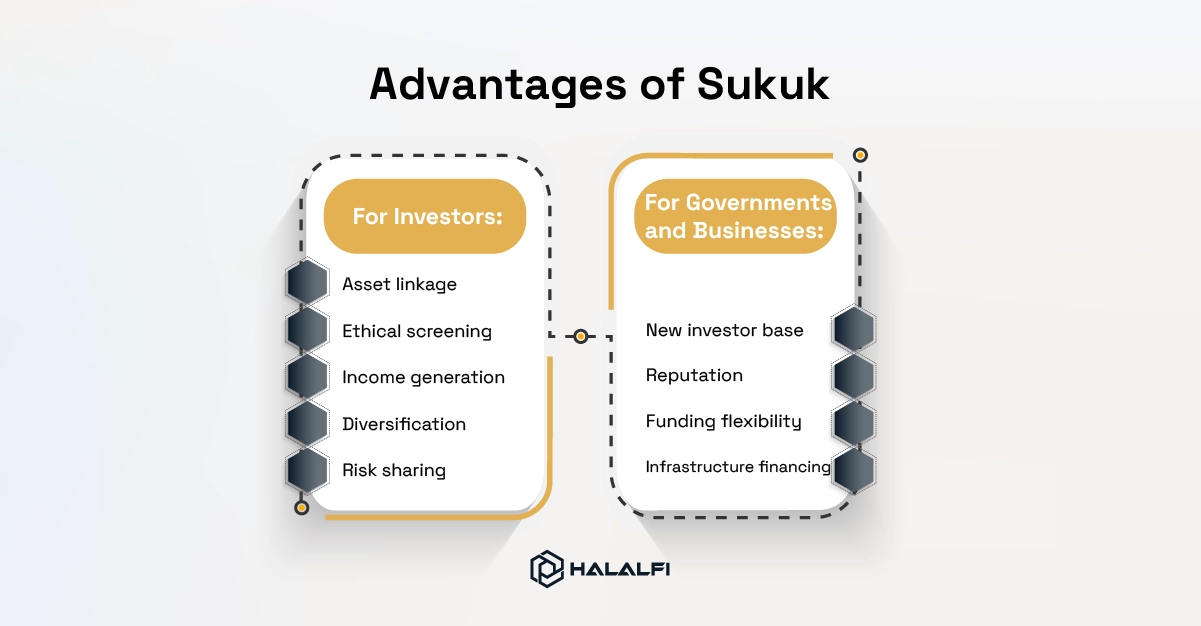
For Investors:
Advantage | Why It Matters |
Asset linkage | Connected to the real economy |
Ethical screening | Avoids prohibited sectors |
Income generation | Profit distributions |
Diversification | Alternative fixed-income exposure |
Risk sharing | More aligned incentives |
For Governments and Businesses:
Benefit | Impact |
New investor base | Access Islamic capital |
Reputation | Ethical positioning |
Funding flexibility | Alternative capital source |
Infrastructure financing | Large project support |
Sukuk also provides exposure to halal investment strategies increasingly sought by younger investors.
Sukuk Challenges
Balanced analysis matters. Sukuk is not perfect, and several challenges remain.
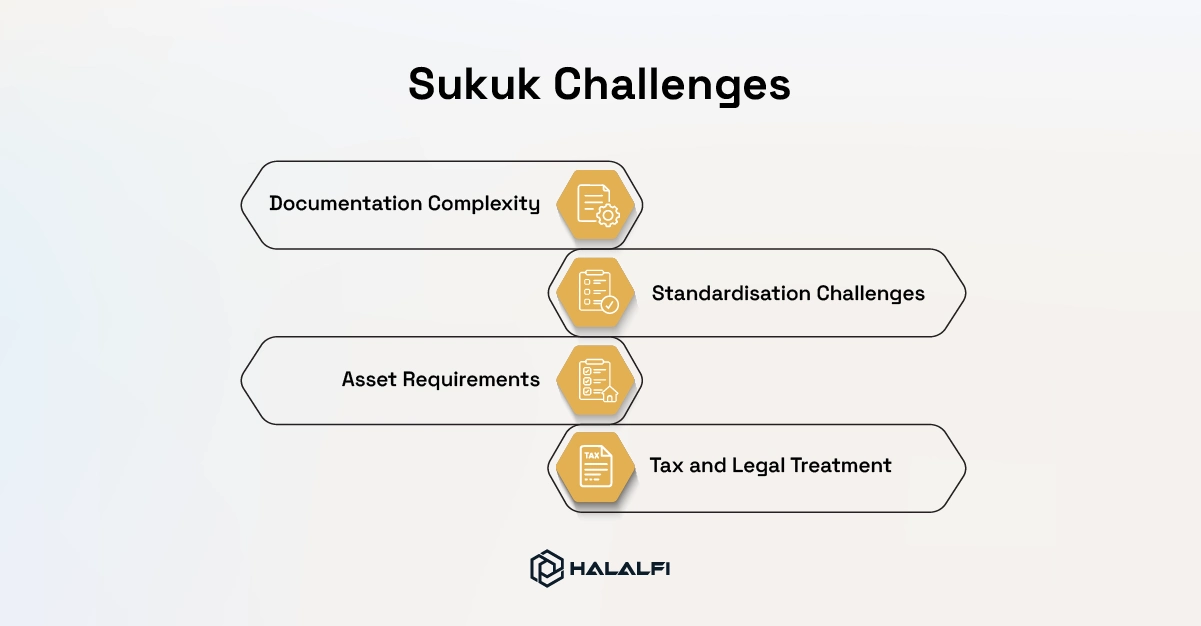
1. Documentation Complexity
Sukuk structures are more complex than conventional bonds:
SPVs
Legal transfers
Sharia opinions
Multiple agreements
2. Standardization Challenges
Documentation harmonization continues to develop. AAOIFI works toward standardization, but scholars sometimes hold differing opinions. That diversity creates flexibility but sometimes uncertainty.
3. Asset Requirements
Certain sukuk structures require suitable halal productive assets. Not every issuer has them. This limits issuance options.
4. Tax and Legal Treatment
Different jurisdictions treat sukuk differently. Tax efficiency and regulatory clarity vary globally.
Shared Roots: Traditional Islamic Finance and Modern Investing
Sukuk has gained global attention because it reflects values that many modern investors increasingly seek.
Sukuk structures emphasize real economic activity, transparency, accountability, and risk sharing rather than purely speculative returns.
These priorities overlap with broader investment trends. Ethical investors want to understand how their money is used. ESG-focused funds seek investments tied to tangible value creation.
Impact investors often prefer opportunities that support productive businesses instead of excessive leverage or financial speculation.
The convergence has created interest in financial models that combine profit with responsibility. Investors want to know "How transparent is the investment process?"
As technology transforms financial markets, these same structures are being applied through digital platforms, creating new ways for investors to participate in real businesses while maintaining a focus on transparency, accountability, and value-based investing. That change explains the rise of modern Islamic fintech platforms such as HalalFi.
HalalFi and Sukuk: From Asset-Based Finance to Digital Investment Platforms
One reason sukuk has remained relevant for decades is that it connects investment returns to real economic activity rather than pure lending.
Investors participate in assets, businesses, or projects that generate value, reflecting core Islamic finance principles such as transparency, risk sharing, and productive enterprise.
However, traditional sukuk markets are primarily designed for governments, financial institutions, and large corporations.
For individual investors, accessing similar opportunities has often been more difficult due to high capital requirements, complex structures, and limited visibility into underlying businesses.
Here, HalalFi, as a halal crowdfunding platform, represents an interesting evolution. While HalalFi is not a sukuk issuer and its offerings should not be confused with publicly tradable sukuk certificates, both approaches share several underlying principles.
Each seeks to connect investors with real economic activity, avoid interest-based returns, and emphasize transparency over speculation.
HalalFi, through business audits, Sharia screening, blockchain-based transparency, and profit-sharing arrangements, applies many of the same values that helped make sukuk a cornerstone of modern Islamic finance, but in a format designed for the digital crowdfunding era.
How Does HalalFi Audit a Business?
Before a project can raise funds on HalalFi, it goes through a dual audit process:
Sharia Audit: The business model is reviewed to ensure it avoids interest (riba), excessive uncertainty (gharar), gambling (maysir), and prohibited industries.
Business Audit: HalalFi evaluates the company's financial sustainability, revenue history, operational structure, growth potential, and commercial viability.
Verification Process: Projects also undergo document verification and commercial evaluation before approval.
Transparency Review: Funding terms, profit-sharing arrangements, and project details must be clearly defined and disclosed to investors.
Faith, Ethics, and Profit
Sukuk teaches an important lesson. Finance does not have to choose between ethics and growth. People want investments aligned with:
Values
Transparency
Real-world activity
Social responsibility
That applies far beyond Muslim investors.
Misconceptions About Sukuk
Here are some misconceptions about Sukuk:
Sukuk are just Islamic versions of conventional bonds: Sukuk are fundamentally different. Bonds represent debt, whereas sukuk represent ownership interests in assets, projects, or business activities.
Sukuk are completely risk-free: Sukuk carry risks. Investors may face market, credit, operational, or asset-related risks depending on the structure.
Only Muslims can invest in Sukuk: Sukuk are open to everyone. Many institutional investors, pension funds, and ethical investment funds include sukuk in their portfolios regardless of religious affiliation.
All sukuk are fully asset-backed: Many modern sukuk are asset-based rather than asset-backed. The level of investor ownership and legal recourse to assets varies by structure.
Sukuk generate guaranteed returns: Returns are linked to underlying assets or business activities, not fixed interest payments. Performance can affect investor returns.
Sukuk are only issued by Governments: Corporations, banks, infrastructure projects, and private companies also issue sukuk to raise capital.
Sukuk are relevant only for religious reasons: investors are attracted to them for their emphasis on ethical finance, transparency, and their connection to real economic activity.
Conclusion
Sukuk is more than an Islamic alternative to bonds. It represents a different philosophy of finance. One built around:
Ownership
Participation
Transparency
Real economic activity
Global growth suggests this idea continues gaining relevance. From Malaysia and Saudi Arabia to the UAE and Pakistan, the sukuk market has evolved into a mature financial market of global significance.
At the same time, if you see HalalFi Documentation, it is asking and answering a newer question:
What happens when Islamic finance principles meet blockchain, audits, and modern crowdfunding?
If the future of investing involves both values and transparency, this conversation is only beginning.
Frequently Asked Questions
Is sukuk safer than bonds?
Not necessarily. Risk depends on structure, issuer quality, and assets involved. Some sukuk may carry risks similar to or lower than those of comparable bonds.
Can non-Muslims invest in sukuk?
Yes. Many sukuk investors are institutional or ethical investors with no religious motivation.
Are sukuk always asset-backed?
No. Many sukuk are asset-based rather than fully asset-backed.
Is sukuk only for governments?
No. Corporations, banks, infrastructure projects, and private entities also issue sukuk.
Can sukuk lose value?
Yes. Like any investment, sukuk carries commercial and market risk. Returns are not automatically guaranteed.
How is HalalFi different from crypto staking?
HalalFi focuses on real businesses and profit participation rather than purely token-driven yield models.