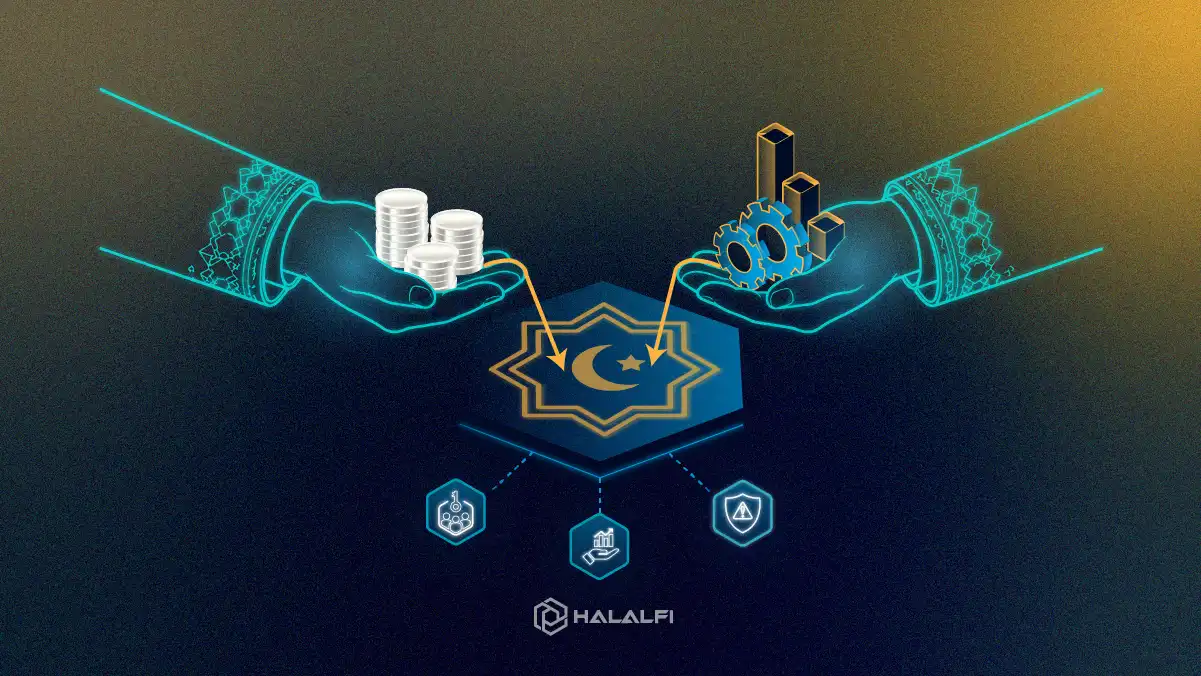
Musharakah enables two or more parties to jointly contribute capital and share profits based on an agreed-upon ratio.
Both parties contribute capital and equally bear losses, encouraging genuine partnership without interest.
In that, one side cannot demand a guaranteed return while pushing every commercial risk onto the other. Profit must come from a real asset, service, or business activity.
Yet the contract needs careful design to ensure fairness and compliance. A well-structured musharakah can uphold Islamic principles and prevent misunderstandings, reassuring readers about its reliability. In this article, we will explain everything about Musharakah.
What Is Musharakah?
In musharakah, two or more parties contribute capital to an asset, project, or business.
They share actual profits according to an agreed ratio and bear financial losses in proportion to their capital contributions, ensuring a fair and transparent distribution of risk that aligns with Islamic principles.
According to IJMAR, musharakah refers to a partnership between two or more parties in which all parties share profits and bear losses.
The partners may contribute cash, assets with an agreed value, or a combination of both. They may also participate in management, although the contract can appoint one partner to handle daily operations.
The agreement should clearly state the capital, business purpose, management powers, profit ratio, loss treatment, reporting duties, dispute process, and exit terms.
A well-defined contract builds trust and reassures readers about the partnership's fairness and reliability.
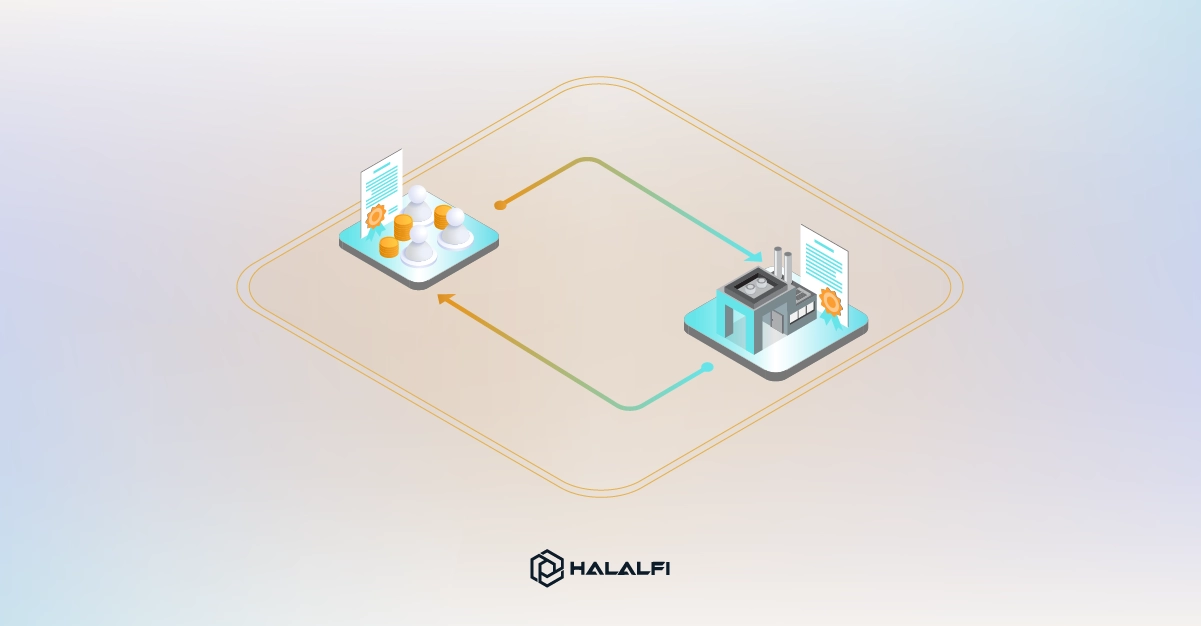
A Real-World Musharakah Example: Home Financing
According to IslamicFinanceGuru, an example comes from Al Rayan Bank in the UK, which uses Diminishing Musharakah as part of its Home Purchase Plan.
Instead of lending a customer money to buy a house, the bank and customer acquire the property through a joint-ownership structure.
The customer then makes payments to gradually purchase the bank's share. As the customer's ownership increases, the bank's share decreases.
The arrangement also includes Ijara, under which the customer makes rental payments for using the portion still owned by the bank.
For example, imagine a buyer initially owns part of a home while the financing provider owns the remainder.
With each acquisition payment, the buyer purchases another portion of the provider's interest. Eventually, the buyer can become the sole owner. This is known as Diminishing Musharakah, or a diminishing partnership.
Is Musharakah Halal?
A halal investment through musharakah creates a genuine partnership. When the partnership follows Sharia rules, funds lawful activities, ensures clear disclosure, and shares genuine outcomes, partners can feel assured of its compliance and integrity.
Profit can follow a ratio that the parties negotiate before the venture begins. That ratio does not always need to match the capital ratio, particularly when one partner contributes more work, expertise, or management.
Loss works differently. Partners normally carry financial loss in proportion to the capital each contributed.
A partner who invested 70% of the capital generally carries 70% of a genuine commercial loss.
Mufti Muhammad Taqi Usmani describes the contract’s wider role in Islamic finance:
“The real alternative to interest in a true Islamic economy is Musharakah and Mudarabah.”
Musharakah becomes non-compliant if the documents promise fixed returns, guarantee capital against normal loss, fund prohibited activities, or disguise interest-like loans with partnership language.
What Is Musharakah in Islamic Banking?
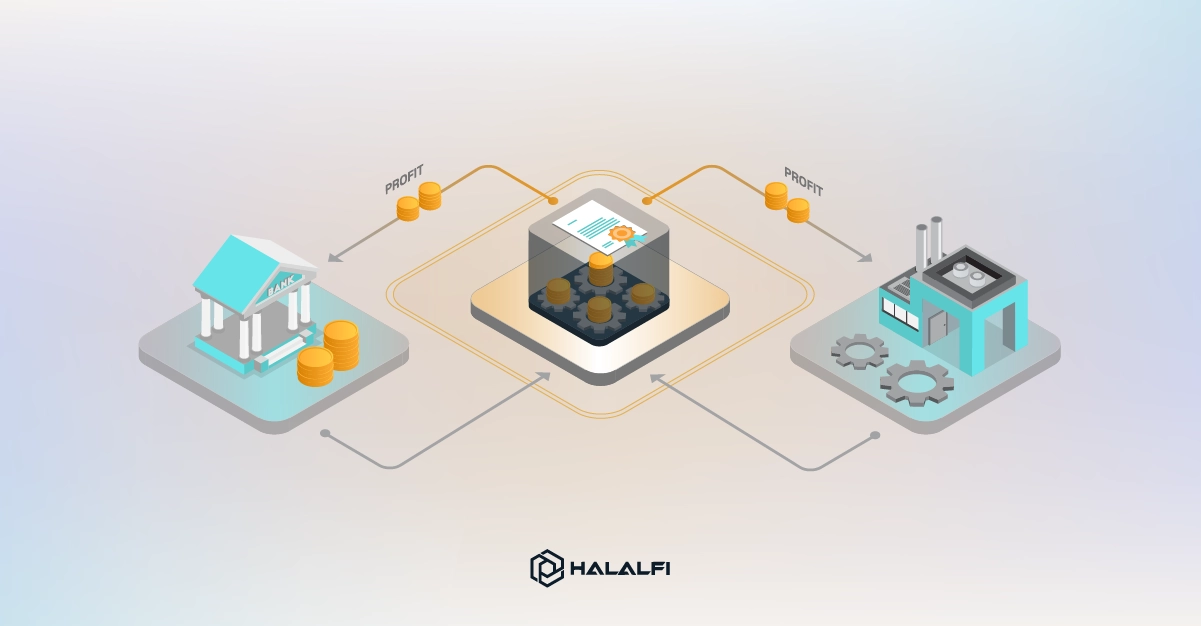
In Islamic banking, musharakah allows a bank and customer to finance an asset, project, or business as partners rather than as lender and borrower.
The bank contributes capital. The customer may contribute capital, management, industry knowledge, or all three. They agree on profit distribution and monitor the venture throughout the contract.
Banks may use musharakah for working capital, property, equipment, project finance, trade, and small-business expansion.
For example, a bank might partner with a small business to finance the purchase of equipment, sharing profits based on actual revenue, which helps readers visualize its practical application and benefits.
The arrangement also creates harder work for the bank. It must understand the business, review financial reports, monitor performance, prevent misuse of funds, and plan a fair exit.
Bank Negara Malaysia’s musharakah policy therefore covers governance, structuring, risk management, financial reporting, disclosure, and market conduct.
It also requires Islamic institutions to help customers understand the contract rather than merely hand them a product sheet.
Types of Musharakah
Bank Negara Malaysia groups musharakah into two broad legal categories:
Partnership through joint ownership
Partnership through a business contract.
Contemporary finance then applies these foundations in several forms.
In the table below, we see how types of musharakah work and what the common uses of each one are:
Type | How it works | Common use |
Shirkah al-Milk | Two or more parties jointly own an asset | Property and jointly purchased assets |
Shirkah al-Aqd | Partners sign a contract to conduct business for profit | Trade, companies, and joint ventures |
Permanent Musharakah | Ownership continues until partners agree to exit or dissolve | Long-term businesses and projects |
Diminishing Musharakah | One partner gradually buys the other partner’s share | Home, property, and equipment finance |
Project Musharakah | Partners finance one defined commercial venture | Construction, trade, and business expansion |
What Is Diminishing Musharakah?
Diminishing musharakah, also known as musharakah mutanaqisah, begins with shared ownership.
One partner then buys the other partner’s units over time until the buyer owns the asset completely. Islamic banks often use it for home finance.
Suppose a home costs $300,000. The customer contributes $60,000, while the bank contributes $240,000. The customer initially owns 20%, and the bank owns 80%.
The customer occupies the property and may pay rent for using the bank’s share. At the same time, the customer purchases small ownership units from the bank.
As the bank’s share falls, rent should reflect the smaller share that the customer uses.
Is Diminishing Musharakah Halal?
Diminishing musharakah is halal when shared ownership exists in substance, not merely on the cover page.
The International Islamic Fiqh Academy permits the structure under several conditions:
The purchase of ownership units should occur through separate sales transactions.
Profit must be based on an agreed percentage rather than a fixed sum.
Ownership costs should follow the partners’ shares, and one partner should not guarantee the other’s original capital against commercial loss.
The following details deserve close attention:
The financier should genuinely own part of the asset.
Rent should apply only to the financier’s remaining share.
Essential ownership expenses should be allocated according to the ownership ratio.
Each unit purchase should represent a real transfer.
The documents should keep partnership, lease, and sale commitments distinct.
Early sale and default terms should not quietly guarantee the bank’s capital at face value.
Musharakah vs. Mudarabah: What Changes?
Some People place mudarabah and musharakah in the same category because both connect returns with business performance. The capital and management roles create the main difference.
Let’s compare differences:
Feature | Musharakah | Mudarabah |
Who provides capital? | Two or more partners | The capital provider |
Who manages? | Any agreed partner or partners | The mudarib manages |
How do partners share profit? | Under a pre-agreed ratio | Under a pre-agreed ratio |
How do they carry financial loss? | By capital contribution | The capital provider carries genuine financial loss |
What does the manager lose after an ordinary failure? | Capital share plus effort, if invested | Time and effort |
When may the manager become liable? | Negligence, misconduct, or breach | Negligence, misconduct, or breach |
Musharakah Compared With Other Islamic Finance Contracts
The best contract depends on what the customer needs. Partnership does not suit every transaction.
In the table below, we compare musharakah with other Islamic Finance Contracts:
Contract | Main relationship | Source of return | Good fit |
Musharakah | Partners contribute capital | Actual business profit | Joint ventures and project finance |
Mudarabah | Capital owner and manager | Actual business profit | Founder with expertise but limited capital |
Murabaha | Seller and buyer | Disclosed sale markup | Purchasing known goods or equipment |
Ijarah | Owner and lessee | Rent from an asset | Property, vehicles, and equipment |
Salam | Buyer prepays for future goods | Value created through sale and delivery | Agriculture and standardized commodities |
Istisna | Buyer orders manufacture or construction | Agreed manufacturing or construction price | Buildings and made-to-order assets |
Wakalah | Principal appoints an agent | Service fee or investment outcome | Asset management and transaction execution |
A wakalah arrangement pays an agent for agreed work. Musharakah makes the parties owners of the venture. Ijarah earns rent on an owned asset, while murabaha earns a disclosed profit on a sale.
The contract should follow the actual commercial need. It should not start with a desired return and then search for Arabic terminology to justify it.
What Can Go Wrong in a Musharakah Contract?
The contract’s greatest strength also creates its hardest problem: partners need trustworthy information.
An information gap hides weak performance or deliberate manipulation. Banks and investors reduce the problem through verified accounts, project-specific wallets, spending limits, milestone releases, stock checks, audit rights, and clear management duties.
Exit also needs attention:
What happens when one partner wants to leave early?
Who values the company?
Can another partner buy the share?
May an outside investor enter?

How HalalFi Brings Partnership Logic to Digital Funding
HalalFi does not state that every listed project uses a pure musharakah contract. Each opportunity may use its own Sharia-reviewed commercial structure.
What the platform shares with musharakah is a focus on real business, non-fixed, performance-based returns, visible project terms, and responsibility tied to the commercial outcome.
Businesses submit funding opportunities for trade, sourcing, distribution, or other permitted activities.
HalalFi reviews each project and receives both business and Sharia review before listing. Investors should examine the purpose, target, duration, expected result, funding progress, and protection status.
Here, investors participate with USDT through the crowdfunding platform. Smart contracts record contributions, distributions, and transaction history on-chain. The business, not USDT price speculation, must create the profit.
That helps address three practical obstacles that often limit partnership finance:
Access: Several investors can support a single project rather than relying on a single bank.
Visibility: On-chain records show how digital funds move.
Screening: Business and Sharia reviews examine the opportunity before funding begins.
Partnership Is a Contract, Not a Marketing Word
In Musharakah, people seeking business profit should understand the business and accept the responsibilities of ownership.
Diminishing musharakah extends that logic to homes, equipment, and other assets. It provides a halal structure when joint ownership, rent, unit purchases, expenses, profit, and loss follow genuine Sharia rules.
HalalFi brings part of this partnership mindset into digital project funding. It gives investors access to reviewed businesses, performance-linked opportunities, USDT settlement, on-chain records, and structured default processes without selling a speculative HalalFi investment token.
So you can visit the HalalFi projects. Ignore the forecast for the first five minutes. Study the business, contract, source of profit, management plan, and treatment of loss. A real partnership should make sense before the numbers look attractive.
Frequently Asked Questions
Can a musharakah partner receive a separate management salary?
A partner may receive compensation for work under a separate, clearly defined arrangement when the Sharia structure permits it.
Can a partner sell their share in a musharakah before the project ends?
The contract may allow an early sale to another partner or an approved third party. The parties should agree in advance on valuation, consent rights, and transfer procedures.
Can Musharakah finance a startup with no trading history?
Yes, but the information risk increases significantly. Investors should examine the founders, product evidence, customer demand, spending controls, milestones, and cash runway.
Can collateral support a musharakah agreement?
Collateral may secure obligations linked to negligence, misconduct, or breach. It should not automatically guarantee one partner against every genuine commercial loss.
Who pays zakat on a musharakah investment?
Treatment depends on the partnership's assets, the investor’s ownership, local rules, and the business's method for calculating zakat.