
What if the money entering your account looks perfectly normal, but the deal behind it involves complex or unfamiliar activities? This is the concept of Halal income in Islam.
Islam does not tell people to avoid profit. It asks where the profit came from, what created it, and whether anyone was deceived or exploited, engaged in riba or gambling, or entered into an unclear contract.
In this guide, we explain how much profit Islam allows, whether savings-account returns qualify as halal, why a “fixed” number can mean two very different things, and how some platforms connect investor capital with screened real-business projects.
What Does Halal Income in Islam Mean?
Halal income comes from permissible work, trade, ownership, services, rent, or investment carried out through a permissible arrangement. The underlying activity matters, but so does the contract.
Selling coffee provides a simple example. Coffee causes no obvious Sharia concern. Yet a dishonest seller who hides defects, manipulates measurements, or takes someone’s money without delivering the agreed goods creates another problem. A halal product does not excuse a dishonest transaction.
The Qur’an gives the foundation in Surah An-Nisa 4:29:
يَـٰٓأَيُّهَا ٱلَّذِينَ ءَامَنُوا۟ لَا تَأْكُلُوٓا۟ أَمْوَٰلَكُم بَيْنَكُم بِٱلْبَـٰطِلِ إِلَّآ أَن تَكُونَ تِجَـٰرَةً عَن تَرَاضٍۢ مِّنكُمْ ۚ وَلَا تَقْتُلُوٓا۟ أَنفُسَكُمْ ۚ إِنَّ ٱللَّهَ كَانَ بِكُمْ رَحِيمًۭا
“Do not devour one another’s wealth illegally, but rather trade by mutual consent. And do not kill ˹each other or˺ yourselves. Surely Allah is ever Merciful to you.”
It shapes modern Islamic finance.
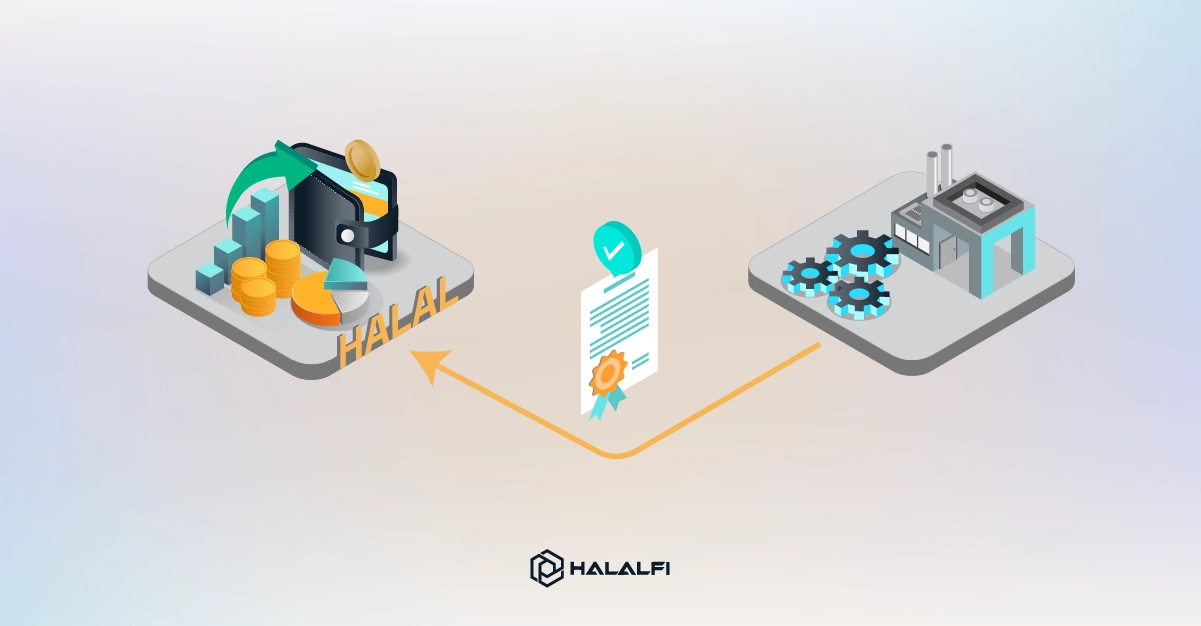
How Much Profit Is Halal in Islam?
There is no universal Sharia rule that says a trader may earn only 10%, 20% or 30% profit.
Islamic law does not prescribe a maximum or minimum profit rate for cash and installment sales. It also advises sellers not to overcharge and encourages generosity in commercial dealings. People often search for a magic “halal profit percentage.” The number alone cannot answer the question.
Suppose a merchant buys a specialist machine for $1,000. Few suppliers stock it locally. The merchant pays freight, storage, insurance, customs, and marketing, then sells it for $1,500.
That represents a 50% markup on the purchase price. Does 50% automatically make the sale haram? No. The buyer knows the final price. The merchant owns what he sells. Both sides agree, and the transaction contains no interest-bearing loan simply because the merchant earns $500.
Is There a Halal Profit Percentage in Islam?
Think of the halal profit percentage in Islam as a contract question, not a ceiling.
Situation | 20% profit | 50% profit | What really matters? |
Honest sale of permissible goods | Can be halal | Can be halal | Consent, ownership, disclosure |
Hidden product defect | Problematic | Problematic | Deception matters |
Guaranteed extra payment on a cash loan | Riba concern | Riba concern | Source of return |
Profit-sharing investment | Possible | Possible | Actual business performance |
Gambling or prohibited business | Haram concern | Haram concern | Underlying activity |
Sharia does not impose a single percentage on ordinary trade, although fairness and the avoidance of exploitation still matter.
So a 5% return does not automatically become halal because it looks modest. A 40% trading profit does not automatically become haram because it looks high. You should know what produced the return.
Profit on Savings Account: Halal or Haram?
Banks sometimes use “profit,” “return,” “yield,” and “interest” in marketing. Sharia looks past the label.
A conventional savings account places money with a bank and promises an increase based on the deposit amount and the time period. Mainstream Islamic finance treats predetermined interest on deposited funds as riba rather than commercial profit. The Qur’anic prohibition concerns the structure, not whether a bank calls the payment 2%, 5% or 0.5%.
An Islamic savings or investment account works differently. Read the contract, ask what the bank does with the money, how it calculates profit,t and whether competent Sharia supervision covers the structure.
Fixed Profit: One Phrase, Two Very Different Deals
The phrase fixed profit needs careful handling.
A fixed sale price can qualify as halal. Imagine a seller owns a laptop that cost $900 and sells it for $1,100 payable later. Both parties know the $1,100 price when they sign. Islamic finance structures sales, such as murabaha, around an agreed-upon markup and deferred payment.
That differs from lending someone $900 cash and requiring $1,100 back solely because time passed.
It also differs from promising an investor, “Give this business $10,000, and you will receive exactly $2,000 profit regardless of whether the business earns anything.”
So “fixed” does not automatically equal haram. The contract underneath the number decides the issue.
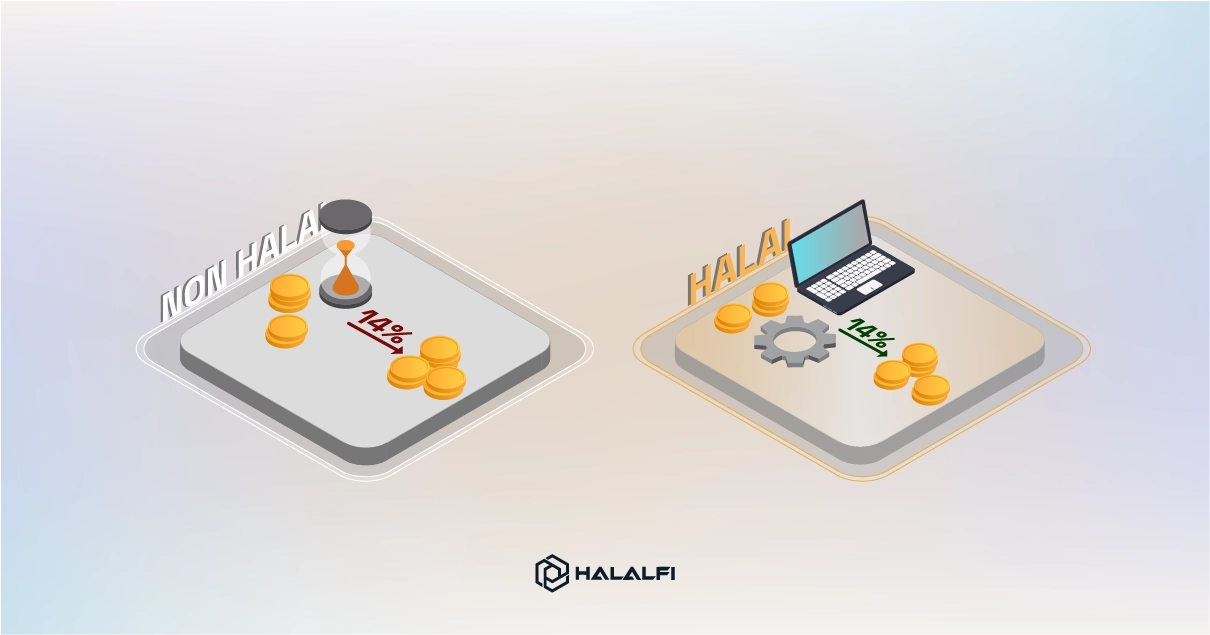
From Halal Income to Halal Investment: Where the Money Goes Matters
Earning a clean salary solves only half the problem.
Imagine someone saves $15,000 from work over several years. The job pays halal income. Now that money sits idle.
The person could place it in an interest-bearing account, buy shares without checking the business, chase a crypto scheme that promises 8% every month, or investigate investments where she understands what the capital funds and how the return arises.
The original $15,000 remains the same in each scenario. The contract changes everything.
That is why a halal investment cannot rely on a “halal” badge alone. Investors should examine the business activity, ownership, debt structure, source of return, and level of uncertainty.
How HalalFi Connects Halal Profit to Real Business
Here HalalFi becomes relevant to the halal-income discussion. Its model focuses on connecting investors with project-based commercial opportunities rather than generating returns from idle USDT. Elements of the model include:
Project-based investment: Investors participate in specific commercial opportunities rather than earn fixed interest on deposited funds.
Sharia and business review: Each project is reviewed to assess whether the business activity is permissible and whether the commercial structure meets required criteria before being presented to investors.
Real business activity: Funded projects may involve sourcing, trading, or distributing goods and services.
USDT-based participation: Investors use USDT to participate in selected projects.
Performance-based returns: Returns depend on the outcome of the underlying project rather than a guaranteed fixed payment.
Blockchain infrastructure: Blockchain records are used to track funding activity, capital distribution, return allocation, and settlement.
Investor visibility: Before committing capital, investors can review project details, including funding targets, duration, expected returns, business information, and available protection mechanisms.
Role of technology: Blockchain and smart contracts provide infrastructure and transparency, but they do not determine whether an investment is halal.
Sharia foundation: The halal assessment depends on the underlying business activity, contract structure, and financial arrangement.
Halal Income in Islam Is About the Route, Not Just the Result
A bank statement only shows what arrived. Islam asks what happened before the number appeared. A $1,000 profit can be made by selling useful goods honestly. The same $1,000 can come from loan interest. It can come from rent, business ownership, skilled work, or a prohibited activity. Looking only at the amount erases what matters most.
In HalalFi, instead of presenting money itself as the product, it connects capital with reviewed commercial projects and ties potential profit to their performance. Investors can inspect what a project does before deciding whether it deserves their USDT.
Do not begin with the annual percentage. Open the project first, read what the business sells, check the timeline, study the profit structure, understand the protection terms, and look at what remains uncertain. Then decide.
A transparent route from capital, real business, and actual profit makes the right questions much easier to ask.
Frequently Asked Questions
Can a Muslim work in finance and still earn halal income?
A finance degree or job title does not automatically make income halal or haram; the actual role and activity matter.
Is rental income halal?
Rental income can qualify as halal when someone owns or lawfully controls the property, rents it for permissible use, and follows a fair contract.
Is affiliate-marketing income halal?
It can be. The promoted product should qualify as permissible, and the marketer should avoid deception, false claims, and dishonest reviews.
Can someone earn halal income through crypto?
Possibly, but “crypto” covers very different arrangements. Buying an asset, staking, lending, derivatives, and funding a business do not share one Sharia ruling. The economic activity and contract matter.
Does receiving a large profit make income suspicious?
No. A large profit by itself does not establish that something is haram. Examine the business, contract, ownership, consent,t and source of the return.
Can halal income still involve financial risk?
Yes. Trade, ownership, and investment naturally involve commercial risk.