Could a good business raise growth capital from hundreds of people instead of waiting for one bank to say yes? Crowdfunding gives founders that option.
Yet raising donations for a community project and asking investors to fund a revenue-producing company sits in very different legal and financial territory.
For South African founders, that difference has become hard to ignore. OECD data published in 2026 puts the financing gap for the country's micro, small and medium enterprises at about R350 billion.
Only 7% of MSMEs used a formal business loan to start, while savings, salaries, and friends and family still provide much of the initial capital for a company.
That funding gap explains the appeal. A founder can use a crowdfunding platform to find customers, supporters, or investors before a traditional financier takes interest.
Crowdfunding in South Africa for startups: why the timing looks different
South African startup funding recovered in 2025, but capital still flowed to a relatively small circle of companies.
Disrupt Africa reported that 42 South African tech startups raised about US$335.9 million in 2025, a 234% increase from the US$100.4 million reported for 2024. Fintech alone collected roughly US$125 million.
A profitable Cape Town manufacturer that needs R600,000 for machinery does not necessarily fit the profile of a venture fund. Neither does a Durban retailer that wants inventory for its next expansion.
That is where crowdfunding for small businesses earns attention. Instead of designing the company around a funder's mandate, the entrepreneur can put a specific opportunity in front of a community.
The campaign may pre-sell a product, collect donations, issue an investment instrument or finance a defined commercial activity.
Nicola Gubb, SAVCA says:
“Behind these numbers lies the story of a maturing market, more sophisticated capital deployment, deeper investor networks...”
How does crowdfunding work in South Africa?
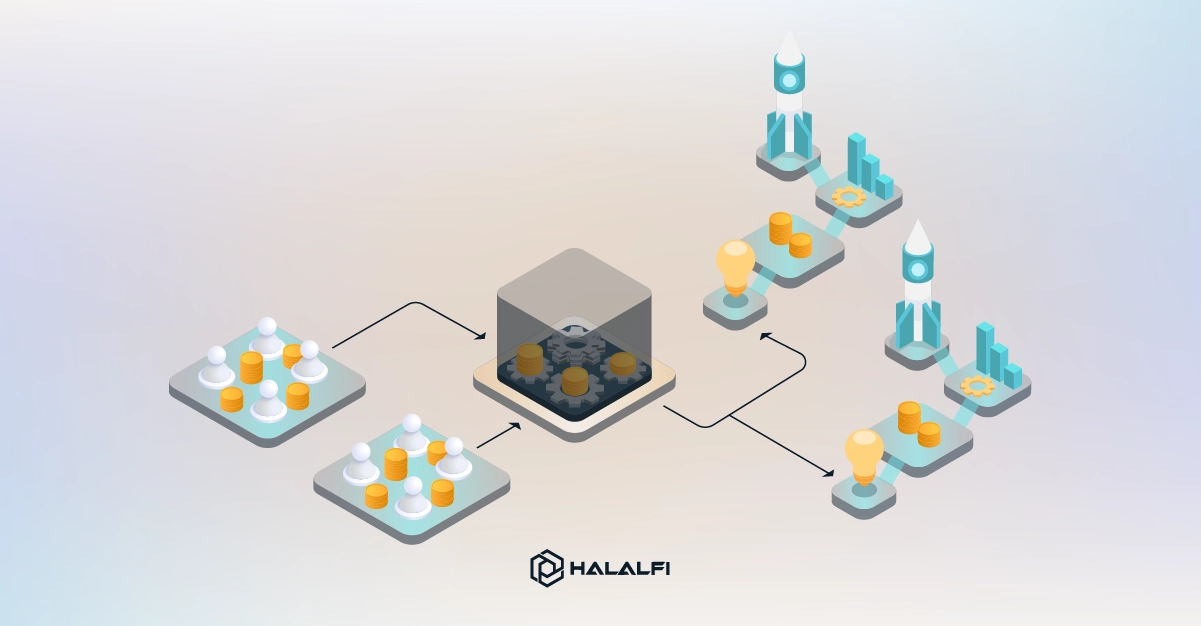
Crowdfunding divides a funding target among many participants.
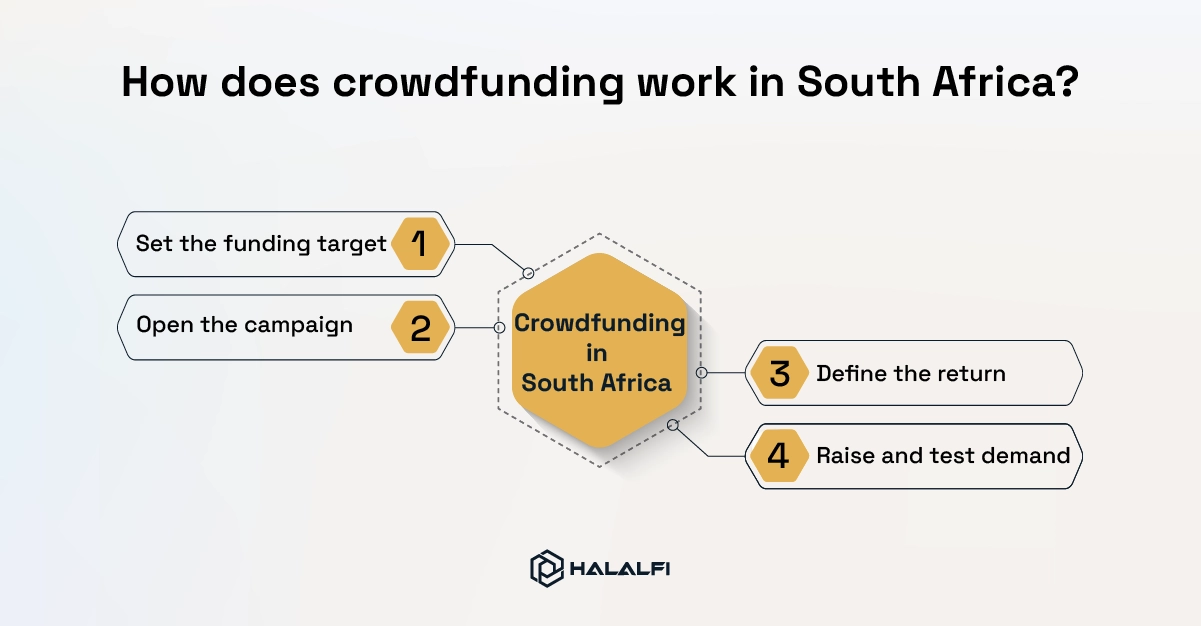
Set the funding target: A business decides how much capital it needs, and explains how it will use the money.
Open the campaign: Instead of seeking a single large investor, the business invites many people to contribute smaller amounts.
Define the return: Contributors may receive rewards, equity, repayment, profit participation, or nothing beyond supporting the cause. This choice affects both risk and regulation.
Raise and test demand: A successful campaign can do more than provide capital. If hundreds of people fund or pre-order a product, the business also gains early evidence of real demand.
Real Crowdfunding Platforms in South Africa You Should Know
South Africa has real crowdfunding opportunities and models. BackaBuddy focuses on donations for medical care, education and emergencies.
Thundafund uses rewards-based crowdfunding, in which supporters receive products or experiences rather than ownership, and charges a 7% fee on successful standard campaigns.
The People’s Fund follows a different path by funding productive business assets and linking investor returns to royalties generated by those assets.
Let's compare these platforms in the table below:
Platform | Model | Main use | Real South African evidence |
BackaBuddy | Donation-based | Medical costs, education, emergencies, community causes | The platform reports supporting 150,000+ campaigns and raising R1 billion+ from 2015–2025. |
Thundafund | Rewards-based | Creative projects, products, businesses and innovation | Thundafund describes itself as a rewards-based crowdfunding platform operating in South Africa. Campaign creators generally offer products, experiences or recognition in return for support. |
The People's Fund | Asset/royalty crowdfunding | Funding productive assets for qualifying businesses | The People's Fund describes its model as crowdfunding assets for BEE Level 1 beneficiaries, with the crowd receiving a royalty linked to products made or delivered using those assets. |
Equity Crowdfunding for South African Startups
Uprise.Africa launched in 2017 as a South African equity crowdfunding platform, giving investors access to private businesses. One notable campaign involved Drifter Breweries, which raised R3.9 million through the platform.
Today, however, Uprise.Africa appears to have moved away from its original crowdfunding marketplace toward an unlisted investment fund model.
Investors should therefore verify its current structure before treating it as an active equity crowdfunding platform.
South Africa has experience with donation, rewards, equity, and asset-backed crowdfunding, but each model works differently and requires careful checks of fees, legal structure, and investor rights.
A South African crowdfunding story
FSCA fintech research highlighted MySurfer, which needed funding to install low-cost wireless internet across 175 buildings.
The People’s Fund supported projects like this through an early alternative-finance model.
The example shows why crowdfunding can suit growing businesses: instead of focusing only on collateral or credit history, investors can assess the project itself, how the capital will be used, and whether that activity can generate enough revenue to support returns.
That explains why business crowdfunding searches in South Africa sit beside searches for loans, grants and angel investors.
A crowdfunding campaign does not replace those routes. For some businesses, it fills the awkward space between proving a business works and becoming large enough for institutional funding.
Is crowdfunding legal in South Africa?
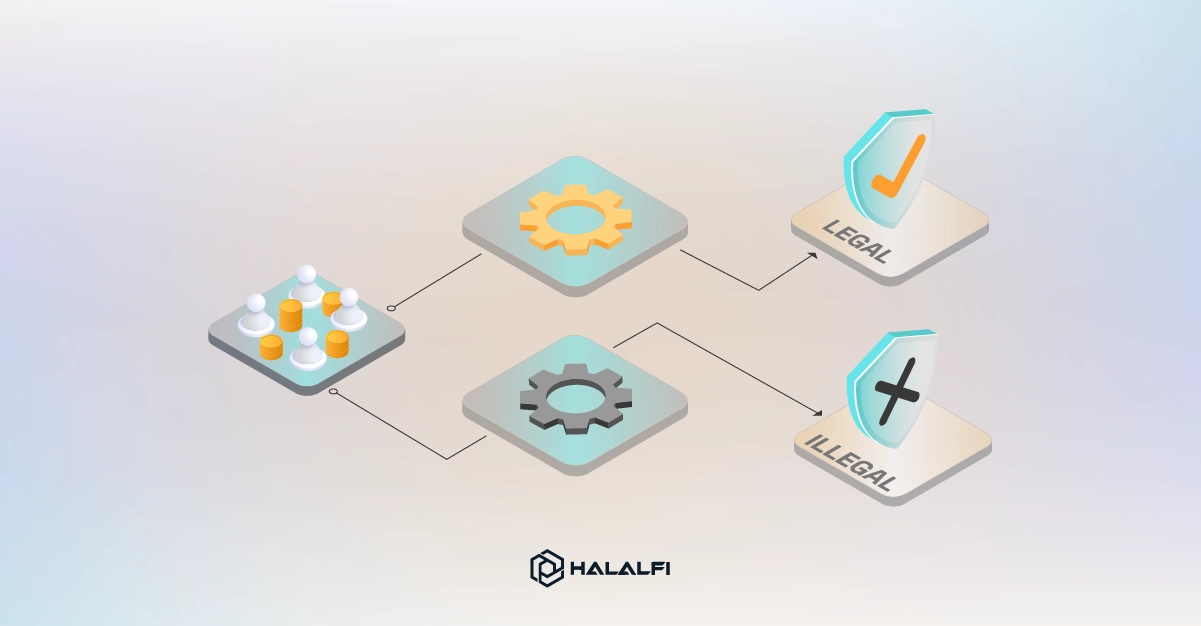
Crowdfunding is legal in South Africa, but there is no single law that covers all models. Equity campaigns may trigger Companies Act and prospectus rules, while debt crowdfunding can fall under credit regulation.
Pooling investor money may also raise collective-investment issues, and platforms offering financial advice or intermediary services can trigger FAIS requirements. The rules depend on what the campaign actually does, not on the “crowdfunding” label.
For crypto crowdfunding, the rules are different. The FSCA declared crypto assets financial products under the FAIS Act in October 2022. Its 2025–2028 strategy says more than 250 crypto-asset service providers had obtained licenses following that change.
Online fundraising South Africa: choosing the model before the platform
A person raising money for medical treatment needs a different South African fundraising platform from a company offering investors a share of profit.
People often start by comparing platform fees before deciding what type of transaction they actually need.
Donation-led sites such as BackaBuddy demonstrate the size of community fundraising. An archived BackaBuddy snapshot reported more than R509 million raised across 67,132 causes.
Its current success pages continue to feature education, medical and community campaigns. That model relies on generosity rather than financial return.
Startups need a different calculation. Before selecting a platform, founders should know the required amount, the exact use of funds, the investor or backer benefit, the campaign deadline, and what happens if the target is not met.
Crowdfunding is More Than Access to Capital
South Africa already has a growing crowdfunding culture, from donation campaigns to startup funding. But what if crowdfunding could go one step further and connect capital with a real, revenue-generating business?
That is where HalalFi brings a different view. Instead of treating crowdfunding as a simple fundraising page, its model focuses on specific business projects, with funding linked to the activity those businesses actually perform.
Projects go through Sharia and business reviews, while smart contracts record participation and distributions on-chain.
If you are a South African investor, it creates an interesting bridge between crowdfunding and project-based finance.
Rather than investing only because a campaign looks attractive, investors can examine what the business does, where the money goes, how returns are generated, and what protections apply to the deal.
So you should review Halafi projects, read the project terms, review the revenue model, understand any collateral or guarantor structure, and check the eligibility information before committing capital.
The most interesting part of crowdfunding may be giving the crowd a clearer way to decide which businesses deserve its money.
What makes a South African crowdfunding campaign worth backing?
For founders, the strongest campaigns rarely start with “support our dream.” They start with proof. Show the customer problem. Show what already works. Show exactly what another R300,000 or R3 million changes.
For investors, reverse the process. Ignore the excitement for a minute and follow the money.
If the business raises R1 million, where does each rand go? What event creates revenue? How does the investor participate in that revenue? Who absorbs the loss when assumptions fail?
That mindset makes crowdfunding in SA more useful for both sides. Founders gain an audience that understands the deal.
Investors gain something better than a catchy funding page: enough information to say yes, no, or not yet.
Conclusion
South Africa does not lack entrepreneurs. It lacks enough practical routes between an early business and the capital needed for its next stage.
With an R350 billion MSME financing gap, crowdfunding for startups in South Africa deserves serious attention alongside loans, venture capital, and government funding.
The opportunity gets more interesting as models such as HalalFi connect crowdfunding platform with real-world businesses, blockchain records, data, and performance-based finance. Still, technology should make due diligence easier, not replace it.
If you are curious about HalalFi, explore the projects, understand how profits arise, and read the audit and protection terms.
If the structure fits both personal values and risk tolerance, the decision starts from evidence rather than hype.
Frequently Asked Questions
Can South Africans receive crowdfunding money from overseas?
Yes, but the transaction can trigger tax, banking, exchange-control or regulatory considerations depending on whether the money represents a donation, sale, loan or investment.
Are crowdfunding profits taxable in South Africa?
They can be. The tax outcome depends on what created the profit and the investor's circumstances.
Is crowdfunding a good option for small businesses in South Africa?
It can be, especially for businesses that already have customers and a clear reason for raising capital. A successful campaign can provide funding while also testing market demand.
How much money can a South African business raise through crowdfunding?
There is no single crowdfunding limit that applies to every model. The amount depends on the campaign structure, the platform, the type of financial product offered, and the applicable laws.
What should investors check before joining a crowdfunding campaign in South Africa?
Start with the business model and the use of funds. Then check who operates the platform, what legal rights investors receive, how returns get calculated, whether the investment has collateral, and what happens if the project fails.
Can foreigners invest in South African crowdfunding projects?
Some platforms may accept international investors, but eligibility depends on the platform, the investment structure, currency rules, tax obligations, and South African financial regulations.