Have you ever clicked “invest” on a crowdfunding platform and quietly wondered what happens next?
That question is becoming more important as crowdfunding opportunities expand worldwide.
From crypto crowdfunding experiments to traditional startup funding, money now moves faster than trust can keep up. In the midst of this change, the best crowdfunding opportunities are working to rebuild that trust through real businesses, transparent structures, and ethical finance models.
Crowdfunding today is about deciding what kind of economy gets funded, and who gets left out. Let's see.
What Are Crowdfunding Opportunities in the Economy?
Crowdfunding is the practice of raising capital from a large number of people, usually through digital platforms. But in recent years, it had evolved into something far bigger than donation-based campaigns.
According to IntelMarketResearch, the global crowdfunding market reached $17.7 billion in 2024, and analysts expect it to grow at a compound annual growth rate (CAGR) of 8.2% through 2032.
In some countries, it has become a leading Islamic fintech hub. In the Middle East, UAE fintech investments have grown by more than 30% year-on-year, while Saudi Arabia’s Vision 2030 programs continue pushing startup financing and SME development.
So Crowdfunding opportunities are not side tools; they are becoming part of the financial infrastructure.
Is Crowdfunding a Good Way to Raise Money?
Crowdfunding has become one of the most effective ways for startups and growing businesses to secure funding.
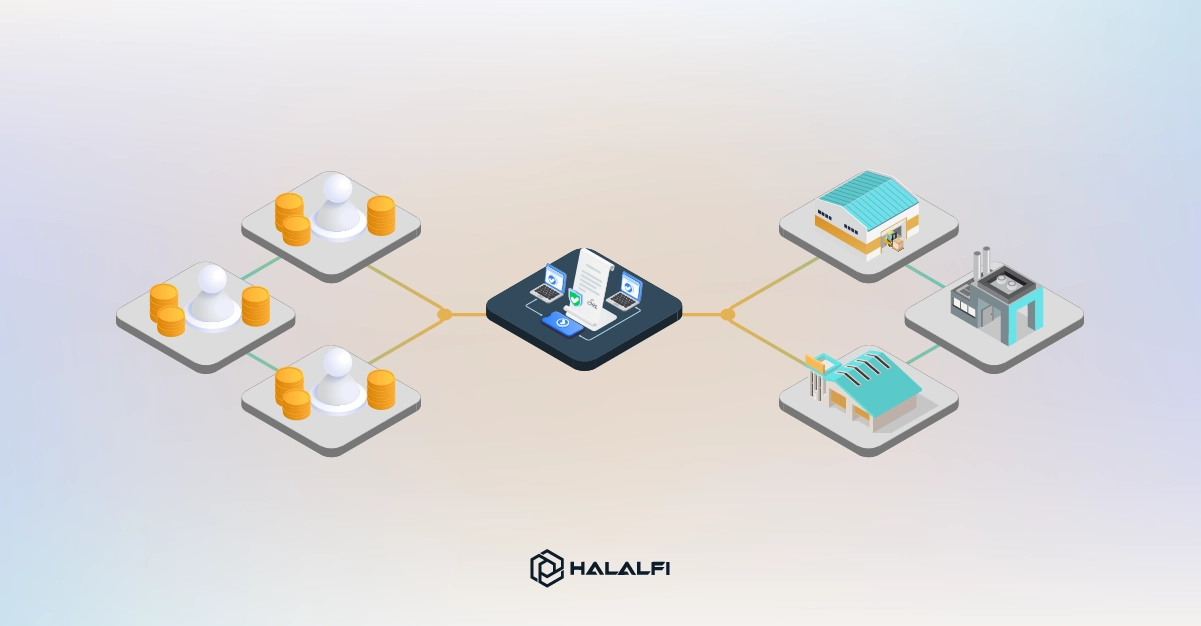
Connecting entrepreneurs directly with a large pool of investors through online platforms expands access to capital and allows investors to support real businesses with growth potential.
Easy access to capital: Businesses raise funds from a large number of investors without relying solely on banks or venture capital.
Supports big ideas: Crowdfunding helps startups and SMEs secure financing even if they lack traditional funding options.
Global reach: Online platforms enable founders to attract investors worldwide.
Builds community and trust: Investors become part of the project's journey, especially when platforms offer transparency and regular updates.
Flexible funding models: Options include equity, reward-based, donation-based, and ethical or Sharia-compliant crowdfunding.
Encourages innovation: Entrepreneurs can validate demand and fund new products or services before full-scale launch.
Growing market: it is becoming an important part of modern financial infrastructure.
Better opportunities with transparent platforms: Crowdfunding works best when platforms provide business verification, audits, and clear reporting, helping reduce risk for both founders and investors.
Crowdfunding Opportunities vs Traditional Investment Models
This comparison shows why crowdfunding opportunities are growing: they reduce barriers. But they also need a stronger structure to reduce uncertainty. Let’s talk about it clearly.
Feature | Traditional Finance | Crowdfunding Platforms | HalalFi Model |
Access | Restricted | Open to the public | Open + vetted businesses |
Transparency | Low | Medium | High (blockchain-based) |
Returns | Fixed or market-based | Variable | Performance-based |
Risk | Market-driven | Project risk | Business-backed + audits |
Purpose | Profit-first | Mixed goals | Ethical + real economy focus |
Why Crowdfunding Platforms Are Growing So Fast
If you scroll through discussions on startup investing or threads about passive income, one theme repeats: people want access, but they also want transparency.
Traditional banking feels slow, venture capital feels exclusive, and stock markets feel disconnected. Crowdfunding sits awkwardly in the middle: fast and accessible, but sometimes uncertain.
Trust is becoming the new currency in digital finance systems. That is why crowdfunding platforms are scaling globally. They offer something traditional finance often doesn’t: direct participation.
But speed without structure creates risk.
Crypto Crowdfunding: Innovation or Illusion?
Crypto crowdfunding entered the scene with bold promises: decentralization, global access, and instant liquidity. And in many ways, it delivered. But it also created a new problem: speculation overload.
Memecoins, high-yield staking schemes, and token launches often prioritize hype over real business value. Many investors entered expecting growth and ended up exposed to volatility cycles.
You should consider that we didn’t need faster speculation. We needed patient capital that understands real revenue.
So here, a new category is emerging: Investors fund real-economy crowdfunding by backing businesses with actual cash flow rather than relying on narratives or speculation.
Risk Exists in Crowdfunding Opportunities
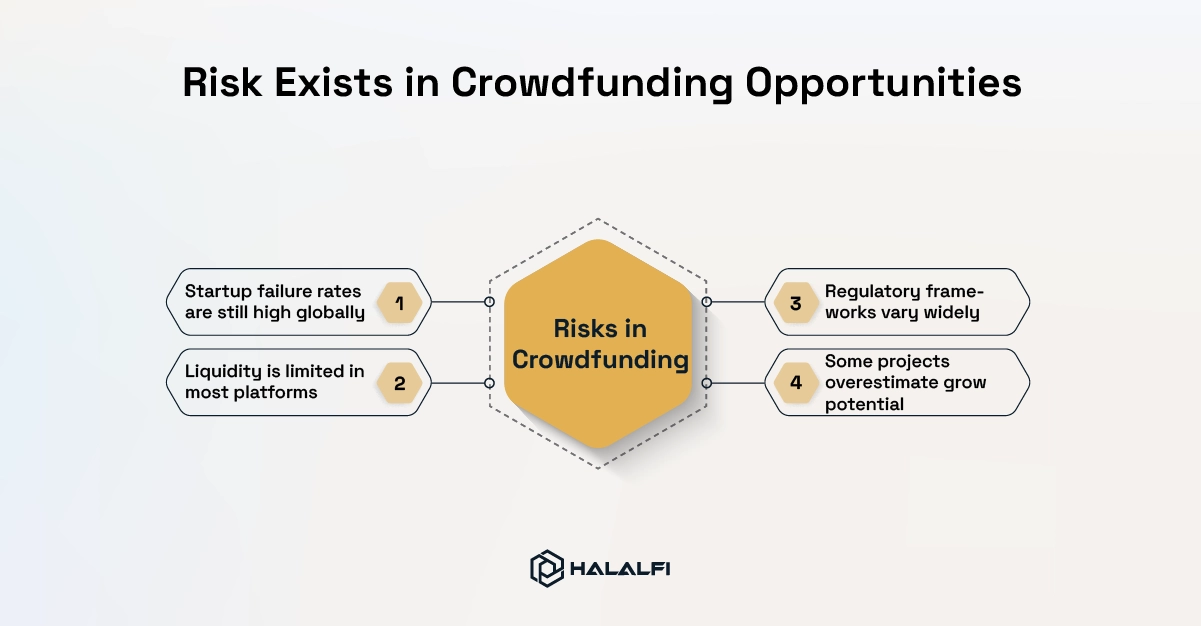
Even with innovation, risks remain on a crowdfunding platform:
Startup failure rates are still high globally
Liquidity is limited in most platforms
Regulatory frameworks vary widely
Some projects overestimate growth potential
So due diligence matters more than hype. Platforms that include audits, verification, and real business backing reduce these risks significantly.
Why Halal Crowdfunding Opportunities Are Growing Globally
Halal crowdfunding is not only a religious concept. It is becoming a financial design choice.
A World Bank report estimates that the Islamic finance industry manages over $3.9 trillion in assets globally. But demand still exceeds supply in many regions.
Muslim investors struggle to find platforms that avoid interest-based systems while still offering growth opportunities.
That gap is where structured platforms like HalalFi are positioning themselves, not as ideology-driven tools, but as practical financial infrastructure.
Investors want control, not complexity. On the other side, investors want transparency, and founders want fairness. Most platforms deliver neither properly. So capital exists, but trust systems are fragmented.
How do Islamic crowdfunding opportunities work?
Most platforms solve one problem: access to capital. Halal crowdfunding goes beyond the surface by examining how capital behaves after investors raise it.
Instead of speculation-driven funding, these platforms connect investors with real, revenue-generating businesses through structured, Sharia-compliant agreements.
They act less like a trading platform and more like a funding infrastructure layer for ethical investment.
Crowdfunding sounds simple on the surface. But three major issues appear repeatedly:
Lack of trust: Many platforms rely on self-reported data.
Weak accountability: Startups may disappear after funding.
Speculative behavior: Returns are often unclear or exaggerated.
Islamic crowdfunding opportunities address these through structure rather than promises.
HalalFi’s Model in Crowdfunding Opportunities
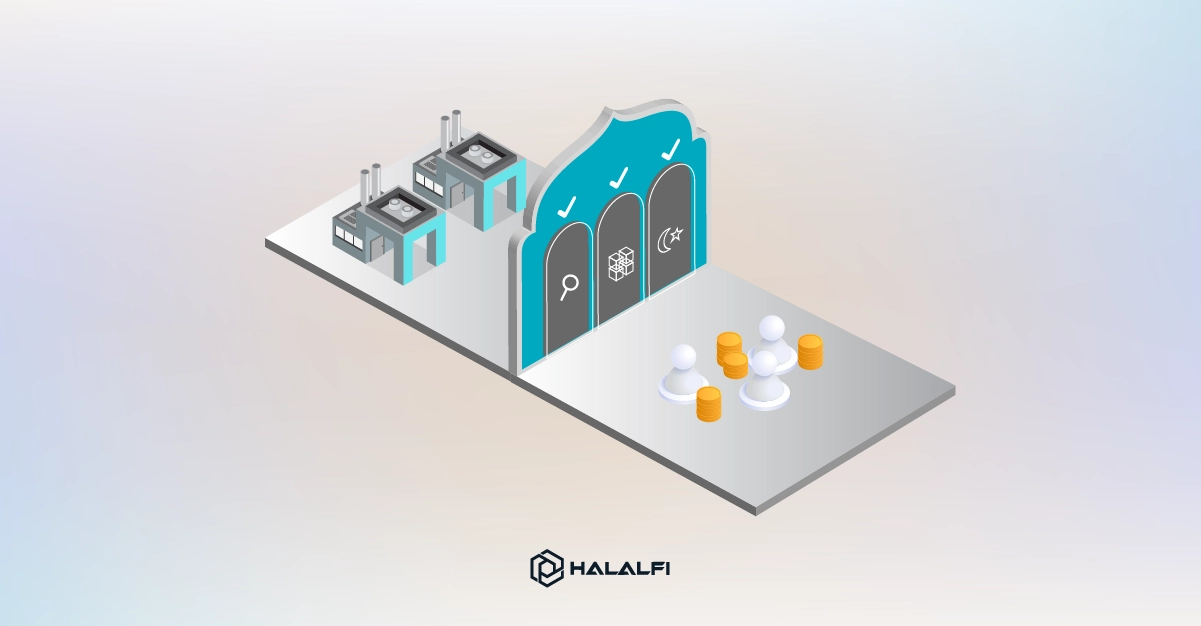
Unlike many crowdfunding platforms that prioritize rapid scaling or token incentives, HalalFi prioritizes alignment. It connects three layers:
Real businesses needing capital
Investors seeking ethical returns
Transparent systems ensuring accountability
The platform, instead of turning investment into speculation, turns it into participation in real economic activity.
Traditional crowdfunding often stops at funding; HalalFi continues into governance and verification.
Traditional platforms: “Fund and hope”
HalalFi model: “Fund, verify, and track performance”
That difference can significantly change investor behavior with:
Dual Audit System
Every project must pass:
Financial viability checks
Sharia compliance review
Real Business Requirement
Only cash-flowing or operational businesses qualify.
Blockchain Transparency
Transactions and allocations are recorded on-chain for traceability.
The structure creates a funding environment closer to “verified participation” than blind investing.
Best Crowdfunding Opportunities
Not all crowdfunding opportunities offer the same value. The strongest opportunities are typically found on platforms that prioritize real businesses, transparent financial reporting, and clear investment structures over speculation or short-term hype.
Some of the most promising sectors for crowdfunding today include technology startups, renewable energy, real estate, consumer products, and SMEs with proven revenue models.
As the industry evolves, investors are increasingly looking for projects that combine growth potential with accountability and long-term sustainability.
If you're looking for these opportunities, check out HalalFi Projects. Instead of funding speculative ideas, investors can review real operating businesses, follow project performance, and participate in opportunities backed by structured due diligence.
Conclusion
Crowdfunding is not an alternative financial tool. It is becoming a parallel financial system. Platforms like HalalFi show where this evolution is heading, toward transparency, real-world asset backing, and ethical alignment.
The future of crowdfunding opportunities will belong to the most trustworthy ones. Investors and founders need to understand which crowdfunding system best reflects the world we want to build, and crowdfunding business opportunities allow them to earn money from ethical businesses.
Frequently Asked Questions
What are crowdfunding opportunities in today’s economy?
Crowdfunding is a way for individuals to invest in or support businesses, startups, or projects through online platforms.
Which industries currently offer the strongest crowdfunding opportunities?
Technology startups, renewable energy, real estate development, and consumer products dominate crowdfunding platforms.
Why are crowdfunding opportunities growing so fast globally?
Traditional funding systems restrict access because banks demand collateral, venture capital firms select only a few startups, and many small businesses fail to secure financing.
What risks should investors consider before joining crowdfunding opportunities?
The risks include project failure, liquidity shortages, weak regulation in some regions, and incomplete financial transparency.
How is crypto crowdfunding changing traditional crowdfunding opportunities?
Crypto crowdfunding introduces faster transactions, borderless participation, and tokenized ownership models.
Is crowdfunding a good investment?
Crowdfunding can be a good investment when it supports well-vetted businesses with transparent financial models and realistic growth potential.