
Can Islamic banking really finance a home, fund a business, and make a profit without charging interest? Yes, but the mechanics matter far more than the label on the bank’s door. A fixed payment may be halal in one contract and impermissible in another. That small detail explains most of the confusion.
This guide follows the money. It explains riba, gharar, Murabaha, Mudarabah, Musharakah, Ijarah, Salam, Tawarruq and Wakalah in plain English. It also compares Islamic banking with conventional banking.
What is Islamic banking?
Islamic banking provides financial services through contracts that follow Sharia principles. The rule is that a lender cannot lend money simply to receive more money because time has passed. Profit needs another legitimate basis, such as a sale, lease, partnership, investment or service.
The Bank of England says:
“You should not be able to make money from money simply.”
That does not mean banks work for free. An Islamic bank still needs revenue, staff, capital and risk controls. It earns money through permitted commercial contracts rather than conventional interest-bearing loans.
Islamic banking also restricts excessive contractual uncertainty, known as gharar, gambling or maysir, and financing for prohibited activities. Transactions generally need a genuine economic purpose and clearly defined obligations.
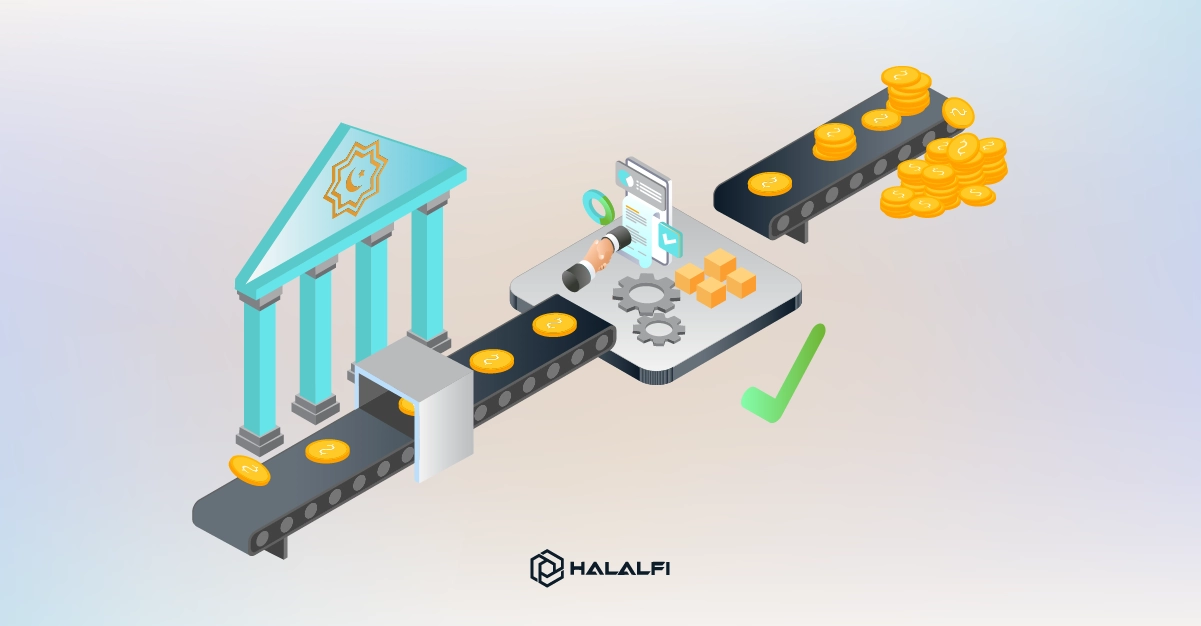
Islamic banking and finance is now a $6 trillion market
This is no longer a tiny specialist corner of finance. ICD and LSEG calculated global Islamic finance assets at $5.98 trillion in 2024, up 21% from the previous year. Islamic banking represented about 72% of the total. Their 2025 report projects assets around $9.7 trillion by 2029.
Bank Negara Malaysia gave an even fresher snapshot in August 2026. Its deputy governor said more than 2,200 Islamic financial institutions now operate globally, managing roughly $6 trillion, with the total projected to approach $9.6 trillion by 2030.
What are the basic principles of Islamic banking?
Islamic banking follows basic principles through Islamic finance that shape how money can generate a return:
No riba: Returns cannot come from interest-bearing loans. Profit must come from trade, leasing, investment, or another permitted commercial activity.
Limited gharar: Contracts should clearly state the price, asset, obligations and major conditions.
Real ownership: In structures such as Murabaha, the financier should own the asset before selling it.
Permitted sectors: Financing should avoid businesses such as gambling, alcohol and other prohibited activities.
Risk and reward: Investment returns should reflect genuine commercial activity and exposure to business risk.
Sharia governance: Islamic banks use Sharia boards, compliance controls and audits to review products and contracts.
How does Islamic banking work without interest?
The easiest way to understand an Islamic banking loan is to stop thinking of every financing arrangement as a loan.
A genuine interest-free loan exists; it is called Qard Hasan. The borrower returns the principal without a contractual financial gain for the lender. Commercial banks, naturally, cannot build their entire business around free lending. So banks use other contracts.
In the table below, the contracts show why Islamic banking does not rely on a single source of income. Profit can come from a real sale, business performance, rent, or an investment arrangement, depending on the contract. The sources of return, ownership, and risk allocation determine how each structure works.
Contract | What happens | Where the return comes from |
Murabaha | Bank buys an asset and resells it at disclosed cost plus profit | Sale profit |
Mudarabah | One party supplies capital; another manages the venture | Share of actual profit |
Musharakah | Two or more parties contribute capital | Shared business profit |
Ijarah | Bank owns an asset and leases its use | Rent |
Salam | Buyer pays now for specified goods delivered later | Trade margin |
Wakalah | Investor appoints an agent to invest under agreed terms | Investment result and/or agency fee |
Tawarruq | Commodity transactions create access to cash | Deferred sale margin |
Ijarah also comes in different forms:
A standard operating Ijarah leases an asset.
Ijarah muntahia bittamleek adds a route for ownership to pass to the customer at or near the end of the lease.
Murabaha in Islamic banking, and why can its profit be fixed?
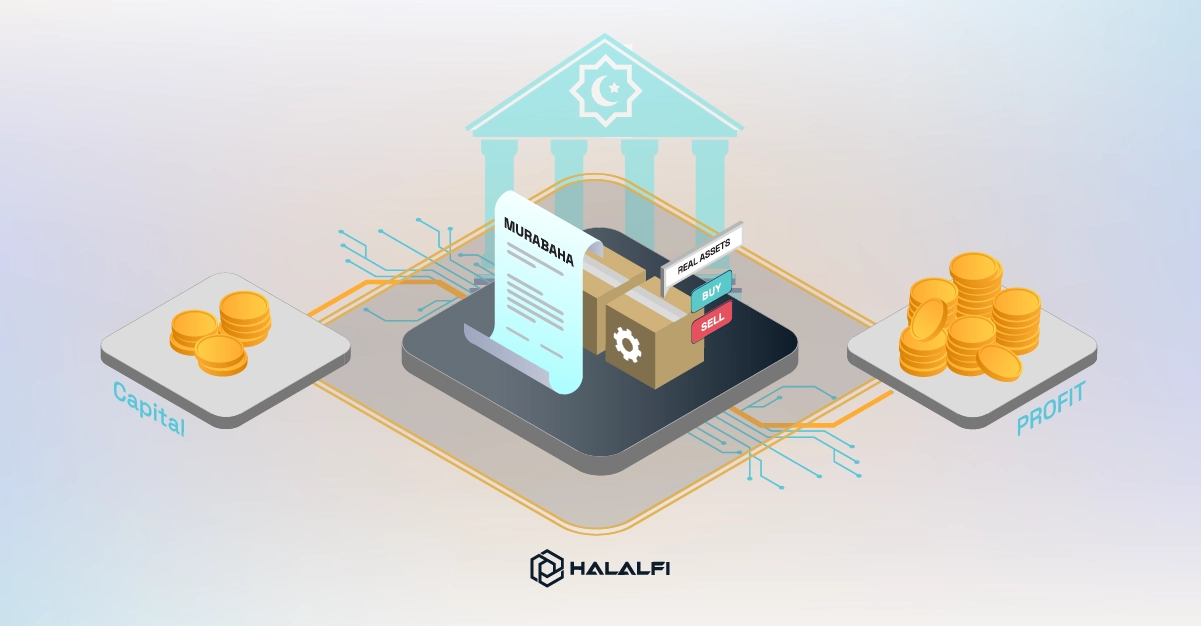
Suppose a customer wants equipment worth $50,000. Under a proper Murabaha, the bank purchases the equipment and then sells it to the customer for $58,000, payable over an agreed-upon period. Both sides know the $8,000 profit when they sign.
That fixed profit does not automatically constitute riba merely because the amount remains fixed. The transaction takes the legal form of a sale; the bank must acquire the asset, and the sale contract sets the final selling price.
A Mudarabah works differently. If an investor contributes $50,000 to a venture, the parties may agree that the investor receives, say, 60% of actual realized profit. They cannot turn that into “the investor receives a guaranteed 10% of capital” without changing the nature of the arrangement.
A fixed Murabaha sale price can comply with Sharia. A guaranteed fixed return on Mudarabah capital generally cannot be guaranteed.
Is Tawarruq Halal? Why the Answer Depends on How It Is Structured
Tawarruq exposes an important reality: Sharia interpretations can differ across jurisdictions.
The IIFA takes a stricter position on structured and inverse Tawarruq. It says those arrangements become prohibited when coordinated trades effectively create present cash in exchange for a larger future debt.
So, is Islamic banking halal or haram? Islamic banking aims for halal finance, but no logo can answer the question for every product. Contract design, execution, and the Sharia authority governing that institution still matter.
Do Islamic banks charge interest, or is “profit” interest with another name?
Islamic banks say they avoid riba, and regulators such as Saudi Arabia’s SAMA require Sharia committees, compliance controls and internal audits to oversee that claim. Still, some Islamic financing payments can look similar to conventional bank repayments.
The important issue is the contract, not the label. Scholars examine whether the bank actually owned the asset, whether a genuine sale took place, who bore the ownership risk, and whether late payment increased the debt. Simply renaming interest as “profit” does not make a transaction halal.
Using a market benchmark to set a profit margin also does not automatically create riba. A fixed profit can be Sharia-compliant when it comes from a valid sale or permitted financing structure. Ultimately, compliance depends on how the contract works in practice.
Conventional vs Islamic banking: what actually changes?
The difference between Islamic banking and conventional banking lies in the source and structure of the return, not in whether the final monthly payment looks similar. Let’s see:
Issue | Conventional banking | Islamic banking |
Basic lending return | Interest on debt | Trade, rent, partnership, fees or investment profit |
Asset ownership | Often unnecessary for lending | Important in contracts such as Murabaha and Ijarah |
Investment return | May carry predetermined interest | Depends on contract; investment profit may need performance exposure |
Prohibited sectors | Usually set by law or policy | Additional Sharia screening |
Excessive uncertainty | Managed commercially | Also restricted through gharar rules |
Sharia supervision | No | Yes, where the institution offers Islamic products |
Pricing | Usually tied to interest benchmarks | May also reference benchmarks, although the legal contract differs |
Nor does Islamic automatically mean cheaper. Extra documentation, asset transfers, Sharia review and smaller market scale can raise costs. A customer should compare the final price, early-settlement terms, late-payment clauses and actual contract, not just the advertised rate.
Is Islamic banking better than conventional banking?
For someone who wants finance structured around Sharia rules, Islamic banking solves an obvious problem. It also gives ethical investors restrictions around gambling, alcohol and other prohibited activities. Asset-linked structures can make the economic purpose of financing clearer.
But there are disadvantages. Products can become complicated, and Scholars and jurisdictions sometimes disagree. Islamic banks also face liquidity constraints because they cannot freely use every conventional debt instrument. The IFSB warns that heavy reliance on hybrid structures such as commodity Murabaha can recreate some of the leverage and interconnectedness found in conventional debt markets.
Dr. Ghiath Shabsigh, Secretary General of the IFSB, puts part of the challenge plainly:
“Long-standing structural gaps, especially in the non-bank sectors, must be addressed.”
And Islamic banking is not only for Muslims. The Bank of England explicitly notes that anyone can use Islamic financial products. Ethical screens, asset-linked finance, and partnership structures can appeal to customers for reasons unrelated to religion.
Why HalalFi Does Not Promise Fixed Returns?
HalalFi takes a different approach from products that advertise a guaranteed return. It ties investor profits to real economic activity through structures such as Mudarabah, Musharakah, and Wakalah, rather than promising a fixed percentage of invested capital.
The same rule applies to protection. HalalFi can use guarantees, collateral, and other safeguards against fraud, negligence, misuse of funds, or breach of contract. Still, those mechanisms cannot eliminate ordinary commercial risk or guarantee expected profits.
A Murabaha transaction at an Islamic bank may include a known sale profit because the return comes from a valid sale. HalalFi’s investment model instead depends on actual project performance.
Final Though
Islamic banking does not eliminate profit. It changes what must be justified by that profit. Before judging any product, follow the money, the asset, the risk, and the contract. If an institution lends cash and demands more cash solely for time, calling the difference “profit” changes nothing. If a genuine sale, lease, or investment creates the return, the analysis changes substantially.
HalalFi pushes that idea into project crowdfunding. Investors can examine real business opportunities, expected rather than guaranteed returns, Sharia review, and available protection structures before committing capital. The sensible next step is not to chase an advertised APR. It is to read the project terms and see exactly where the profit comes from. So explore HalalFi projects and get the next step.
Frequently Asked Questions
Can an Islamic bank use a conventional interest rate as a pricing benchmark?
A benchmark can help a bank price a product without becoming the legal source of the return. The contract still needs to satisfy Sharia requirements.
Why can Islamic financing sometimes cost more than a conventional loan?
Islamic structures may require asset purchases, additional contracts, Sharia review, legal documentation, and different liquidity arrangements.
Are Islamic windows inside conventional banks automatically non-halal?
No. Regulators can permit conventional banks to operate separately governed Islamic windows.
Can Islamic finance use stablecoins such as USDT?
Sharia treatment depends on the asset, use case, custody, contractual structure and relevant scholarly or regulatory assessment.
How do Islamic banks make money if they do not charge interest?
Islamic banks earn through contracts such as Murabaha, Ijarah, Musharakah and Mudarabah.
Are Islamic banks completely interest-free?
Islamic banks aim to avoid riba, but the structure of each product matters.
Why do Islamic bank payments sometimes look similar to conventional loan payments?
Both products may produce similar monthly installments, especially when banks use market benchmarks to set prices.
Do Islamic banks guarantee profit on savings and investment accounts?
Not always. In investment-based accounts such as Mudarabah, profit usually depends on actual performance and cannot be guaranteed as a fixed return on capital.