In Bangladesh, halal investing now stretches from government Sukuk financing water and rural projects to Shariah funds and screened Dhaka Stock Exchange shares.
So the hardest part of halal investing is knowing exactly what your money is supporting. More investors now want returns without interest-based income, excessive uncertainty, or businesses that conflict with Islamic directions. That has pushed Halal Investment Bangladesh from a niche search into a practical financial question.
For years, Islamic banks were the obvious starting point. They still matter, but the choices are getting wider. Investors can now explore Shariah-compliant stocks, sukuk, Islamic mutual funds, property-based opportunities, and newer digital investment platforms.
The challenge is assessing how each opportunity generates revenue and whether its Shariah screening is clear.
Halal Investment in Bangladesh and Where Investors Can Put Their Money
In Bangladesh, Tk10,000 can open the door to a government Sukuk, and Tk1,000 a month can start a Shariah fund plan, making halal investment much more concrete than it was a few years ago.
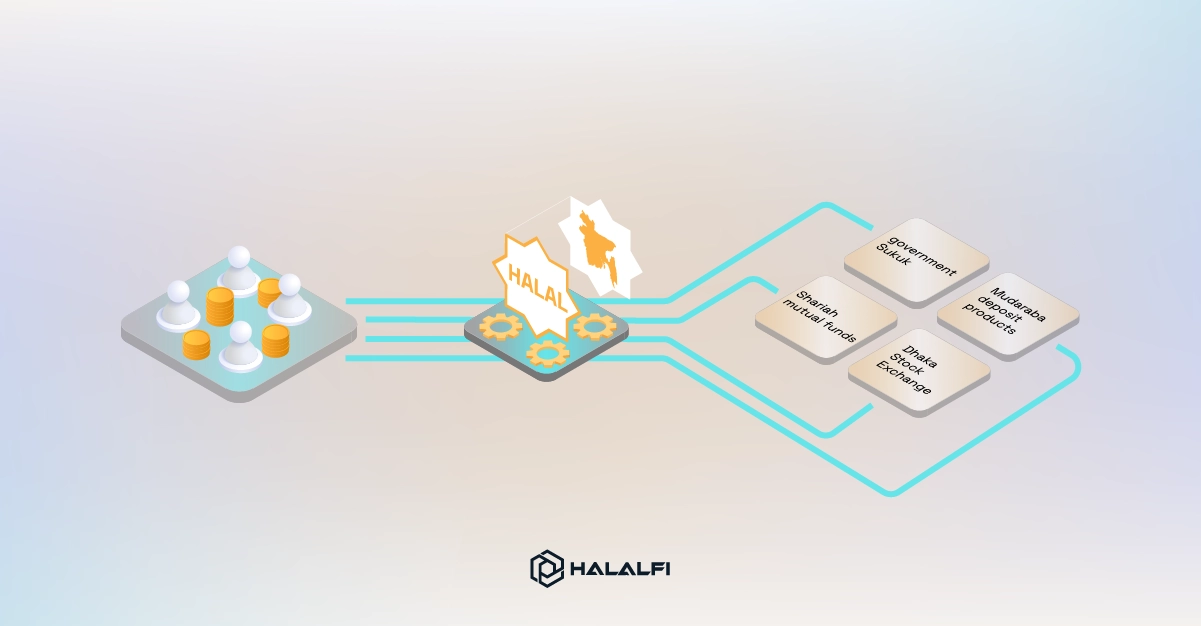
For a long time, halal investment in Bangladesh mostly meant investing in an Islamic bank. But now Bangladeshi investors can choose between government Sukuk, Shariah mutual funds, screened shares on the Dhaka Stock Exchange, Mudaraba deposit products and, in some cases, newer project-based platforms.
What Makes an Investment Halal in Bangladesh
In Bangladesh, Banks operate under Bangladesh Bank rules and now face specific requirements around Shariah Supervisory Committees. Mutual funds have their own Shariah boards and screening procedures. Listed shares may qualify for the DSEX Shariah Index, better known as DSES, after passing business and financial screens.
So you should ask who reviewed the structure, what the money is used for, and how the return is generated.
Bangladesh Government Sukuk Is Now a Retail Option
Government Sukuk deserve attention because Bangladesh now has a growing range of Shariah-compliant government securities. Bangladesh Bank listed 11 outstanding Sukuk issues in August 2026, financing projects such as safe water supply, primary schools, and rural development through Ijarah and Istisna’a-Ijarah structures.
The options also cover different investment periods:
The 10-year Safe Water Supply Sukuk offers a 9.51% rental rate, while the seven-year RDIRWSP Sukuk offers 10.50%.
For shorter commitments, the 273-day Short Term BGIS issued in June 2026 carries a 9.36% profit rate.
Retail investors can participate too. Bangladesh Bank allows Sukuk purchases from Tk10,000, in multiples of Tk10,000, through Primary Dealers.
Still, government and corporate Sukuk carry different risks. Beximco’s Tk3,000 crore Green Sukuk illustrates this clearly. In 2026, repayment concerns led to discussions about extending its maturity to 2032, while questions also emerged over collateral. Shariah compliance removes interest-based structures, but it does not remove credit or business risk.
Shariah Mutual Funds Have Made Small Monthly Investing Possible
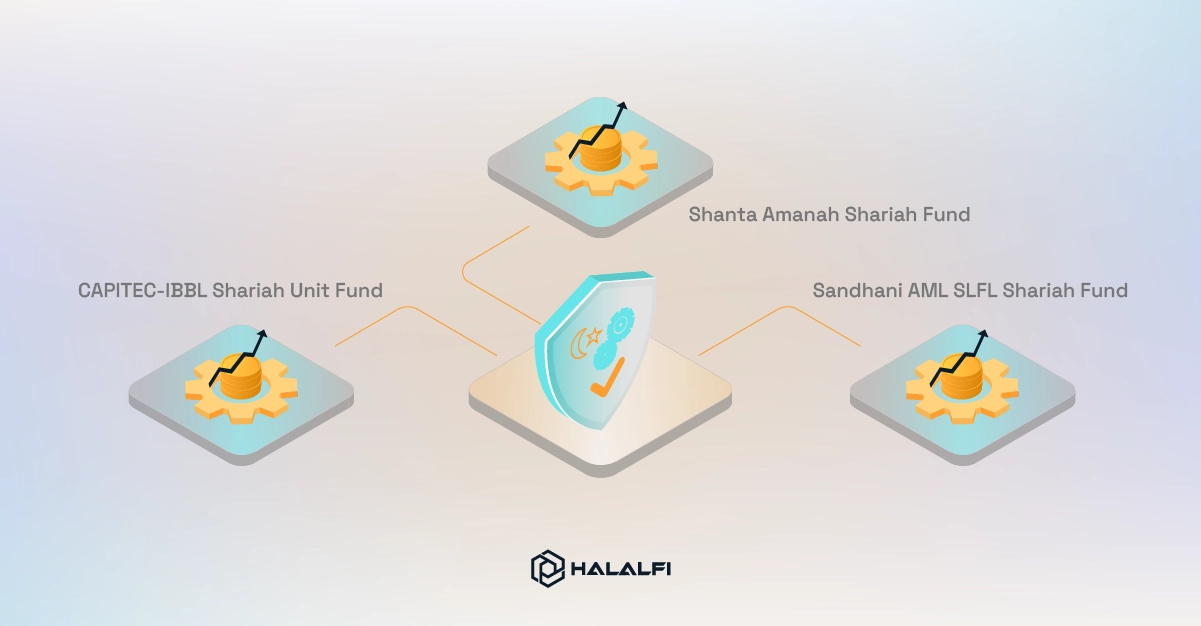
For investors in Bangladesh who want to put aside a small amount each month, Shariah-compliant mutual funds may be more helpful than waiting for individual Sukuk opportunities. Some local funds allow entry with just Tk1,000 to Tk5,000, making them accessible to salaried investors seeking gradual market exposure.
Shanta Amanah Shariah Fund: Launched in February 2019, this open-ended fund allows investors to start a SIP with a minimum contribution of Tk1,000 per month. It excludes prohibited sectors and applies financial screens to interest-related debt and income.
CAPITEC-IBBL Shariah Unit Fund: Sponsored by Islami Bank Bangladesh PLC, the fund accepts standard investments from Tk5,000, while SIPs start at Tk1,000.
Sandhani AML SLFL Shariah Fund: This open-end fund launched with an initial size of Tk25 crore. Individual applications start from Tk5,000, and its NAV stood at Tk10.17 on August 25, 2026.
Keep in mind that Shariah compliance does not eliminate market risk. Fund prices and NAVs can still rise or fall.
Halal Shares on the Dhaka Stock Exchange Need More Homework
Bangladesh’s DSEX Shariah Index (DSES), launched in January 2014, gives investors a rule-based list of Shariah-compliant companies from the broader DSEX. It offers a stronger basis for direct stock selection than simply assuming a company is halal based on what it sells.
Still, DSES is only a benchmark. It is not a fund or a personal Shariah ruling. Companies can enter or leave the index as their financial ratios and business activities change. Investors who buy individual DSES stocks should therefore continue to review companies' finances, debt levels, and compliance instead of treating inclusion as permanent.
Mudaraba Deposits Remain the Familiar Choice
For many Bangladeshi households, the easiest halal financial product is still a bank account. Islami Bank Bangladesh's Mudaraba Term Deposit Account, for example, starts from Tk1,000 and offers terms of 3, 6, 12, 24 and 36 months. The product uses the Mudaraba concept rather than a conventional fixed profit.
But 2026 offered Bangladeshi investors a useful reminder that “Islamic bank” and “risk-free” are not synonyms. EXIM Bank, First Security Islami Bank, Social Islami Bank, Global Islami Bank and Union Bank were brought together under Sammilito Islami Bank after financial distress and a regulator-led resolution process.
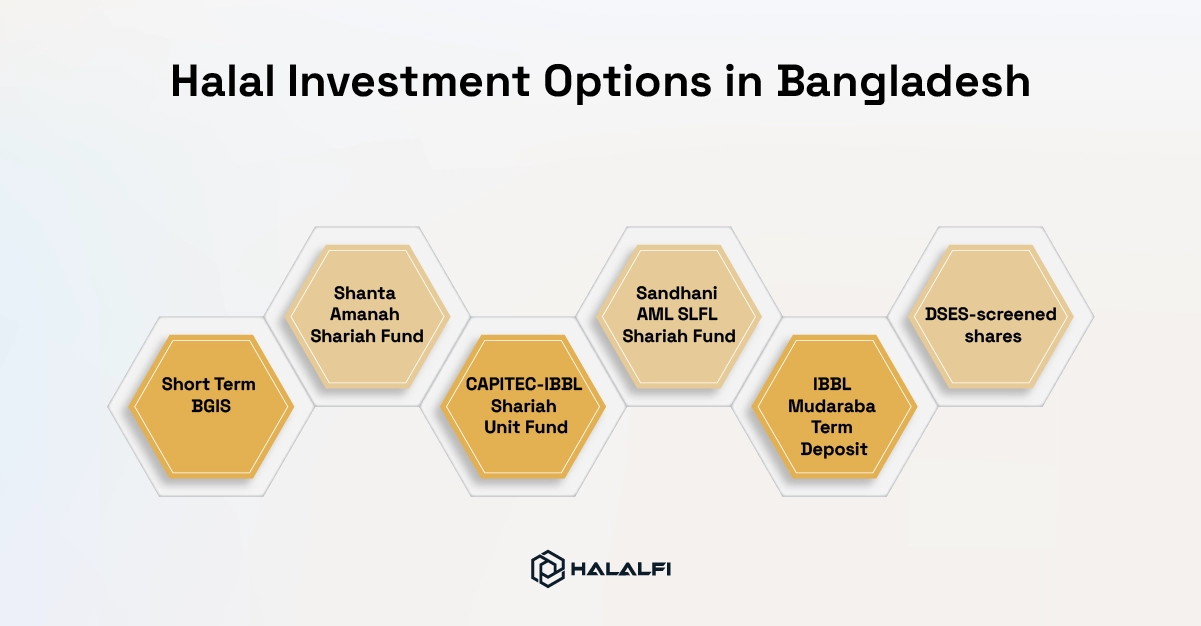
Comparing Halal Investment Options in Bangladesh
Let's now compare halal investment options in Bangladesh. If you are looking for halal investing for beginners options, these Investments help too:
Investment available in Bangladesh | Starting point | Where returns come from | Access to money | Main issue to check |
Short Term BGIS | Tk10,000 purchase increments | Sukuk profit from underlying structure | 273-day maturity, secondary trading subject to terms | Availability and market price |
Shanta Amanah Shariah Fund | SIP from Tk1,000 | Shariah-screened portfolio | Open-end, surrender available | Market movement |
CAPITEC-IBBL Shariah Unit Fund | Tk5,000 standard, SIP from Tk1,000 | Shariah capital and money markets | Open-end | NAV and portfolio performance |
Sandhani AML SLFL Shariah Fund | Tk5,000 standard application | Shariah-compliant securities | Open-end | Newer performance record |
IBBL Mudaraba Term Deposit | Tk1,000 | Mudaraba profit | 3 to 36-month terms | Bank strength and profit policy |
DSES-screened shares | Depends on share price and broker | Business profits and share-price changes | Exchange trading | Company and Shariah screening |
There is no obvious winner here. Someone saving Tk2,000 every month faces a very different decision from a family placing Tk5 lakh aside for several years.
What Bangladeshi Scholars Say About Halal Investing
Bangladeshi scholars tend to make a distinction that investment marketing sometimes misses. Earning money is not the problem. The structure and behavior behind it matter.
According to dhakapost, after the MTFE investment scandal, Bangladeshi scholar Shaykh Ahmadullah wrote:
“ইসলাম স্বাভাবিক পন্থায়, হালাল উপায়ে ধনী হওয়াকে উৎসাহিত করে
Islam encourages becoming wealthy in a natural way, through halal means.”
He paired that statement with a warning about schemes selling the dream of becoming rich quickly with little effort.
That advice feels particularly relevant to investing in Bangladesh, where “halal” can sometimes appear beside unusually high projected returns.
On share investing, Mufti Saiduzzaman Kasemi of Baitul Quran Madrasa in Mohammadpur gives a more conditional view. After describing requirements covering the company's main business, assets and interest-derived income, he writes:
“If those four conditions are properly met, share trading is permissible.”
He also warns investors about deception and practical difficulty in meeting those conditions.
HalalFi as an Alternative Halal Investment Option in Bangladesh
HalalFi is outside the traditional Bangladesh Bank Sukuk and BSEC mutual-fund route. The platform is a Shariah-compliant investment crowdfunding platform where operating businesses undergo Shariah and business reviews before fundraising, and investment terms are executed via smart contracts with performance-based rather than fixed returns.
For a Bangladeshi investor, that creates an interesting project-based alternative but also raises an additional regulatory question. HalalFi uses blockchain and USDT-related infrastructure, while Bangladesh Bank's existing circular states that transactions made in, from, or to Bangladesh for the purpose of obtaining virtual assets are not permitted.
A resident therefore needs to check the current legal funding route and the platform's jurisdiction before treating HalalFi as a locally available Sukuk or a BSEC-regulated fund.
Choosing a Halal Investment in Bangladesh
The useful way to compare these options is not to start with the highest percentage on the page. Start with the job the money needs to do.
Money that may be needed within a year belongs in a different conversation from ten-year savings. A person who does not want to research individual Dhaka Stock Exchange companies may find a Shariah mutual fund easier to manage. Someone looking for government-backed, asset-linked exposure can examine BGIS issues. An investor comfortable analyzing companies can work from DSES screening rather than buying random shares.
If you prefer immediate exposure to screened real-business opportunities, HalalFi’s Shariah-reviewed projects offer a more project-focused alternative to traditional funds and Sukuk.
Frequently Asked Questions
What is the minimum amount needed for halal investment in Bangladesh?
It depends on the product. Shanta Amanah and CAPITEC-IBBL offer SIP entry from Tk1,000, while the Bangladesh Government Investment Sukuk can be purchased in Tk10,000 multiples starting from Tk10,000.
Which halal mutual funds are available in Bangladesh?
Examples include Shanta Amanah Shariah Fund, CAPITEC-IBBL Shariah Unit Fund and Sandhani AML SLFL Shariah Fund.
Is Bangladesh Government Sukuk safer than a corporate Sukuk?
They carry different issuer and credit risks. Bangladesh Bank currently lists a government Sukuk backed by government projects.
Are all DSES shares automatically halal forever?
No. DSES applies Shariah screening to eligible DSE companies, but company finances and index membership can change.
What is the most practical halal investment in Bangladesh for a beginner?
For small monthly contributions, an open-ended Shariah fund with a Tk1,000 SIP is a practical starting point for research.