
Halal investment options in Pakistan have expanded far beyond traditional savings, giving investors choices across Islamic funds, Shariah-screened stocks, sukuk, property, and business opportunities.
Pakistan has built one of the largest Islamic banking markets in the world. But choosing the right investment still feels confusing.
This guide explains the main halal investment options in Pakistan, compares their strengths and risks, and shows where a project-based model is most effective.
What Makes an Investment Halal in Pakistan?
A halal investment does not mean that a company has a Muslim name or operates in a Muslim-majority country; the structure of the returns is important.
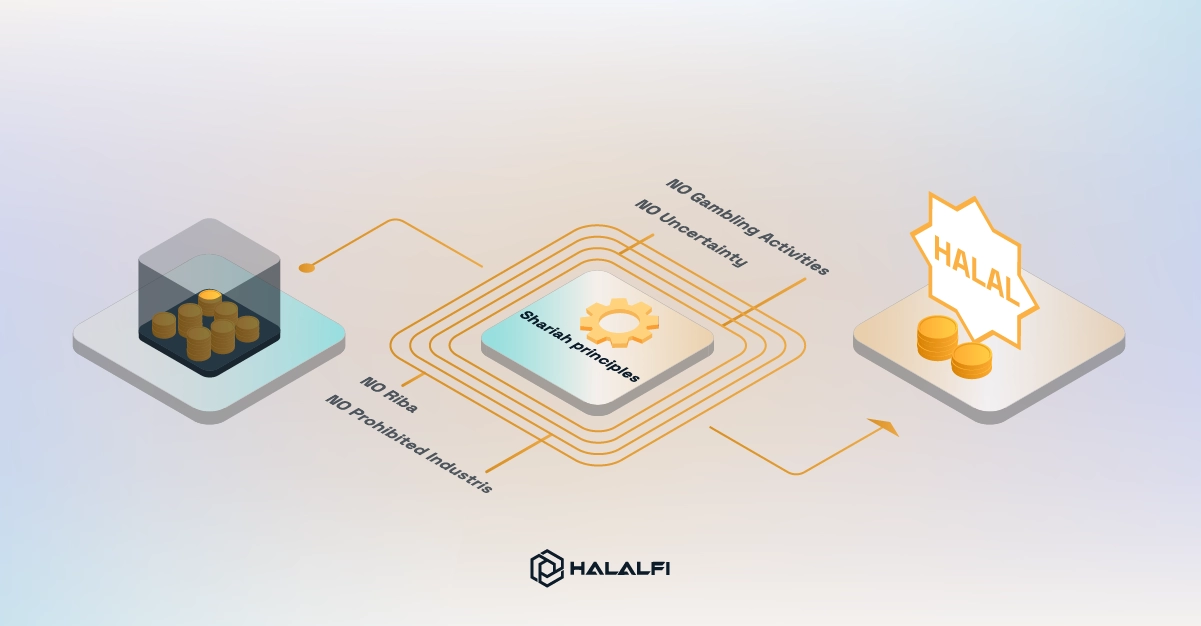
A Shariah-compliant investment usually avoids riba (interest), excessive uncertainty, gambling-related activities, and businesses connected with prohibited industries.
Pakistan’s financial system uses Shariah boards and regulatory frameworks to review products.
The State Bank of Pakistan maintains dedicated Islamic banking regulations and publishes Islamic Banking Bulletins covering industry development and supervision.
Beginners exploring halal investing should know where this return comes from. Profit from ownership, trade, leasing, or partnership follows a different structure from a return generated solely by lending money at interest.
According to the State Bank of Pakistan Islamic banking framework:
“Islamic finance is based on principles of fairness, transparency and risk sharing.”
Pakistan’s Islamic Investment Market Has Become Much Larger
Pakistan is no longer a small market for Islamic finance. According to Profit Pakistan Today, the country’s Islamic banking industry grew rapidly between 2020 and 2025.
Islamic banking assets increased from Rs4.27 trillion in 2020 to Rs14.47 trillion by the end of 2025. Deposits also climbed from Rs3.39 trillion to Rs11.04 trillion during the same period.
For Pakistani investors, this growth created more choices:
Investment Type | How Returns Come | Suitable For | Main Risk |
Islamic Mutual Funds | Equity growth, sukuk income, asset returns | Beginners and long-term investors | Market movement |
Shariah Stocks | Share price growth and dividends | Experienced investors | Company performance |
Islamic Banking Products | Permitted banking structures | Lower-risk savings | Inflation and lower returns |
Sukuk | Asset-backed income structures | Income-focused investors | Credit and market risk |
Property | Rent and appreciation | Real assets | Liquidity and maintenance |
Business Projects | Commercial profit | Alternative investors | Business failure |
Best Investments in Pakistan for Long-Term Halal Growth
Many investors believe Islamic equity funds provide the easiest starting point because they offer diversification without requiring someone to analyze dozens of companies.
Al Meezan manages one of Pakistan’s largest Islamic fund platforms. Its Meezan Islamic Fund invests in Shariah-compliant equities and reported fund assets of around Rs65.51 billion as of July 31, 2026.
The fund follows the KMI-30 benchmark and carries a high-risk profile because equity markets can move sharply.
Pakistan also has dedicated Shariah stock indexes. The Pakistan Stock Exchange’s KMI-30 Index tracks 30 liquid Shariah-compliant companies listed on PSX.
A beginner may start by understanding:
How the fund selects companies
Who manages the portfolio
What fees apply
Whether the investor needs monthly contributions or a lump sum
How long the money can remain invested
Halal Investment Options in Pakistan Compared
Different investors need different tools. For example, a university graduate saving Rs10,000 monthly does not face the same problem as a business owner seeking growth capital.
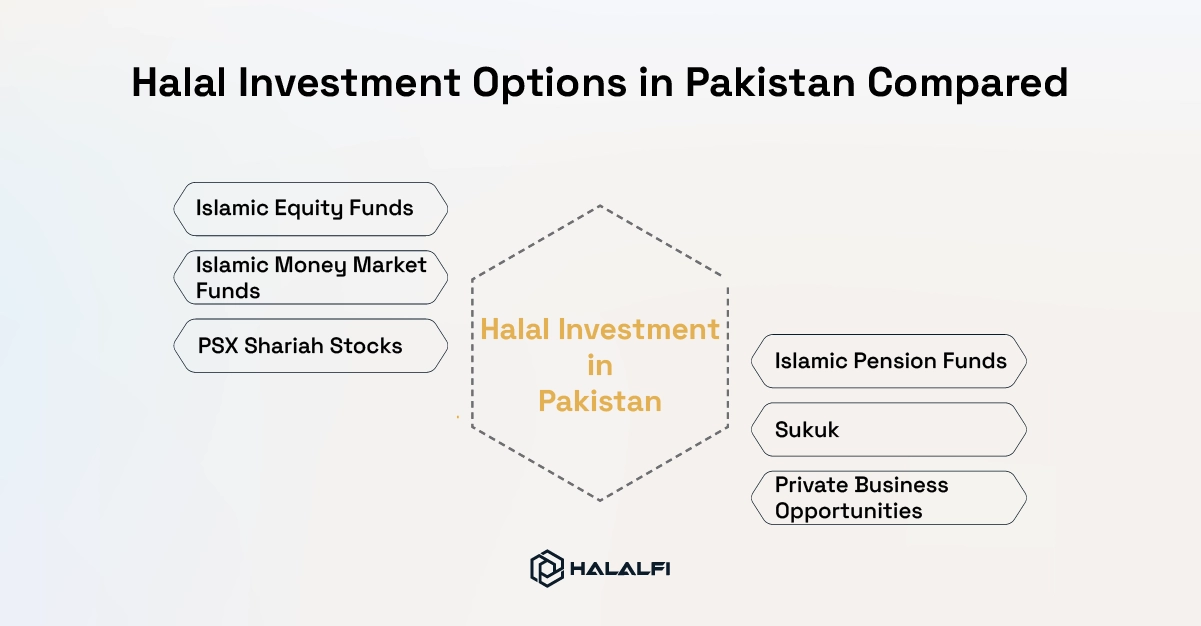
Let's see some Halal investment options in Pakistan:
Option | Example in Pakistan | Best Use |
Islamic Equity Funds | Meezan Islamic Fund, Al Meezan Funds | Wealth building |
Islamic Money Market Funds | Short-term savings goals | Lower volatility |
PSX Shariah Stocks | KMI-screened companies | Active investors |
Islamic Pension Funds | Retirement planning | Long-term discipline |
Sukuk | Income-focused portfolios | Diversification |
Private Business Opportunities | Direct commercial projects | Alternative exposure |
Islamic Investment Plans in Pakistan for Different Investors
A mistake is to search only for the highest return; you should match the investment to the purpose.
For example, a young investor building wealth over 10 or 20 years may accept market fluctuations through Islamic equity funds.
Someone saving for a near-term goal may prefer Islamic money market funds or lower-volatility products.
Or consider: a business owner may look for opportunities connected to real economic activity rather than publicly traded companies.
That final category creates an interesting gap. Public markets provide diversification, but they rarely allow investors to directly choose a specific operating business project.
Can Pakistani Investors Access Real Business Opportunities?
Imagine a textile business in Faisalabad with customers, production capacity, and demand, but needing additional capital to expand its inventory. Traditional financing may require collateral, banking history, or structured repayment.
A project-based investment model looks at something different:
What business activity needs funding?
How will revenue be generated?
What is the timeline?
How will investors receive returns?
How HalalFi Connects Halal Investment Pakistan With Real Business Projects
Most halal investment products in Pakistan focus on funds, stocks, or banking products. HalalFi explores a different category: project-based halal crowdfunding.
Through HalalFi Projects, investors can participate in defined business activities rather than buying shares in a market index, using USDT-based funding.
Here, projects undergo Sharia and business reviews before appearing on the platform, while smart contracts record funding, distributions, and settlements.
For Pakistan, the connection is helpful. The country already has strong participation in Islamic banking, but many investors still have limited access to smaller real-world business opportunities.
HalalFi’s model focuses on that gap:
Sharia-reviewed projects
Business-level assessment
Blockchain transaction records
USDT-based participation
Project-specific return structures
Halal Investment Apps in Pakistan
The demand for digital investing has increased, but an app alone does not make an investment halal. A useful halal investment app in Pakistan should help users understand:
Shariah screening
Portfolio information
Fees
Risk levels
Investment documents
Many investors now use digital platforms from Islamic asset managers, stockbrokers, and fintech companies to monitor their investments.
A beautiful interface cannot turn a conventional interest-based product into an Islamic investment.
A Strategy for Beginners Exploring Halal Investments in Pakistan
There is no shortcut to building wealth with halal investment. A beginner can start by asking:
What is the investment timeframe?
How much risk feels acceptable?
Does the product have a Sharia review?
Where does the return come from?
Can the investment be sold easily?
A balanced approach often combines multiple categories rather than relying on a single product.
For example, a long-term investor may combine Islamic equity exposure with lower-risk Islamic products while keeping a small allocation for alternative opportunities. The percentage matters less than understanding the underlying asset.
Conclusion
The best halal investment in Pakistan depends on the investor, not the product name. A beginner may prefer diversified Islamic funds, and a market-focused investor may explore PSX Shariah companies. Someone seeking direct business exposure may explore project-based models.
Pakistan already has a strong foundation based on Islamic finance. The next step for investors is to understand where their capital goes and how returns are generated.
For those interested in reviewing halal business opportunities beyond traditional funds, HalalFi offers another model to explore: project-based investing connected to real commercial activity. Review the projects, understand the contracts, and compare the opportunity before committing capital.
Frequently Asked Questions
What is the safest halal investment in Pakistan?
Lower-volatility Islamic money market funds and Islamic banking products are generally considered less risky than equity funds, but returns may also be lower.
Can beginners invest in halal mutual funds in Pakistan?
Yes. Many Islamic mutual funds allow investors to start with relatively small amounts.
Is buying PSX stocks halal in Pakistan?
Only stocks that pass Shariah screening should qualify for investors following Islamic investment principles.
Are cryptocurrencies considered halal investments in Pakistan?
Scholars and regulators have different views depending on the asset, structure, and use case.
Can overseas investors access halal investment opportunities connected to Pakistan?
Access depends on the platform, regulations,s and investor location. International investors should check legal requirements before transferring funds.
What should beginners check before choosing a halal investment plan in Pakistan?
They should review the underlying asset, the expected return source, fees, liquidity, Shariah supervision, and the organization managing the investment.