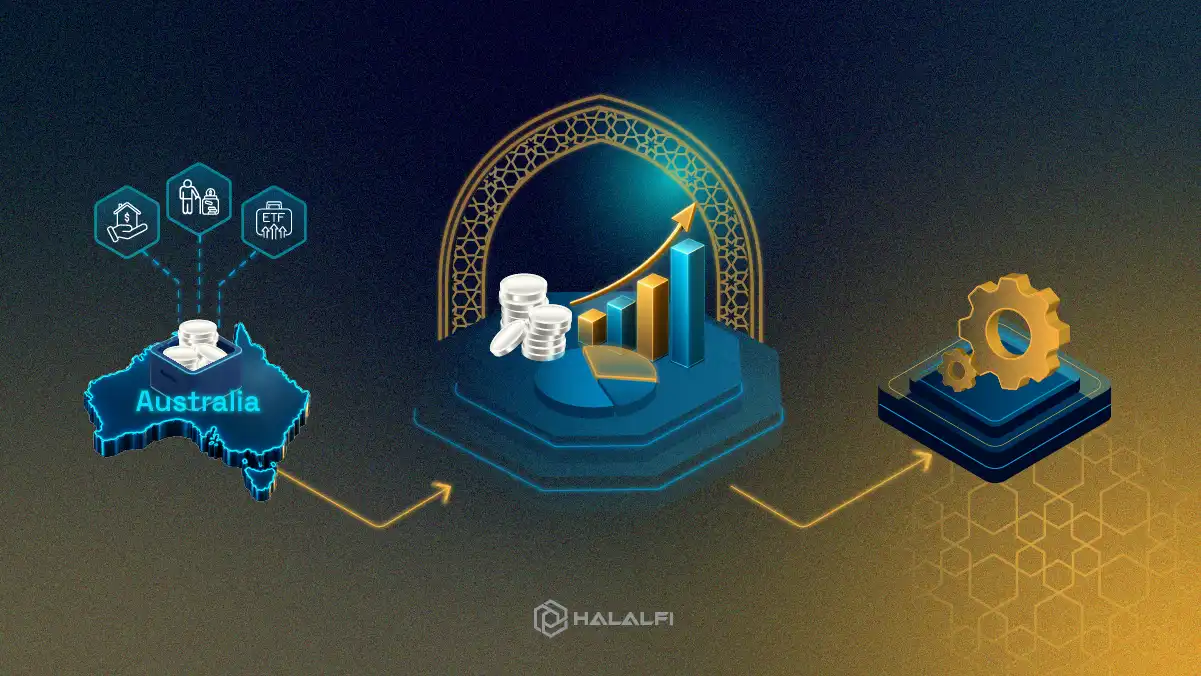
What if an investment carries a halal label, holds respectable companies, and still leaves you wondering exactly how your money earns? That is the useful starting point for halal investment in Australia.
Australians can now choose from Sharia-screened ETFs, Islamic super options, property exposure, sukuk and private opportunities.
That is a much better position than having almost no choice. But more choice creates another problem: labels are no longer enough.
But what does it own? How does it earn? How much debt sits inside the portfolio? Who screens it?
And when someone quotes a return, what has to happen in the real world for that return to exist? Let's answer these questions.
Superannuation Is Where Halal Investing Gets Real in Australia
For many Australians, the biggest investment decision happens with every payslip.
According to B2B News, Australia's superannuation system held about A$4.77 trillion at 30 June 2026. Employers now contribute 12% of qualifying earnings, which means even someone who never opens a brokerage account still builds an investment portfolio through work.
That makes super impossible to ignore in any serious discussion of Islamic investment in Australia. The issue is not merely whether the fund performs well. It is where that money goes for the next 20, 30 or 40 years.
For a Sharia-conscious employee, checking the underlying investment option may matter far more than choosing a halal stock with a few hundred dollars on the side.
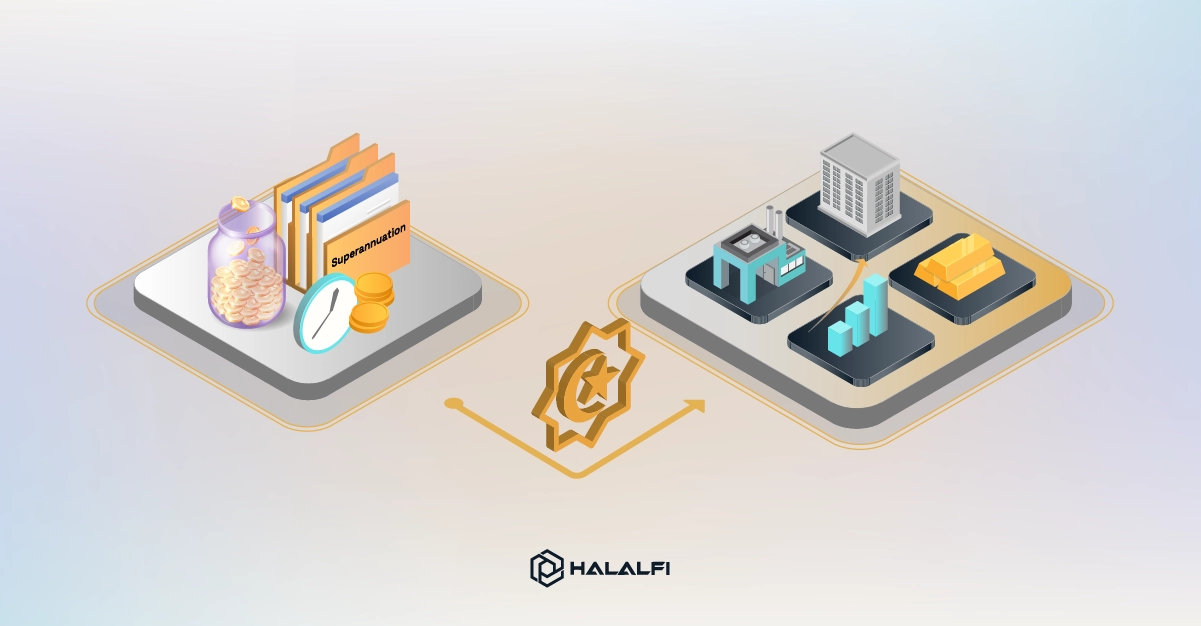
Your Super Fund Could Be Investing While You Are Not Looking
A traditional diversified super option can hold banks, conventional fixed income and companies that fail Sharia screens. Islamic super funds close the portfolio differently.
Salaam, for example, offers Defensive, Balanced and Growth options built from Sharia-compliant assets. Its Growth option currently targets 80–100% growth assets and includes Australian and international shares, alternative assets, Islamic cash and fixed profit.
Hejaz also offers Sharia-focused super and pension strategies, although it currently states it has temporarily paused new memberships while it reviews the product.
Australia Has Halal ETFs You Can Buy on the ASX
Someone opening a brokerage account today does not have to build a Sharia-screened portfolio stock by stock. Hejaz currently lists some ASX-traded funds:
ISLM for global equities
HJHI for higher-income listed companies
SKUK for sukuk exposure
HJZP for global property assets
HHIF for companies in innovation-focused sectors
Hejaz reported one-year performance of 16.34% for ISLM, 3.04% for HJHI, and -3.91% for SKUK as of 31 May 2026.
A shariah-compliant investment does not remove market risk. Equity rises, Sukuk fall, and property struggles. Halal refers to the rules governing the investment.
The Ticker Tells You Almost Nothing About the Sharia Screen
ISLM's appearance on the ASX does not explain why one company is added to the portfolio while another is rejected.
Hejaz publishes a screening methodology based on AAOIFI principles. Its current process checks both business activity and financial ratios. For listed shares, the screen includes:
Impermissible income must stay below 5% of total revenue.
Interest-bearing debt must stay below 30% of average market capitalization.
Cash and interest-bearing investments must stay below 30%.
The fund excludes businesses centered on activities such as conventional finance, gambling, alcohol and weapons.
The process can require purification when impermissible income enters the portfolio.
Those thresholds also explain why two Muslims examine the same “halal ETF” and still debate it.
What Australian Halal Investment Options Give You
The options look clearer once you compare what each one owns. So let's see:
Option | What your money reaches | How value may grow | What to inspect |
ISLM | Global shares | Company growth and distributions | Equity risk and screening |
HJHI | Dividend-focused listed companies | Income and share prices | Concentration and market risk |
SKUK | Sukuk | Payments from Sharia structures and asset performance | Rate, issuer and market risk |
HJZP | Global property assets | Property income and valuation | Property cycle and liquidity |
Salaam Super | Diversified Sharia assets | Long-term portfolio growth | Fees, allocation and time horizon |
USDT-Based Project Crowdfunding | Individual commercial projects | Project-generated profit-sharing | Project, counterparty and USDT risk |
The Best Halal Investment in Australia Depends on When You Need the Money
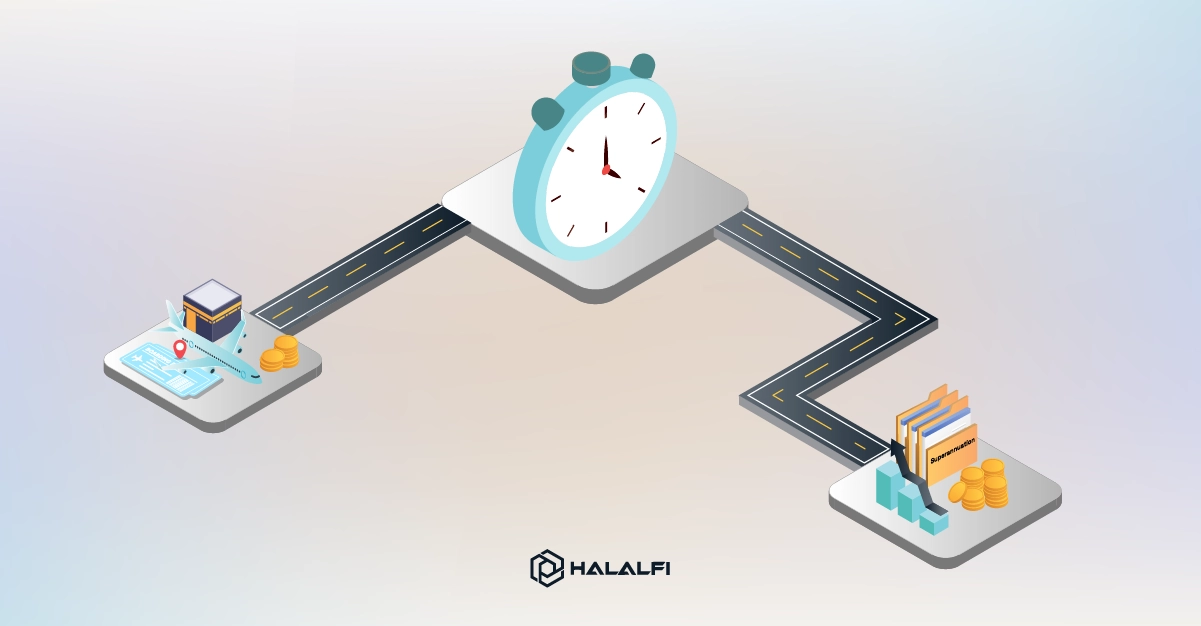
A 24-year-old investing for retirement and a couple saving for Hajj in 18 months do not have the same problem.
For example, if an Australian investor saves about A$14,000 for Hajj in 2027 or 2028 and asks whether a halal ETF could help the money grow, concerns about using equities for such a short horizon will rise.
Time changes what “best” means. A long horizon can absorb more volatility. Money needed next year cannot always wait for a market recovery. That is why halal investing for beginners should begin with the goal, not the product.
Property Feels Familiar Until You Look at the Financing
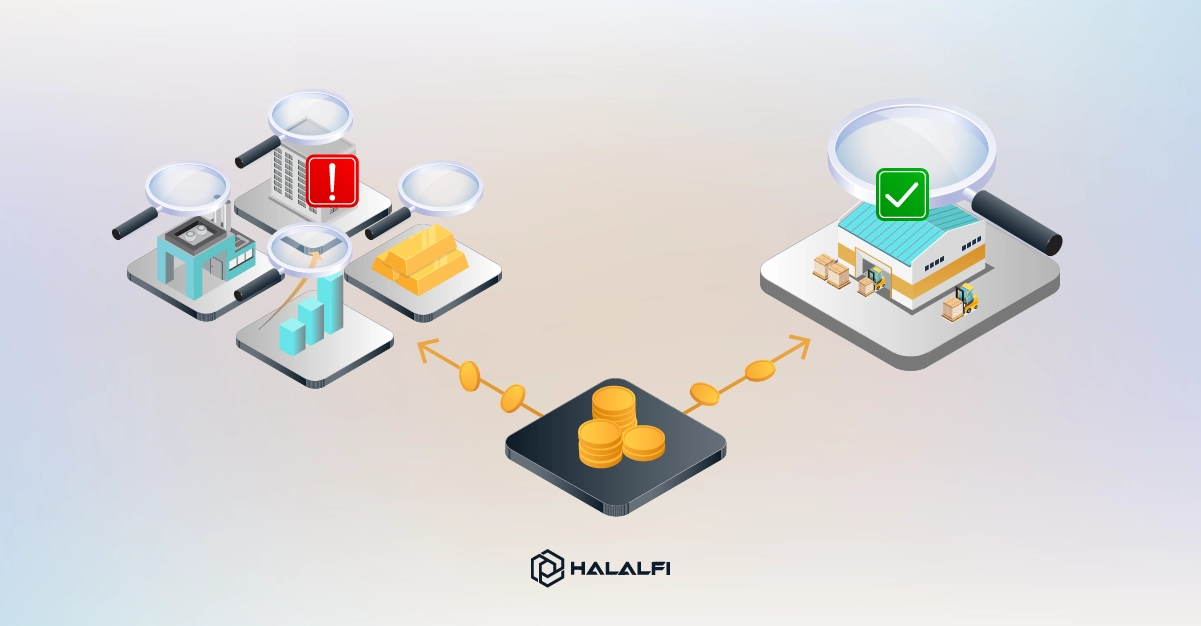
Property often feels easier to understand than funds. Because there is a building, someone pays rent, and the asset has a market value. But Sharia analysis does not stop at the front door.
An investor needs to examine how the property vehicle borrows, who the tenants are, how much interest-bearing debt it has, and where its distributions come from.
Hejaz applies separate Sharia screens to REITs. Its methodology checks impermissible rental income and limits interest-bearing debt to 30% of the REIT's asset market value.
So “property-backed” does not mean halal. The building can look perfectly ordinary, and the balance sheet may tell another story.
“Shariah Compliant” Should Never End the Research
If a provider claims a product is Sharia-compliant or ethically approved, look for evidence supporting the claim. A good check includes:
Who sits on the Sharia board?
Which standard or methodology does the manager follow?
How often does the manager screen holdings again?
What happens when a company fails the screen later?
Does the fund purify impermissible income?
Can you read the PDS and current portfolio information?
Hejaz, for example, says an external Sharia Supervisory Board conducts semi-annual compliance audits of its screening process. That gives investors something concrete to examine.
Australia Regulates the Product Even When Sharia Governs the Structure
Islamic finance is not outside Australian financial law. Moneysmart says providers need the relevant Australian Financial Services license or authorization when offering financial products or advice. Retail managed investment schemes may also need ASIC registration and supporting disclosure such as a PDS.
So here are two separate checks:
Is the structure Sharia-aligned?
Does the provider meet Australian legal requirements?
One does not replace the other.
Moneysmart also warns that people may feel pressured to invest because an opportunity circulates within a community.
That is worth remembering whenever someone markets an investment through faith, friendship or urgency.
What Changes When Your Money Goes Into One Business Project?
An ETF works well when the goal is broad exposure. You buy units, and the fund spreads money across companies or assets. But some investors want to get closer to the business activity.
They may want to know that their capital will finance a stock purchase, a distribution cycle, an export order, or another defined commercial project.
That moves everything away from listed securities and toward project investing. It also changes what you inspect.
Instead of studying an index and dozens of holdings, you study one business, one transaction, one project duration, and one source of potential profit.
That is the point where HalalFi becomes relevant to an Australian investor, because it does something different.
Australia Gives You Halal Funds; HalalFi Gives You Something Different to Inspect
ISLM spreads your money across listed equities, SKUK gives you sukuk exposure, and Salaam Place Super spreads your money across diversified Islamic assets. HalalFi does not need to imitate any of them.
Its appeal lies in a different investment experience: a defined project, a stated duration, a commercial activity and a forecast tied to that project.
That interests investors who already hold diversified funds but want some capital closer to real business activity. It also creates different risks.
Projects may fail, and Global participation does not mean every Australian can participate under every circumstance.
HalalFi is a global platform, subject to local rules and platform requirements. So check those conditions before funding anything.
Conclusion
The strongest halal investment in Australia is the one you can explain. You know what you own, what created the profit, the Sharia screen, what can go wrong, and the risk matches the time you can leave the money invested.
Australia now offers a much wider menu, from Islamic super and ASX-listed funds to sukuk and property exposure.
HalalFi offers it: capital tied to individual Sharia-reviewed commercial projects rather than to a broad fund or an interest-bearing loan.
Do not rush because a project looks attractive. Check HalalFi projects. Study how previous projects worked, understand the contract, and follow the money. Then decide whether the next opportunity deserves a place beside the rest of your halal portfolio.
Frequently Asked Questions
Are halal investments tax-free in Australia?
No. Sharia compliance does not remove Australian tax obligations. Tax treatment depends on the investment structure, income and your personal circumstances.
Can I buy halal ETFs through a normal Australian broker?
Yes, if your broker provides access to the relevant ASX-listed ETF. Hejaz currently lists several Sharia-focused ETFs on the ASX.
Can I have a halal super fund in Australia?
Yes. Providers including Salaam offer Sharia-compliant super investment options. Product availability, fees and investment choices should be checked before switching.
Can I invest in halal ETFs through an Australian broker?
Yes. Several Sharia-screened ETFs trade on the ASX, so investors can usually access them through brokers that support those securities.
Can my superannuation be invested according to Sharia principles?
Yes. Australia has super options that screen investments for Sharia compliance. Compare fees, asset allocation, performance and the fund’s screening methodology before switching.
Does halal investing in Australia mean avoiding all debt?
Not necessarily. Different Sharia methodologies use financial ratio screens rather than require companies to carry zero debt. Check the exact standard used by the fund or adviser.
Are halal investments in Australia protected from losses?
No. Sharia compliance deals with how an investment operates, not whether it will make money. Halal shares, sukuk, property and project investments can all lose value.