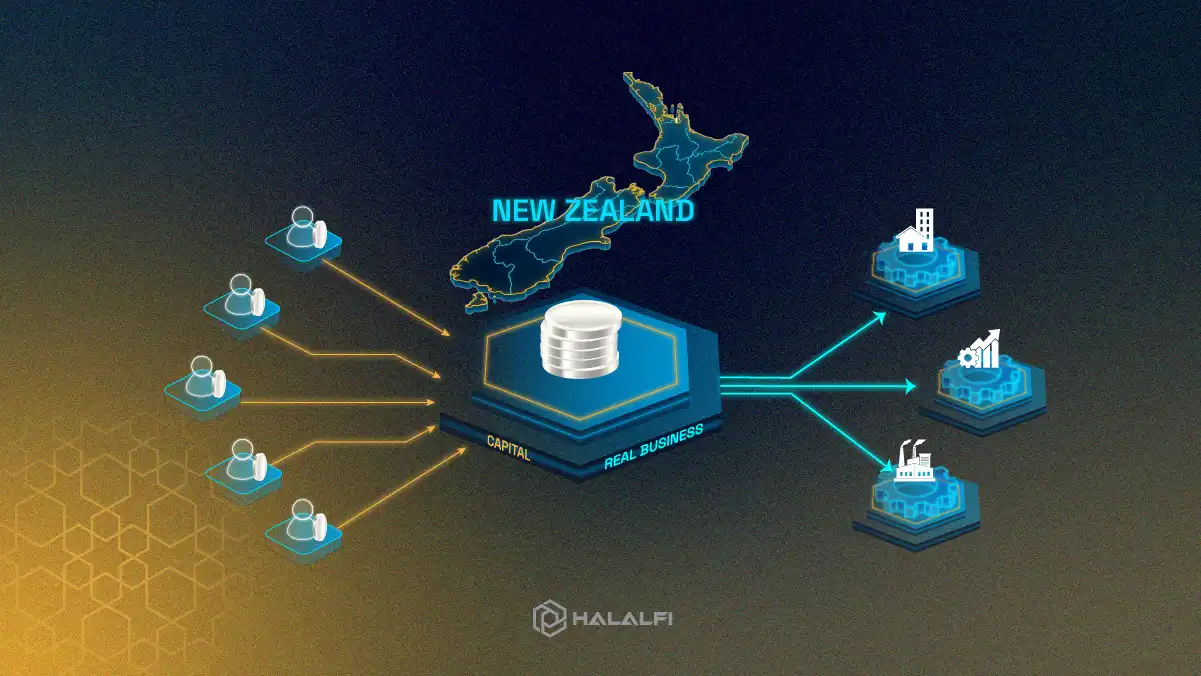
You put your money into a campaign; what becomes of it later? Crowdfunding in New Zealand turns that money into shares in a young company, a slice of property, capital for a growing business, or support for someone facing a medical bill. The page may take ten minutes to read, and the investment could last years.
Let's see what you receive, how your money gets used, who regulates the platform, and how you eventually get your money back.
New Zealand Has a Capital Problem: Crowdfunding Touch
New Zealand has roughly 600,000 small businesses, accounting for 97% of all firms. MBIE says they employ around 680,000 people.
Many of those businesses will never raise NZ$300,000 to expand production, enter the Australian market, buy equipment, or turn an enthusiastic customer base into shareholders.
The timing is interesting too. New Zealand venture investment climbed 61% in 2025, yet only 47 newly funded companies entered the market.
University of Auckland professor Rod McNaughton described the pressure:
“Selective markets make life hardest for firms seeking their first serious round of funding.”
Crowdfunding opens another door for some of those firms.
Crowdfunding in New Zealand Does Not Mean One Thing
A Kiwi founder saying “we’re crowdfunding” might mean selling shares to hundreds of investors, or collecting NZ$30 donations from supporters, or asking people to fund a product before production begins.
The FMA focuses its crowdfunding license on equity crowdfunding, in which companies offer shares to the public through a licensed intermediary. Donation and reward campaigns sit outside that specific financial-market framework.
Someone backing a reward campaign might receive honey, a book, or early access to a product rather than a financial return.
Which Crowdfunding Platforms Operate in New Zealand?
The most useful crowdfunding platform is the one that determines what happens to your capital after you press the button. Let's compare some options:
Platform | Model | What the money funds | What participants receive |
Snowball Effect | Private-company equity and investment funds | Growth companies and private investments | Shares or fund interests |
PledgeMe | Equity, lending and project crowdfunding | Businesses, organizations and projects | Shares, loan returns or rewards |
Tressel / Housies | Property equity crowdfunding | Fractional property ownership | Shares linked to property investment |
Givealittle | Donation fundraising | Individuals, charities and community causes | No investment return |
HalalFi | Sharia-reviewed project crowdfunding | Defined commercial projects | Performance-linked potential profit |
Snowball Effect Shows How Far Kiwi Crowdfunding Has Grown
Snowball Effect launched in 2014 and says companies and funds have since raised more than NZ$200 million through its platform.
It now reports more than 55,000 investors. The platform focuses on private Kiwi growth companies, as well as managed and alternative funds.
For example, medical technology company Wellumio closed a Snowball raise in March 2026, with NZ$7.58 million in funding.
That exceeds New Zealand's NZ$2 million retail crowdfunding limit, as companies can combine retail crowdfunding with capital from wholesale investors through other routes. Crowdfunding here no longer means passing a hat around digitally.
PledgeMe Lets the Crowd Choose More Than Shares
PledgeMe feels different because it brings together some types of fundraising in New Zealand under one roof.
Its platform lets people run project, equity, and lending campaigns. Recent investment campaigns have funded businesses in the food, property, technology, and healthcare sectors. PledgeMe says more than NZ$81.8 million has flowed through over 1,800 successful campaigns.
The numbers become substantial. That variety also means investors must read carefully. Backing a chocolate project for a reward is not the same as buying shares in the company that produces it.
Tressel Is Bringing Crowdfunding Into the Property Conversation
Property occupies an unusual place in New Zealand finance. Buying an entire house takes a large deposit, while many younger investors still want some form of property exposure.
Tressel entered this space with an FMA crowdfunding license granted in June 2025. Through its Housies model, the company offers fractional property investment, allowing participants to buy shares rather than an entire home.
Tressel says its structure provides property income and access to a secondary marketplace for shares. That does not make fractional property equivalent to owning your own house.
It shows that crowdfunding opportunities in New Zealand are shifting further away from startup funding toward assets that retail investors have traditionally found difficult to access.
Checklist Before NZ$1 Leaves Your Account
Before funding the first NZ$1, check:
What do I receive? Shares, debt, a reward, property exposure, or nothing financial?
Who uses the money? The platform itself or the company raising it?
What creates my return? Company growth, interest, rent, or project profit?
How do I exit? Is there a buyer, secondary market, or fixed repayment date?
What could wipe out the investment? Default, dilution, weak sales, or business failure?
What information is missing? Private companies may disclose less than listed companies.
If you cannot explain the investment without repeating the campaign headline, keep reading.
The NZ$2 Million Rule Makes Crowdfunding Easier
Under New Zealand's Financial Markets Conduct framework, a company can raise up to NZ$2 million through equity crowdfunding over a rolling 12-month period without preparing the Product Disclosure Statement normally required for a regulated public offer. That lowers the cost of raising smaller amounts of capital.
It also means investors may receive less information than they would when buying securities through a conventional public offer.
When New Zealand issued its first crowdfunding licenses in 2014, FMA compliance director Elaine Campbell warned that crowdfunding companies:
“require less disclosure than companies listed on the registered exchange, NZX.”
Lower paperwork helps a startup raise money.
New Zealand May Change Its Crowdfunding Rules Again
The NZ$2 million limit has survived for years, but policymakers are now examining whether it still fits the market.
In July 2026, MBIE opened consultation on another phase of New Zealand's capital-market reforms. The eight areas under review included limits on crowdfunding and peer-to-peer lending. Submissions closed in September 2026. But no final change had replaced the existing NZ$2 million rule at this time.
That review tells investors something useful. Crowdfunding has moved far enough into mainstream capital raising that the government now treats its settings as part of the wider debate over how Kiwi businesses access money.
What an FMA License Tells You and What It Does Not
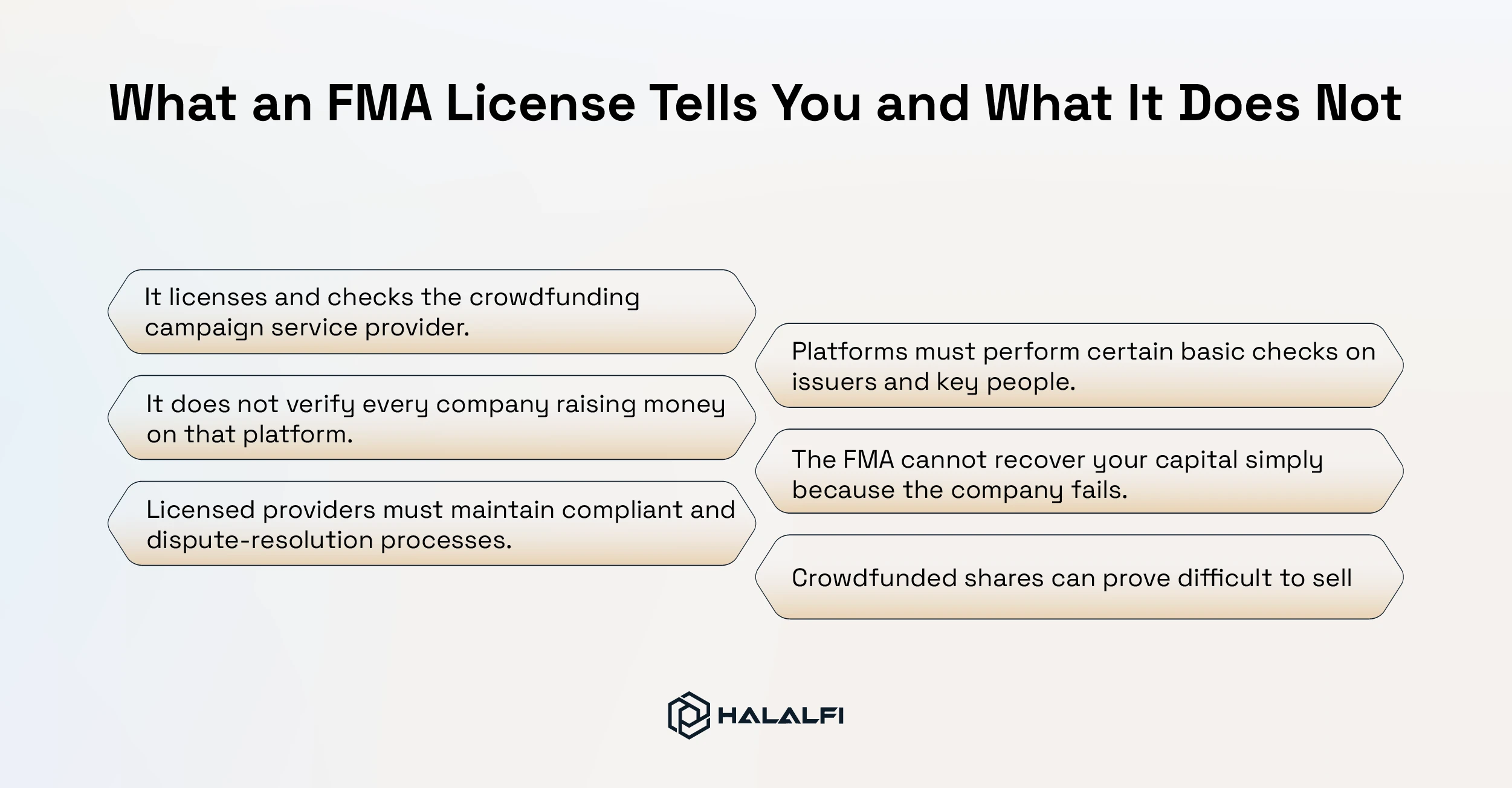
Seeing “FMA licensed” should reassure you about some things. It should not end your research. The FMA makes the limits clear:
It licenses and checks the crowdfunding campaign service provider.
It does not verify every company raising money on that platform.
Licensed providers must maintain compliant and dispute-resolution processes.
Platforms must perform certain basic checks on issuers and key people.
The FMA cannot recover your capital simply because the company fails.
Crowdfunded shares can prove difficult to sell later.
Crowdfunding Opportunities Look Different When Interest Is Off the Table
Most Kiwi crowdfunding content assumes investors can freely choose among equity, interest-bearing lending, and other private investments.
That assumption does not work for everyone. An investor who wants Sharia alignment has another filter and wants to know how the money itself earns a return.
Interest-bearing loans create a riba issue. For example, a company can operate in a permissible industry and still use a financing contract that a Sharia-conscious investor will not accept.
That creates space for halal crowdfunding, in which the structure connects investor capital to permissible commercial activity rather than charging interest on the use of money.
HalalFi: The Part of Crowdfunding Kiwi Investors Rarely See
New Zealand investors already use crowdfunding to back private companies, property projects, and growing businesses.
In HalalFi, instead of earning interest from a business loan, investors fund Sharia-reviewed commercial projects using USDT.
Here, the return comes from activities such as sourcing, trade, or distribution rather than from charging a borrower for the use of money.
It is important for investors who like the direct-business approach of crowdfunding in New Zealand but want to avoid riba.
HalalFi, as a crypto crowdfunding, also provides each project with a defined duration, business model, expected return, and a Sharia review to be completed before committing capital.
It is not a New Zealand-licensed crowdfunding provider, so local eligibility must still be checked. But conceptually, Kiwi investors in HalalFi know what real business activity their money is funding.
Conclusion
New Zealand has already moved well past the stage where crowdfunding means a few friends funding someone's weekend idea.
Snowball reports more than NZ$ 200 million raised. PledgeMe has processed more than NZ$81 million in pledges, and Givealittle has surpassed NZ$361 million in donations. A newly licensed provider now uses equity crowdfunding for fractional property.
At the same time, the government is reconsidering crowdfunding limits as part of its 2026 capital-market reforms. There is real money here, and also real risk. That combination makes understanding the contract far more valuable than simply finding the next campaign.
There is nothing to rush into. Check HalalFi projects, study the completed projects, compare forecast and realized results, understand the contracts, and know exactly what you want before the next project opens.
Frequently Asked Questions
Can a New Zealand company raise more than NZ$2 million through crowdfunding?
The retail crowdfunding exemption caps qualifying raises at NZ$2 million over 12 months. A company may raise additional money through other routes, including eligible wholesale investors.
Can someone outside New Zealand invest through PledgeMe?
PledgeMe says international investors need to qualify as wholesale investors and remain legally permitted to invest under their home-country rules.
Is crypto crowdfunding automatically regulated like NZ equity crowdfunding?
No. The FMA says ICO-style crypto crowdfunding does not fall into the same category as licensed equity crowdfunding under the FMC Act: the actual rights and economic substance of the cryptoasset matter.
Is crowdfunding regulated in New Zealand?
Yes. Equity crowdfunding platforms that offer shares to retail investors generally need a license from the Financial Markets Authority. Donation and reward-based fundraising follow different rules.
How much can a company raise through equity crowdfunding in New Zealand?
A company can generally raise up to NZ$2 million in 12 months under the crowdfunding exemption without preparing a full Product Disclosure Statement.
Can New Zealand crowdfunding shares be sold easily?
Not always. Shares in private companies can be difficult to sell because they do not trade like NZX-listed stocks. Some companies may also place restrictions on transfers.
What happens if a New Zealand crowdfunding campaign misses its target?
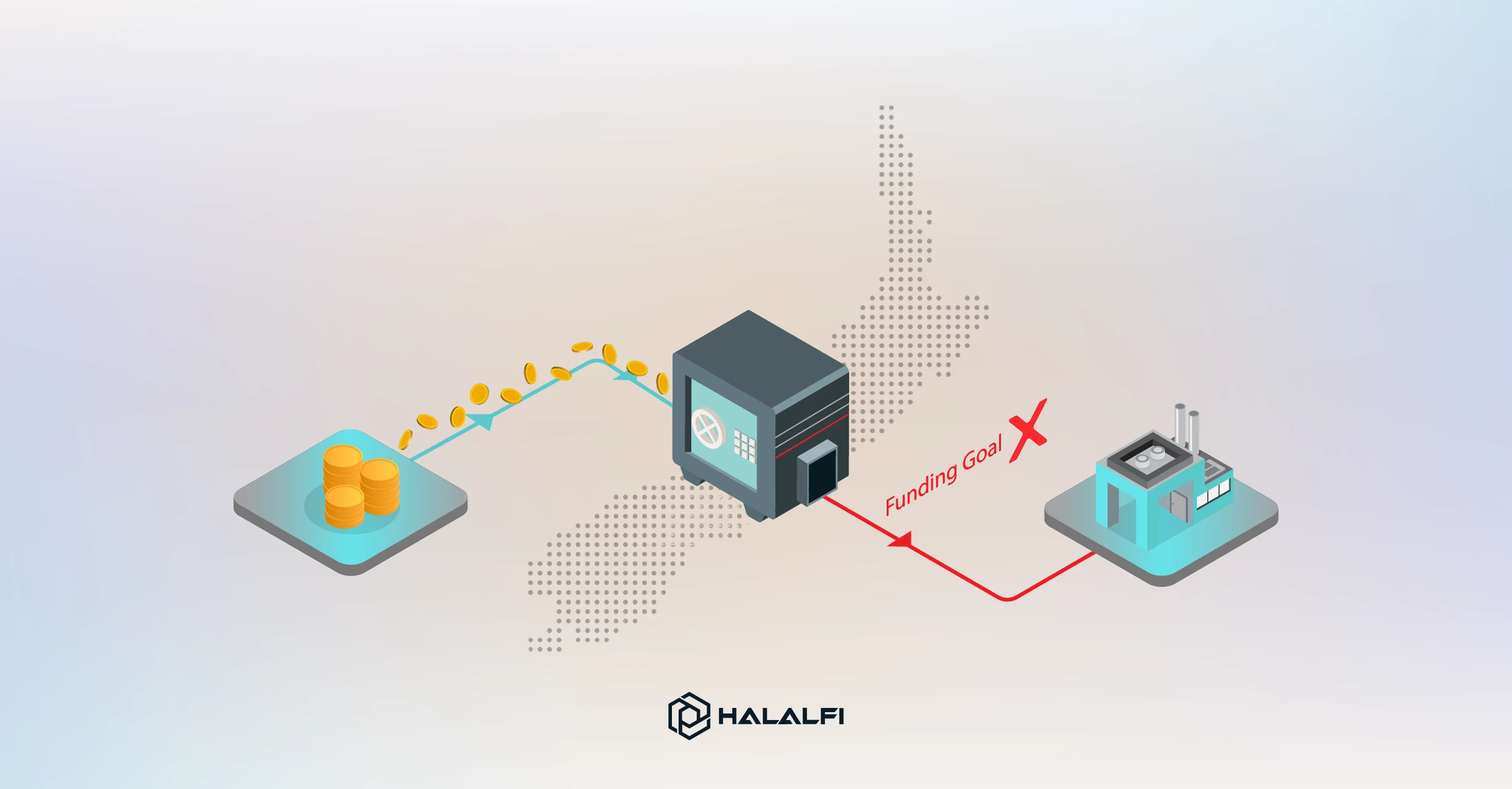
It depends on the platform. Some use an all-or-nothing model, meaning investors get their money back if the campaign fails to reach its minimum funding target.