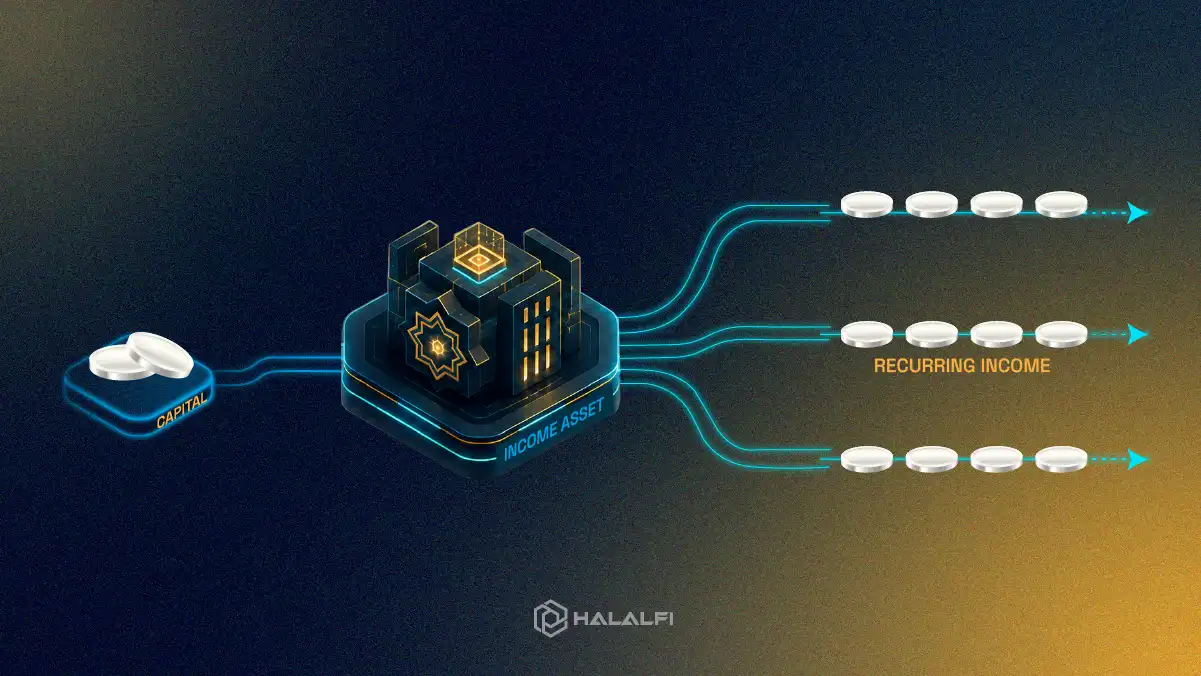
What would change if part of your income arrived without another hour on the clock? Passive income promises exactly that, but the useful version looks very different from the “make $10,000 while you sleep” posts scattered across social media.
The goal of this guide is to help you understand what passive income means, so you can make informed decisions which align with your resources and goals and build confidence in your financial path.
What Is Passive Income?
Real passive income needs one of three things first:
Money
Work
An asset worth paying for.
You might invest capital, build a useful digital product, own property, license intellectual property, or fund a business. The work becomes lighter later.
Passive income means cash flow that requires relatively little ongoing work after the initial setup or investment.
Fidelity puts it neatly:
“Passive income is a regular cash flow that doesn't require much time or effort to maintain.”
“Passive” describes the relationship between income and ongoing labor. It does not mean free money.
Consider this Reddit conversation here that makes it clear:
One user reported putting $8,000 into a vending machine, digital products, and rental equipment.
After 12 months, the projects produced $8,740 in revenue but only about $3,090 in profit before tax.
The digital-product business alone required roughly 100 hours of setup work before becoming relatively low-maintenance.
That account remains an unverified personal anecdote, but it captures the hidden work behind many online success stories.
Passive Income vs Non-Passive Income
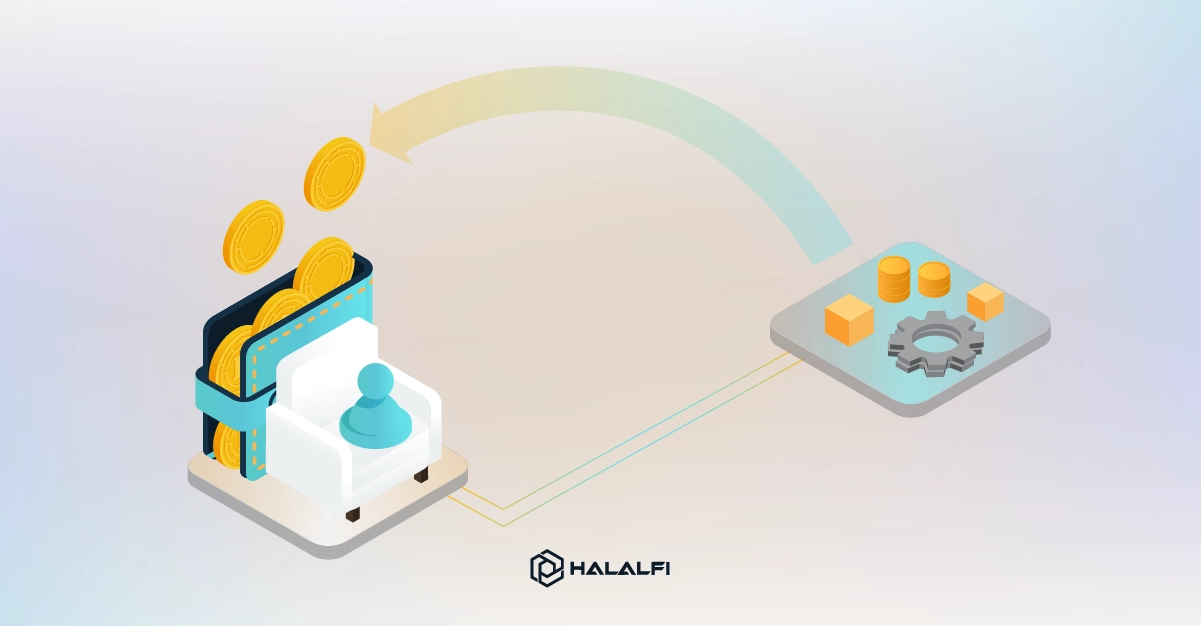
Passive income separates earnings from the hours you personally work. Active income depends heavily on your labor.
This table compares different income sources by showing how passive they typically are, what they require upfront, and how much ongoing effort they require.
Income source | Usually passive? | Upfront requirement | Ongoing involvement |
Dividend investments | High | Capital | Very low |
Sukuk or income funds | High | Capital | Very low |
Rental property | Medium | Capital + setup | Low to high |
Digital products | Medium | Time + skill | Low after setup |
Royalties | High | Valuable intellectual property | Low |
Affiliate website | Medium | Content + audience | Ongoing updates |
Private business profit share | High to medium | Capital | Usually low |
Freelancing | No | Skill | High |
Salary | No | Employment | High |
Consulting | No | Expertise | High |
How to Make Passive Income Without Falling for the Fantasy?
Start by deciding what you have more of: capital or time.
Someone with $100 but strong design skills has a very different starting point from someone with $100,000 and no desire to run a side business.
For the first person, templates, software, photography, ebooks,s or licensing may make sense. For the second, investment-based income can require far less personal work.
The trick is not finding the longest list. It is matching the income engine to what you already have, empowering you to make decisions that make you feel capable and in control.
How to Create Passive Income Online?
Online passive income works best when a digital asset serves the hundredth customer without requiring the creator to start over.
A downloadable spreadsheet illustrates the point. Someone may spend several weekends building it.
Customer number one downloads the same file as customer number 500. Production cost barely changes.
Digital products often sit closer to true passive income than content feeds because they can separate sales from daily publishing. Software, stock media, and licensing can do the same.
How to Generate Passive Income Online Without Becoming a Full-Time Creator
The internet rewards systems more than random output.
For example, an evergreen tutorial that ranks in search generates affiliate commissions months later,r or A template can sell while its creator works elsewhere.
None of these assets require zero maintenance, but each can gradually reduce the connection between time worked and money earned.
So build something useful enough that the same hour of work can earn money more than once.
How to Invest for Passive Income?
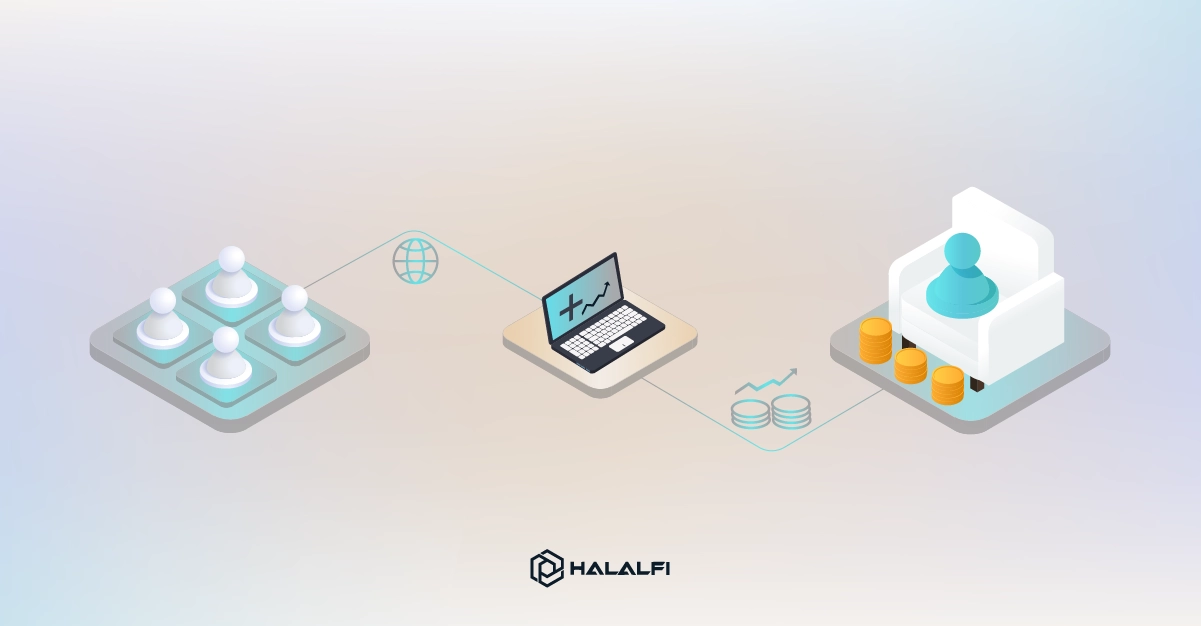
Investment-based passive income removes much of the operational work, but capital takes its place.
Dividend stocks can distribute company earnings. REITs can provide exposure to rental property without direct tenant management.
Sukuk can generate asset- or project-linked payments. Private-business investments can share commercial profit.
For investors who follow Islamic principles, a halal investment requires an additional filter. The income source matters.
A permissible structure should avoid riba, prohibited businesses, gambling-like transactions, and excessive contractual uncertainty.
According to ICD, Mustafa Adil, LSEG’s Head of Islamic Finance, expects that growth to continue:
“Global Islamic finance assets are projected to reach US$9.7 trillion by 2029, growing at an average annual rate of 10%.”
What Are Examples of Passive Income?
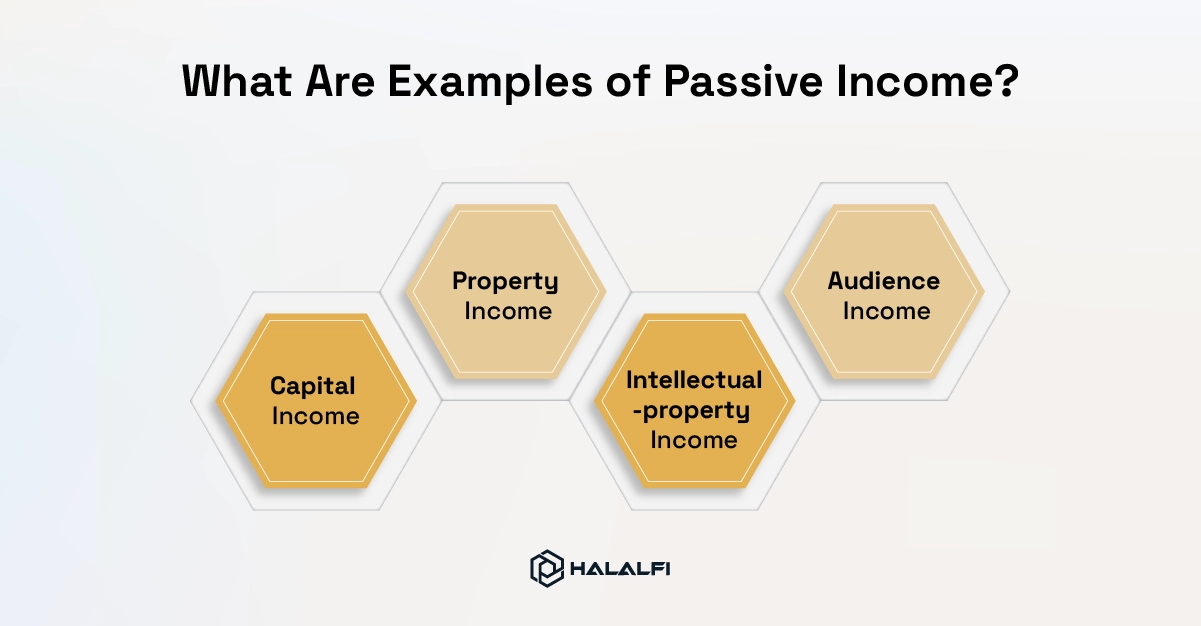
The most useful categories are 4 groups:
Capital income: dividends, sukuk distributions, REIT income, and private-business profit sharing.
Property income: residential rent, commercial rent, storage, parking, or equipment rental.
Intellectual-property income: books, photography, music, software licenses, and templates.
Audience income: affiliate content, YouTube libraries, newsletters, courses, and evergreen websites.
Each has a price. Investments like stablecoin investment cost capital; property costs capital and attention; digital products cost time, & Audience businesses demand distribution before they become passive.
Is Interest Income, Passive Income?
In casual financial language, yes. Bank account interest can arrive without daily work.
Under U.S. tax rules, the answer changes. The IRS normally classifies interest and dividends as portfolio income, not passive activity income, under its Section 469 rules. Most bank interest is also taxable income.
For a Muslim investor, another distinction matters. Conventional interest conflicts with the prohibition on riba, so an income stream can look wonderfully passive and still fail a Sharia screen. Passive does not automatically mean permissible.
How Is Passive Income Taxed?
According to the IRS passive-activity guide, in the United States, there is no single “passive income tax rate.”
Different incomes receive different treatment. Ordinary dividends can face ordinary income-tax rates.
Qualified dividends may be taxed at lower capital-gain rates. Rental income is subject to its own rules.
Interest generally counts as taxable income. Business and royalty income can create different reporting obligations.
High-income investors may also face the 3.8% Net Investment Income Tax. For individuals, the IRS applies it to qualifying net investment income when modified adjusted gross income exceeds statutory thresholds such as $200,000 for single filers or $250,000 for married couples filing jointly.
So, is passive income taxable? Usually, yes, unless a specific exemption or tax-advantaged account changes the answer. Investors outside the United States need local advice.
Passive Income Ideas: Which Ones Actually Make Sense?
A useful passive income idea should match your budget, skills, and willingness to manage the process. Some options require time upfront, while others require capital.
Dividend investments can provide regular payments, but they need upfront capital, and returns are never guaranteed.
Rental properties can generate monthly cash flow, though maintenance and tenant issues can make them feel less passive.
Digital products like templates, ebooks, and software can be created once and sold repeatedly, but they require upfront effort.
Royalties and licensing allow creators to earn income from assets such as photos, music, or software.
Affiliate content can generate commissions from articles or websites over time, but it still needs updates and maintenance.
The right choice depends on your resources and goals. For investors seeking passive income while adhering to Islamic finance principles, the source and structure of returns matter as much as the potential earnings.
Then there is another category that sits closer to traditional investing: funding real businesses or income-producing assets and receiving a share of the returns.
It appeals to people who do not want to become landlords, creators, or online publishers. Instead of building an audience or managing customers, they put capital into an investment structure tied to economic activity.
A high-yield investment may look attractive, but if its underlying structure relies on interest, excessive uncertainty, or prohibited business activity, it does not meet Islamic investment principles.
That distinction matters when comparing savings products, bonds, property investments, private businesses, or even newer digital-asset opportunities.
So here, platforms built specifically around Sharia-conscious investing become relevant.
How HalalFi Can Turn Business Activity Into Passive Income
HalalFi approaches passive income from a different direction.
Instead of asking investors to operate a business themselves, its crowdfunding platform connects USDT capital with screened commercial projects.
In HalalFi, projects undergo both business and Sharia review before listing. Investors fund the project, the business carries out the commercial activity, and profit distribution follows the agreed structure.
That arrangement generates passive income because the investor does not need to source inventory, find customers, manage employees, or execute trades personally.
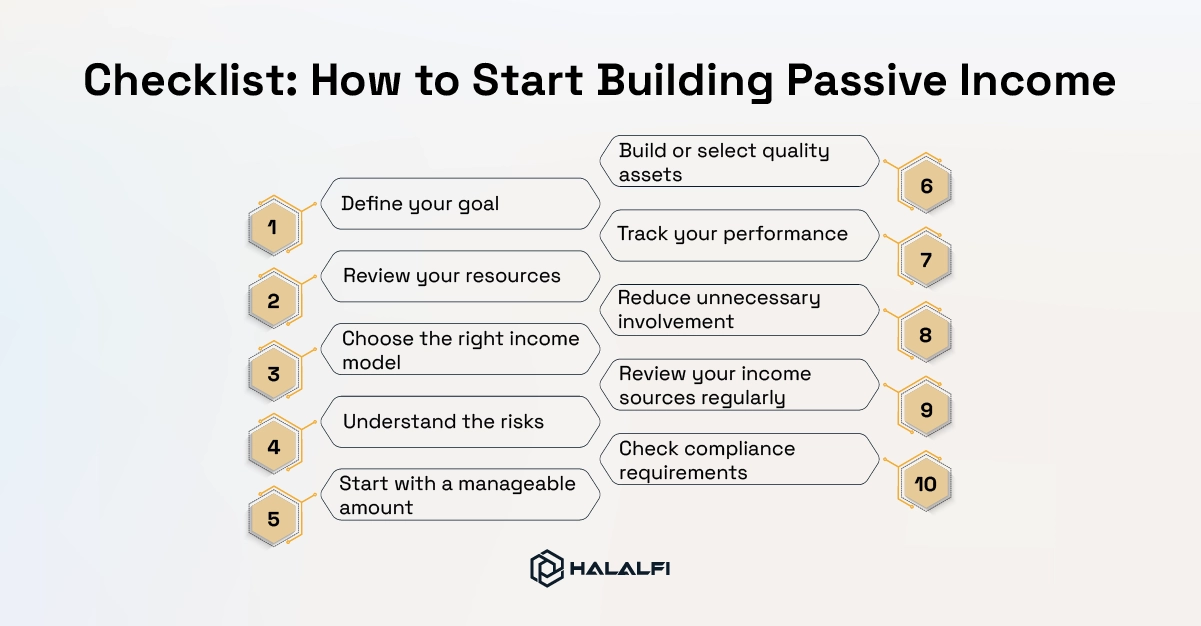
Checklist: How to Start Building Passive Income
Building passive income usually starts with preparation, not choosing the first opportunity you see. Use this checklist to create a realistic plan:
Define your goal: Decide how much monthly income you want to generate and why you want it.
Review your resources: Identify how much capital, time, and skills you can invest.
Choose the right income model: Decide whether investing, digital products, property, royalties, or business investments fit your situation.
Understand the risks: Check potential losses, fees, liquidity, and how returns are generated before investing.
Start with a manageable amount: Test your approach before committing a large portion of your money.
Build or select quality assets: Focus on investments, products, or businesses with real value.
Track your performance: Monitor income and expenses, and assess whether the strategy is meeting your expectations.
Reduce unnecessary involvement: Create systems, automate tasks, or use professional services where helpful.
Review your income sources regularly: Update, improve, or replace assets that no longer perform well.
Check compliance requirements: For halal investing, ensure the income source and investment structure comply with Sharia principles.
The Better Way to Think About Passive Income
A reliable passive-income plan starts with a concern: What asset will create the cash?
Sometimes the answer is to invest $100,000 in income-producing securities. Sometimes it is a parking space. Sometimes it is a spreadsheet that solves a boring problem exceptionally well.
For investors who want to avoid interest and link returns to real commercial activity, HalalFi is a principal-protected investment platform that offers an alternative.
Its model lets investors use USDT to participate in screened projects while the businesses handle day-to-day execution. That can turn capital into relatively hands-off, performance-linked cash flow.
Do not start by chasing the biggest percentage on the screen. Start with the source of the return.
Read the project, understand the term, check the protection structure, ask how the business makes money, and then decide whether the expected reward earns a place beside your other income streams.
If project-based halal passive income fits that plan, explore HalalFi’s current opportunities and see what your USDT would actually fund before committing it.
The best passive income does not make money feel mysterious.
Frequently Asked Questions
Can someone start passive income with only $100?
Yes, but $100 will not generate meaningful investment income on its own.
How long does it take before passive income actually feels passive?
It depends on the model. A portfolio can become low-maintenance immediately after setup. A digital business may require months of product development, marketing,g and testing before maintenance drops.
Should passive income be reinvested or withdrawn?
That depends on the goal. Someone building wealth may reinvest distributions to buy more income-producing assets. Someone using passive income for living expenses may withdraw part of it.
Can a stablecoin create passive income by itself?
No. Holding USDT does not create income. A return needs a source, such as lending, staking, trading, ng or participation in a business project.
Is a higher passive income yield always better?
No. A higher quoted yield can compensate investors for greater business, market, liquidity, credit, or structural risk.
Is passive income really passive after retirement?
Investment income can require very little work, but portfolios still need occasional review. Taxes, inflation, withdrawals, changing risk, and asset performance can alter the plan.