
Your 401(k) is growing, but you have no idea whether the companies inside it are halal. That is a bad position investors discover only after they start looking under the hood.
A familiar ETF may hold hundreds of companies, including banks, alcohol producers, gambling businesses, or firms carrying financial ratios that fail common Shariah screens.
Halal investment in the USA starts by solving that problem. Investors need to know what they own and how their returns are sent to them.
The US market now includes Shariah-screened stocks and ETFs, Islamic funds, real estate, private businesses, and online project-based investments.
So this guide will not hand you another generic list of “halal investments.” We show you here where money can go in the US, what makes each option halal, and what can go wrong.
Why Are More People Exploring Halal Investment in the US?
The United States has one of the largest investment markets in the world. The New York Stock Exchange and Nasdaq together represent thousands of publicly traded companies, offering investors many choices.
According to Pew Research Center’s 2023–2024 Religious Landscape Study, Muslims represent around 1.2% of US adults.
For Muslim investors who care about ethical investing, the challenge has often been filtering those choices.
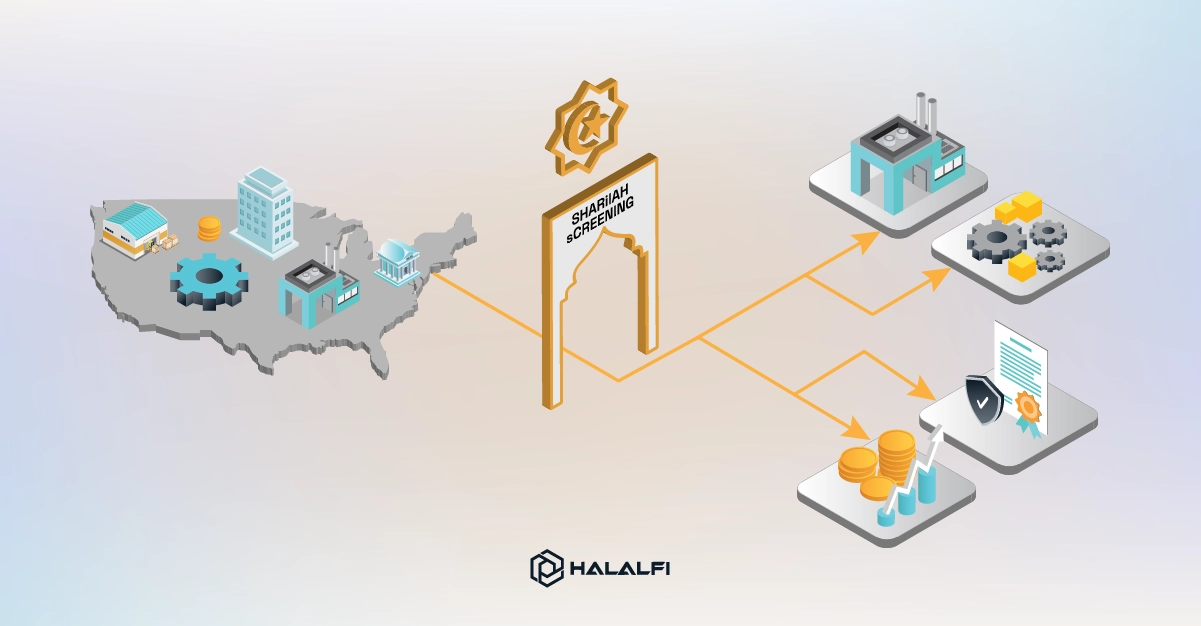
A traditional portfolio may include companies in industries that do not align with Shariah principles. Some financial products may also involve interest-based structures. A halal investment focuses on some concerns:
Does the business activity align with Islamic principles?
Does the investment avoid riba?
Does the return come from real economic activity?
Is the risk and ownership structure clear?
What Are the Best Halal Investment Options in the USA?
We can't introduce the “best” halal investment in the USA for everyone. For example, a young professional saving for retirement may make different choices from a business owner seeking alternative assets. The right option depends on:
Investment timeline
Risk tolerance
Expected return
Personal financial goals
The US already has dedicated Shariah-compliant investment products. For example, the Wahed FTSE USA Shariah ETF (HLAL) gives investors exposure to US companies that pass Shariah screening.
The ETF launched in 2019 and tracks the FTSE Shariah USA Index. By 2026, the fund reported more than $1 billion in net assets, showing growing demand for publicly traded halal investment options in America.
Halal Investment Options USA
The table below shows the most familiar halal investment options in the USA:
Investment Type | How It Works | Example |
Shariah-compliant stocks | Investing in screened companies | Technology or healthcare companies that pass Islamic screening |
Islamic funds | Professionally managed portfolios | Funds following Shariah guidelines |
Sukuk | Asset-backed certificates similar to bonds but structured differently | Government or corporate Sukuk |
Real estate | Ownership or partnership in property | Commercial or residential projects |
Business investment | Funding real businesses | SME growth opportunities |
Halal crowdfunding | Investing directly into approved projects | Business financing platforms |
Halal Investment Platforms in the USA
The US market already has platforms and funds focused on Shariah-compliant investing. Let's see some of them:
Platform | Main Focus | What Investors Can Access | Best Fit For |
Wahed Invest | Automated halal investing | Shariah-screened portfolios of stocks and ETFs | Beginners looking for managed portfolios |
Amana Mutual Funds | Islamic mutual funds | Shariah-compliant equity funds managed by Saturna Capital | Long-term stock investors |
Azzad Asset Management | Islamic investment management | Shariah-compliant funds and wealth management services | Investors seeking professional management |
SP Funds | Islamic ETFs | Shariah-screened ETFs tracking US and global equities | ETF investors |
HalalFi | Digital halal project investment platform | Access to reviewed business opportunities and real-world projects | Investors looking for direct project-based opportunities |
Islamic Investment in USA: Differences From Traditional Investing
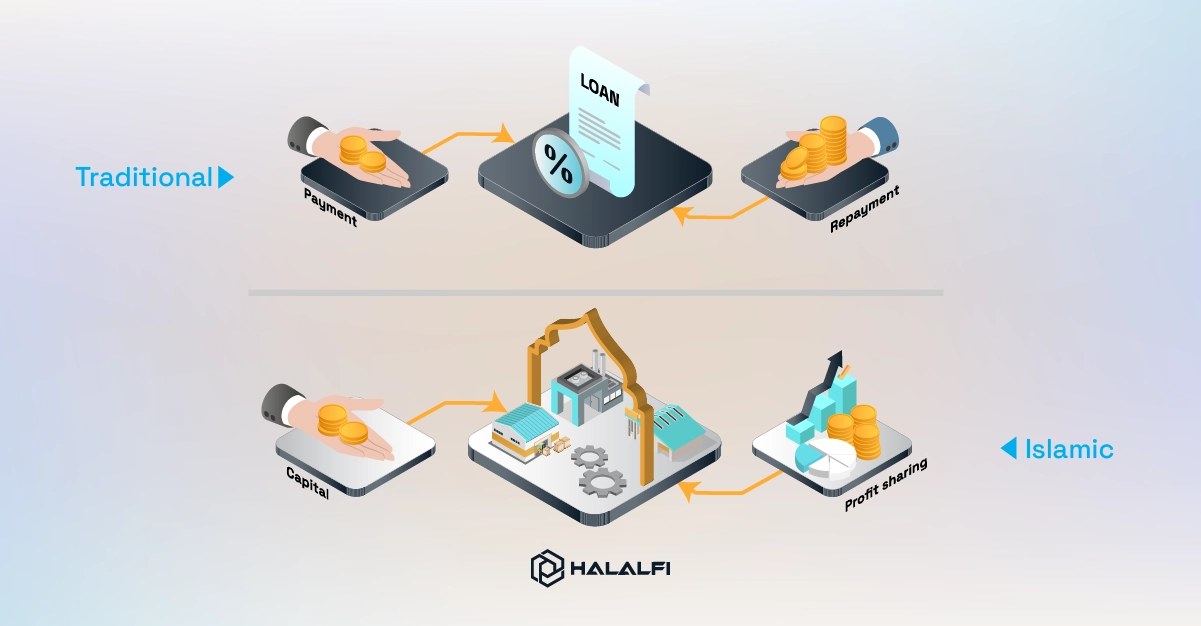
Islamic finance begins with a focus: returns should come from real value creation, not money generating money on its own.
Traditional finance focuses on financial instruments, interest rates, and debt structures. Islamic finance emphasizes:
Asset ownership
Risk sharing
Ethical business activities
Transparency
A good example is profit-sharing. Instead of receiving a guaranteed interest payment, an investor may participate in a business's success through structures such as mudarabah or musharakah.
For example, a small food company wants funding to expand from one location to three locations.
A traditional loan may involve interest payments, or a Shariah-based structure may allow investors and the business owner to share profits according to agreed terms.
The examples show that the business grows, investors benefit, and the relationship connects to commercial activity.
Is Halal Investing for Beginners Possible in the USA?
Many beginners think investing requires advanced financial knowledge, but it does not. The difficult part is understanding what you are buying. Someone starting with halal investing for beginners should first learn:
How returns are generated
What risks exist
What assets they own
How the investment structure works
The goal is to understand each investment before committing money. So a beginner may start by:
Researching Shariah-screened companies
Learning about Islamic finance
Comparing investment platforms
Starting with smaller amounts
The Rise of Digital Halal Investment Platforms in the US
The way people invest has changed. Twenty years ago, many investors needed a broker to access opportunities. Today, online platforms allow individuals to explore investments directly.
The changes have also created demand for a halal investment app in the USA and digital platforms that make Islamic investment easier to understand.
For example, a platform like HalalFi comes to this market by connecting investors with project-based opportunities. HalalFi focuses on specific projects where users can review:
Business information
Funding goals
Expected timelines
Investment structure
Potential returns
How HalalFi Creates a Different Halal Investment Experience
Many investors want access to opportunities, but they also want clarity. HalalFi focuses on connecting capital with real-world projects through a digital platform. The process centers around:
Reviewing available projects
Understanding business activities
Examining investment structures
Tracking project information
For example, instead of investing in an unclear financial product, an investor can explore a specific opportunity and understand the business behind it.
HalalFi also aligns with the growing interest in crypto investing and digital assets by exploring how blockchain technology can enhance transparency in investment processes.
Why Real Projects Are More Important than Modern Halal Investing?
Newer investors want background. For example, a restaurant expansion, a technology company, a renewable energy project, or a property development tells a clearer story than a number on an investment dashboard.
This idea connects with halal crowdfunding, where investors can support businesses while understanding the purpose behind the funding.
Consider a company needs capital to purchase equipment and increase production. Investors provide funding and the business grows. After that, returns come from commercial activity.
That connection between capital and business is one reason crowdfunding and islamic finance continue to attract attention.
The Future of Halal Investment in the USA
The US market continues to create more investment choices. At the same time, investors want control, transparency, and alignment with their values.
The growth of Islamic finance, digital platforms, and alternative investments shows that people are searching for different ways to build wealth.
For investors interested in exploring halal opportunities, HalalFi offers a way to find projects built around real business activities and Shariah-focused structures.
Explore available opportunities and HalalFi Projects, understand the projects, and decide which investments match your goals. The best time to learn how your money works is before you invest it.
Final Thoughts
Halal investment in the USA is not limited to traditional financial products. Investors now have access to stocks, funds, real estate, business opportunities, and digital platforms, providing more choice. The important step is understanding what models are behind the return.
If someone wants halal investment opportunities connected to real projects, HalalFi provides a platform to explore investment options with more visibility into the businesses behind them.
Before making any investment decision, review the opportunity, understand the risks, and choose investments that fit your financial goals.
Frequently Asked Questions
Is investing in US stocks halal?
Some US stocks may qualify as halal investments if they pass Shariah screening criteria.
Are ETFs available for halal investors in America?
Yes. Some ETFs focus on Shariah-compliant companies. Examples include funds that track Islamic indexes, although investors should review each fund’s methodology.
Can non-Muslims invest in halal investment platforms?
Yes. Halal investment principles often attract investors interested in ethical investing, transparency, and asset-backed opportunities.
Is crypto investing halal in the USA?
Scholars have different views regarding cryptocurrencies. Investors should research each asset and consider its structure, purpose, and risks.
How much money do I need to start halal investing in america?
The amount depends on the investment type. Some platforms like halalfi allow smaller investments, while others require larger commitments depending on the project.