
Why does money sometimes grow even when nothing real is happening in the background?
Money can sometimes feel like it grows on its own, numbers increase, returns appear, and everything looks stable on paper. But the real question is what’s actually happening underneath that growth, and whether it’s connected to any real economic activity or not.
This is where the difference between guaranteed returns and risk-sharing in Islamic finance becomes important.
In conventional fixed-return systems, income is often promised regardless of outcomes. But Islamic finance links profit to actual performance, meaning returns rise or fall with actual business results rather than with predetermined interest rates.
In this article, we’ll see how both systems work, why guaranteed returns raise ethical and structural concerns in Islamic finance, and how risk-sharing models aim to create a closer connection between capital, effort, and real-world value.
Why Guaranteed Returns Conflict with Islamic Finance Principles
Guaranteed returns may sound safe, but in Islamic finance, safety cannot come at the cost of justice. Fixed profits mean earning money regardless of whether a business succeeds or fails, which removes real economic participation.
Islamic finance principles require that returns come from actual trade, effort, and risk-sharing. This is why fixed profits are considered riba in Islamic finance, as they reflect wealth growth without exposure to real business outcomes.
The World Bank notes that ethical finance systems tied to real assets tend to improve global financial inclusion and stability.
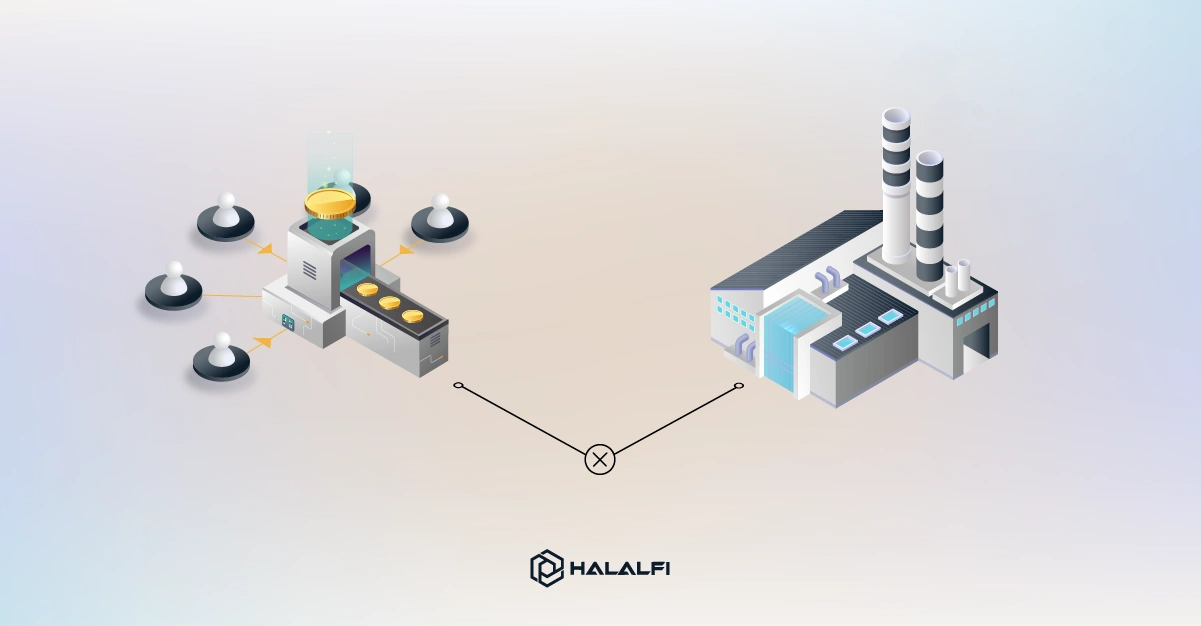
What Is Profit-Sharing in Islamic Finance?
Profit-sharing, or Musharakah and Mudarabah, is the backbone of halal investing for beginners. It means investors and entrepreneurs share both profit and risk according to agreed-upon ratios.
Unlike conventional lending, there is no guaranteed return. If the business grows, everyone benefits. If it struggles, losses are shared fairly. This makes it a principal-protected investment model in spirit, but not in guarantee.
Actually, profit is earned through participation, not prediction.
The Reality Behind “Fixed Profits”
Fixed returns might feel comforting. You invest money, wait for time to pass, and receive a guaranteed increase.
But Islamic finance looks at that simplicity differently. Because behind that “certainty” is a very specific economic reality: one party carries the full risk, while the other party is protected from it completely.
Profit-sharing contracts like Musharakah and Mudarabah are structured differently. They connect capital directly to business activity.
This is where confusion begins for many beginners exploring halal investing. They assume Islamic finance means cheaper or safer returns.
Even institutions such as the International Monetary Fund have acknowledged that asset-based financing tends to improve financial stability by reducing speculative leverage and strengthening real-sector linkages.
So the real question is not “Is it cheaper?” but rather “Is it ethically structured under Islamic finance principles?”
The IMF has acknowledged that asset-based financing tends to improve financial stability by reducing speculative leverage and increasing real-sector linkages.
Profit vs Return: A Difference Often Misunderstood
Many people confuse “profit” and “return,” but Islamic finance makes a clear distinction between them.
Profit refers to actual earnings from a business after costs. Return, however, includes both profit and potential loss. In halal investment options, returns are never fixed; they fluctuate based on actual performance.
Conventional systems often promise stable returns, but Islamic finance replaces that idea with reality-based outcomes. This ensures that money is tied to productivity rather than guaranteed accumulation.
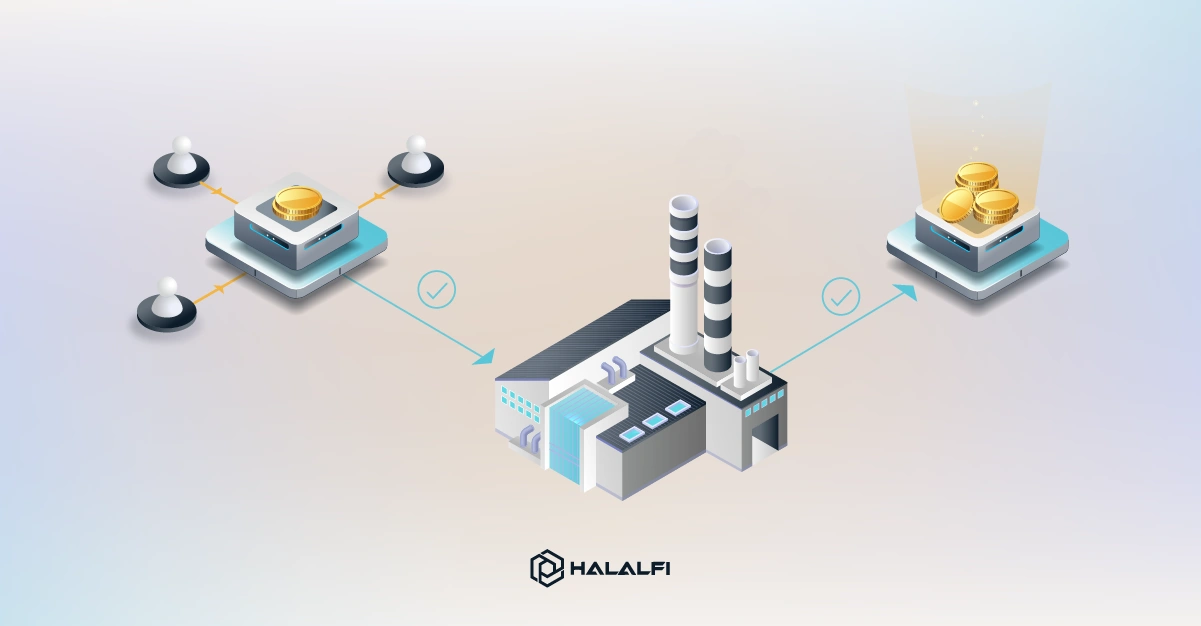
Why Riba (Interest) Is Prohibited
Riba in Islamic finance refers to earning money from money without risk or productive effort. It creates an imbalance because one party gains regardless of the outcome, while the other bears the burden.
The Qur’an states:
“Allah has permitted trade and forbidden riba.”
(Surah Al-Baqarah 2:275)
The Prophet Muhammad (peace be upon him) also warned against involvement in interest-based systems, including those who document or facilitate it.
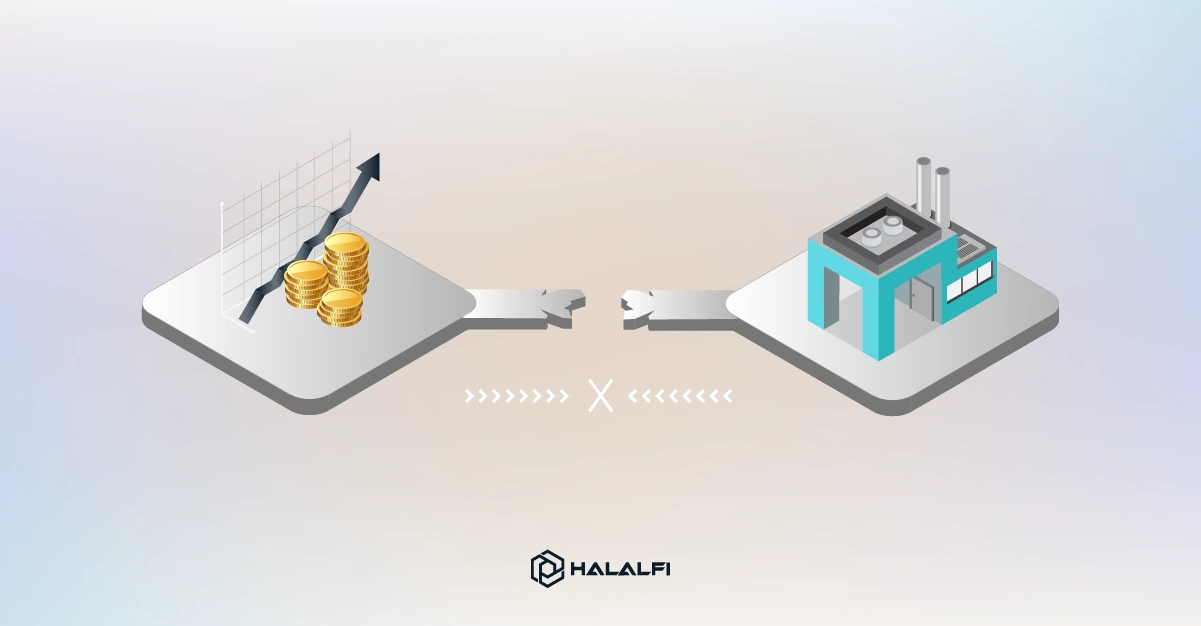
Islamic Finance Is Growing Rapidly
Islamic finance is no longer a niche system. It is expanding across multiple regions:
According to Bank Negara Malasia, this country holds one of the most developed Islamic banking systems globally, with Islamic finance making up nearly 40% of its banking sector
Saudi Arabia’s Islamic banking assets exceed hundreds of billions of USD
Pakistan continues to expand Sharia-compliant banking through national reforms
The UAE has become a major hub for halal investment innovation and fintech growth
Global Islamic finance assets are now estimated at trillions of dollars, reflecting strong demand for halal investment alternatives.
The Principle of “No Gain Without Risk”
A core Islamic finance principle is al-ghunm bil-ghurm, no gain without risk.
This principle ensures that every halal investment must involve shared exposure. If someone profits, they must also accept the possibility of loss.
Gain is justified only when risk is shared. This principle is why fixed interest models are rejected. They remove uncertainty for one party while transferring all risk to the other.
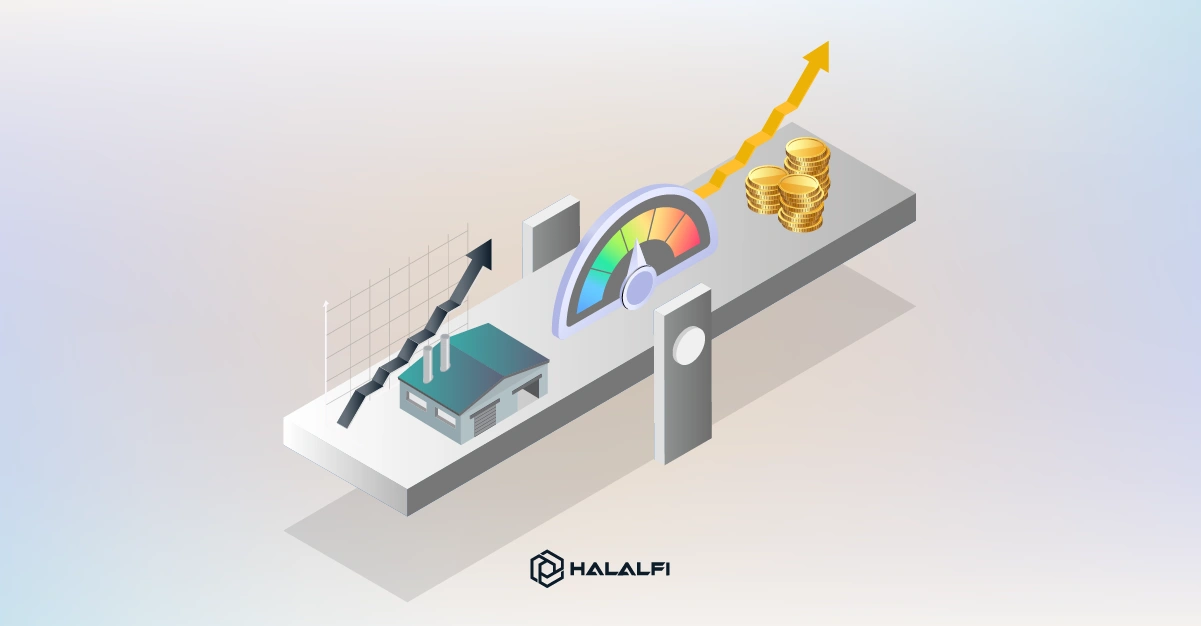
Fixed Return vs Profit-Sharing
This comparison shows why Islamic finance cannot promise fixed returns; it would completely undermine the structure of risk-sharing.
Feature | Fixed Return System | Islamic Profit-Sharing |
Profit Type | Guaranteed | Variable |
Risk | One-sided (borrower) | Shared |
Basis | Lending | Trade & investment |
Sharia compliance | Not allowed | Allowed |
Outcome dependency | None | Business performance |
Ownership | No real ownership transfer | Partial/real ownership in an asset or project |
Risk Exposure | Mainly on the borrower | Shared between parties |
Economic Linkage | Weak (debt-based) | Strong (linked to the real economy) |
Sharia Basis | Interest (Riba-based) | Profit-sharing (Halal structure) |
Asset Backing | Not required | Usually required / asset-backed structure |
Experiences from Global Financial Markets
Across Southeast Asia and the Middle East, investors have increasingly shifted toward halal investment for beginners amid concerns about trust in speculative markets.
In Indonesia, Islamic fintech adoption has grown significantly in the last decade, supported by digital banking reforms. In Saudi Arabia, Vision 2030 includes strengthening Islamic financial ecosystems as part of its economic diversification efforts.
An IMF report highlights that asset-backed financing models improve financial resilience in volatile economies.
Financial scholar Mahmoud El-Gamal once noted:
“Islamic finance is not about eliminating risk, it is about distributing it fairly.”
Where Islamic Finance Meets Modern Crowdfunding
Traditional Islamic contracts such as Musharakah and Mudarabah are now being adapted for digital platforms. This includes tokenised assets, blockchain verification, and real-time reporting.
Platforms like HalalFi combine these tools with Islamic finance principles to make halal investing more accessible globally.
The goal is not just compliance, it is transparency, fairness, and participation.
Can Islamic Finance Ever Offer Fixed Returns?
The short answer is no. Fixed returns would contradict the foundation of risk-sharing.
However, structures like lease-based models or asset-backed financing may yield predictable cash flows, but even these are not guaranteed profits in the Islamic sense.
The difference lies in obligation versus performance.
How Modern Islamic Finance Is Trying to Solve the Gap
Modern Islamic finance is standing at a very interesting crossroads.
On one side, there is traditional sharia law in finance, rooted in classical contracts like trade (bay’), partnership, and shared risk.
On the other side is today’s financial world: fast-moving, digital, global, and heavily influenced by fixed-return expectations.
The challenge is not that Islamic finance lacks principles. The challenge is that applying those principles to modern infrastructure is not always straightforward.
This is where platforms like HalalFi become important. Instead of trying to imitate fixed-return systems, HalalFi takes a different direction: it embraces uncertainty, but structures it fairly. Investors do not receive guaranteed returns.
Instead, they participate in real businesses through performance-based profit-sharing.
Interestingly, global investment behaviour is already shifting in this direction. According to industry trends, impact investing and ethical finance are growing rapidly across both Muslim and non-Muslim markets, as investors begin prioritising transparency over pure yield.
Today, for many people, the concern is not just “How much can I earn?” but also “What is my money actually supporting?” So halal crowdfunding becomes relevant.
These platforms, instead of feeding speculative cycles in which money moves based on hype or leverage, aim to connect capital to real-world businesses.
the Future of Ethical Investment Platforms
Modern fintech is now trying to solve a long-standing problem: connecting investors with real businesses without relying on interest-based models.
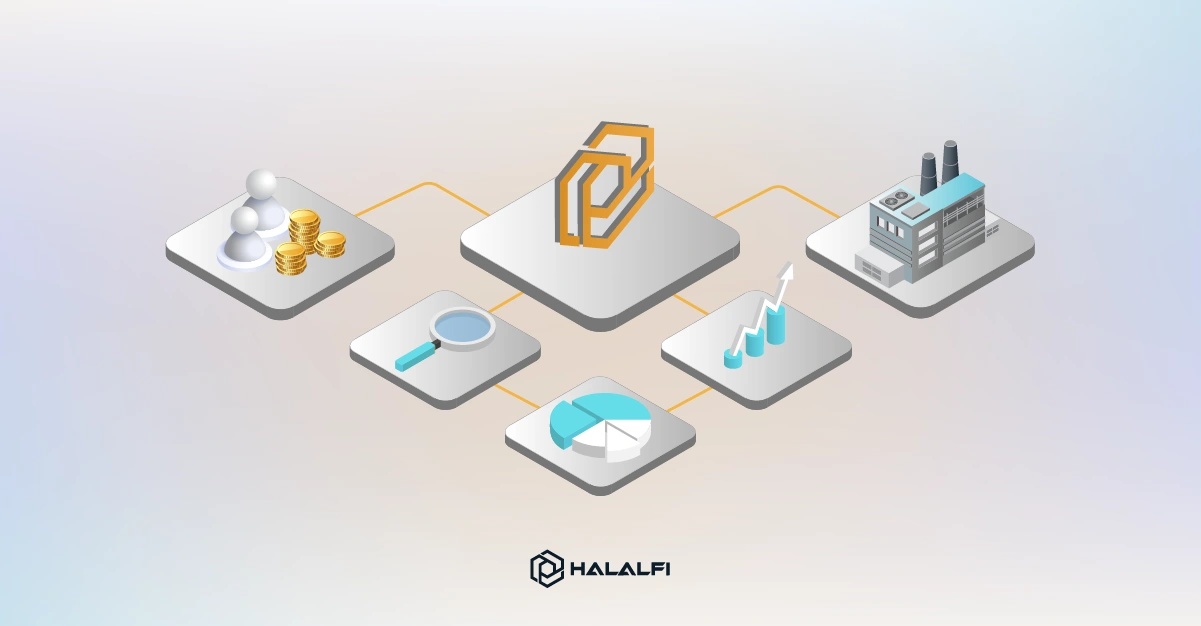
HalalFi is one example of this shift. It uses halal crowdfunding to connect investors with cash-flowing businesses through transparent smart contracts and performance-based profit-sharing.
At HalalFi, returns are determined by actual business performance rather than by fixed profits. Also, instead of speculation, funds are directed toward actual economic activity.
This aligns closely with Islamic finance principles while also addressing modern investor needs.
How HalalFi Structures Risk and Profit
HalalFi documation shows it uses a dual-audit system:
Sharia audit ensures compliance with Islamic rules
A business audit ensures financial viability
This creates a filtering system before investment begins.
It also introduces guarantor mechanisms and legal safeguards to reduce the risk of fraud. While profit is never guaranteed, the system aims to protect principal exposure as much as possible.
This is a change from “promise-based finance” to “performance-based finance.”
Conclusion: Why Risk-Sharing Defines the Future of Islamic Finance
Islamic finance is built to distribute it fairly. Guaranteed returns may feel comfortable, but they remove the essence of real economic participation.
As global demand for ethical finance grows, risk-sharing systems are becoming more relevant than ever.
Platforms like HalalFi represent a new direction in which transparency, real business activity, and Sharia compliance converge in a single ecosystem.
For anyone exploring halal investment today, the question is simple:
Do you want guaranteed numbers or real participation in real growth?
Frequently Asked Questions
Why can Islamic finance not guarantee profits?
Because profit must come from real economic activity, not fixed or risk-free lending.
Is all interest considered riba in Islamic finance?
Yes, any guaranteed return on a loan is considered riba in Islamic finance.
Are halal investment options risk-free?
No. They are not risk-free but are structured to share risk fairly.
What is the safest form of halal investment?
Asset-backed and profit-sharing models are considered the most balanced.
How does halal crowdfunding work?
It pools investor funds into real businesses and distributes profits based on performance.