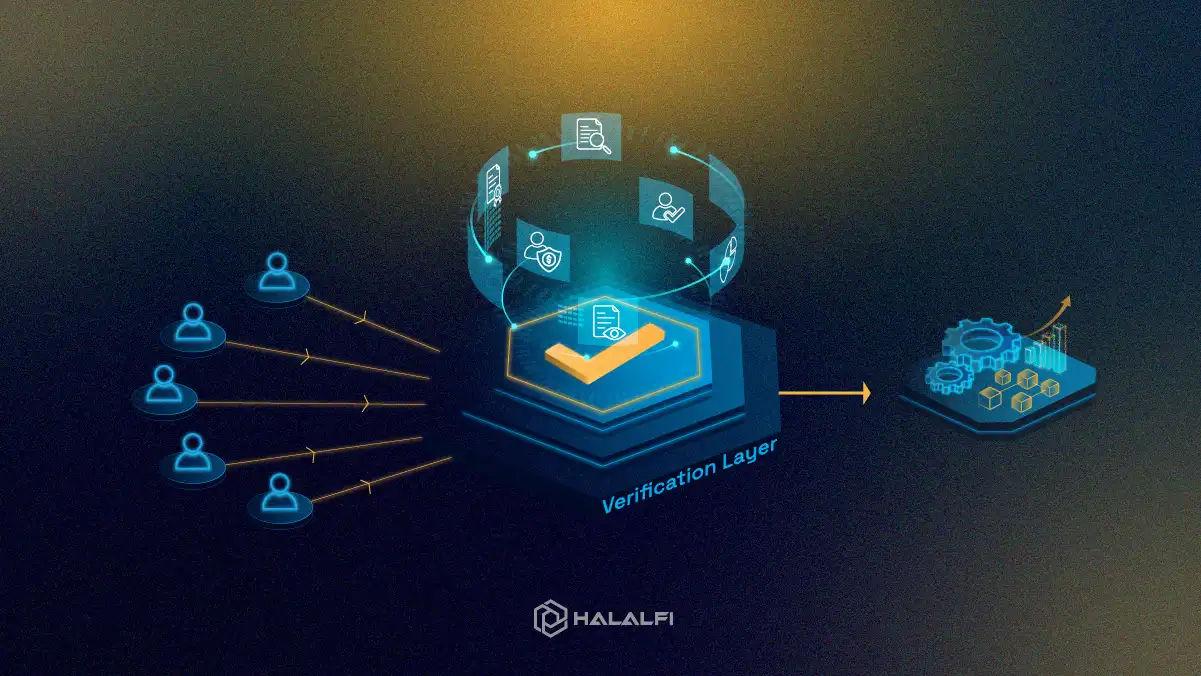
Why crowdfunding regulations feel exciting one minute and confusing the next?
That’s fair. Crowdfunding opens doors for founders, small businesses, and everyday investors. But once money moves from a crowd into a business, regulators start asking serious questions.
The short version is simple: rules now shape the best opportunities. They decide who can raise, who can invest, how much money can move, and what a crowdfunding platform must disclose. For investors and entrepreneurs, it matters. In this guide, we will discuss crowdfunding regulations.
What Are Crowdfunding Regulations?
Crowdfunding lets many people contribute smaller amounts to fund a business, project, product, or cause. Some people donate, some pre-order a product, and others invest in shares, profit-sharing, or repayment.
Regulators care most when crowdfunding looks like investing. MoneySense explains that securities-based crowdfunding encompasses lending- and equity-based models, while donation and reward campaigns typically fall outside MAS securities rules. Platforms offering securities-based crowdfunding must hold a MAS license.
A founder selling T-shirts through pre-orders faces one set of expectations. A founder offering revenue share or shares faces another. One feels like marketing, and the other clearly enters finance.

How Is Crowdfunding Regulated?
Crowdfunding is regulated through a combination of platform licensing, investor protection rules, disclosure requirements, fundraising limits, and financial compliance standards.
In many countries, investment-based crowdfunding platforms must register with or receive approval from a financial regulator before offering securities, loans, or other investment opportunities.
The exact rules depend on the country and the crowdfunding model. Equity, debt, reward-based, donation-based, and crypto crowdfunding may all fall under different legal frameworks.
Regulators typically focus on making risks clear, preventing fraud, verifying businesses, controlling how campaigns are advertised, and ensuring that investor funds are handled properly.
Why Crowdfunding Rules Matter?
Crowdfunding grew up. It no longer means a quirky gadget video and a hopeful comments section. It now funds SMEs, farms, property projects, software firms, renewable energy projects, and sometimes tokenized assets.
The World Bank wrote that building a crowdfunding ecosystem “depends on key enablers to build trust.” That line still lands because trust remains the whole game. Without it, crowdfunding turns into noise, hype, and disappointed backers.
Europe gives a useful snapshot. ESMA reported that 181 crowdfunding service providers raised €4.25 billion in the EU in 2024 across 21 member states. Loan-based projects took 58% of that funding, while retail investors made up 88% of the investor base.
Legal Requirements for Launching a Crowdfunding Campaign
Before launching a crowdfunding campaign, businesses need to understand the legal rules that apply to the platform, fundraising model, investors, and target market.
Requirements vary by country, but most regulated campaigns must meet several core compliance standards. Some crowdfunding legal requirements include:
Using a licensed or registered crowdfunding platform where required
Providing accurate business, financial, and campaign disclosures
Clearly explaining investment risks and potential losses
Following local fundraising and investor contribution limits
Verifying the identity of founders, businesses, and investors
Complying with anti-money laundering and know-your-customer rules
Following advertising and financial promotion restrictions
Protecting investor funds and personal information
Meeting tax, securities, and consumer protection obligations
Submitting ongoing reports after the campaign, where applicable
Crowdfunding Regulations in Muslim-Majority and Regional Markets
Crowdfunding regulations vary widely across Asia and the Middle East. While some countries have established mature regulatory frameworks for equity and P2P crowdfunding, others are still refining their rules to support innovation while strengthening investor protection.
The following examples highlight how some regional markets approach crowdfunding regulation.
Crowdfunding Regulations in Malaysia
Malaysia has become one of the clearest examples of Islamic and alternative finance. The Securities Commission Malaysia regulates ECF, P2P financing, digital asset exchanges, and property crowdfunding under its Recognized Markets framework. Its guidelines were revised again in May 2026.
The results look practical, not theoretical. By June 2025, Malaysia’s ECF and P2P platforms had raised more than RM10 billion and helped over 23,000 businesses.
MyCIF also allocated up to RM40 million under Budget 2025 to promote Islamic risk-sharing models such as Musharakah and Mudharabah.
Crowdfunding Regulations in Saudi Arabia
According to Arab News, Saudi Arabia takes a more institution-heavy route. SAMA’s debt-based crowdfunding rules require due diligence, audited financial statements where available, risk disclosure, electronic repayment, complaint handling, and clear default procedures.
The rules also require platforms to keep participant funds separate from company funds.
Crowdfunding Regulations in the UAE
The UAE moved early. The DFSA launched a framework for loan- and investment-based crowdfunding in 2017, calling it the first of its kind in the GCC.
That matters because Dubai and Abu Dhabi now attract fintech founders who want regulated access to regional capital.
Crowdfunding Regulations in Pakistan
Pakistan still shows the “work in progress” side of the market. In June 2025, the SECP invited feedback on P2P and crowd-lending reforms.
It flagged problems around eligible participants, escrow management, risk diversification, governance, trust accounts, disclosures, and cybersecurity.
Crowdfunding Regulations in Indonesia
Indonesia gives the most direct halal crowdfunding signal. OJK October 2025 update said Sharia securities crowdfunding reached IDR985.86 billion and captured 57.16% market share in that segment.
That number says that faith-aligned finance can compete when the structure feels credible.
Crowdfunding Regulations in Singapore
Singapore regulates investment crowdfunding primarily through the Monetary Authority of Singapore (MAS).
Depending on the business model, crowdfunding platforms may need to hold a Capital Markets Services (CMS) licence or qualify for an exemption under the Securities and Futures Act.
The framework focuses on investor protection, disclosure requirements, anti-money laundering compliance, and maintaining Singapore's position as one of Asia's leading fintech hubs.
Crowdfunding Regulations in the US and Europe
The United States regulates investment crowdfunding primarily through Regulation Crowdfunding (Reg CF).
Introduced under the JOBS Act and administered by the SEC, Reg CF allows eligible companies to raise up to $5 million within a 12-month period through an SEC-registered funding portal or broker-dealer.
Companies must provide required disclosures about their business, finances, and fundraising plans, while investment limits help protect non-accredited investors.
SEC Crowdfunding Regulations
The U.S. Securities and Exchange Commission (SEC) oversees Regulation Crowdfunding and sets the rules that companies, funding portals, and investors must follow.
These SEC crowdfunding regulations are designed to make fundraising more transparent while reducing the risk of fraud.
SEC requirements include:
Issuers must file the required disclosure documents before launching a campaign.
Fundraising must take place through an SEC-registered funding portal or broker-dealer.
Companies must provide ongoing reporting after completing a successful offering, where applicable.
Investment limits apply to many non-accredited investors based on regulatory requirements.
Funding portals must comply with investor protection, recordkeeping, and communication rules.
Crowdfunding Regulations in Europe
The European Union regulates business crowdfunding through the European Crowdfunding Service Providers Regulation (ECSPR).
This framework creates a more consistent regulatory environment across participating EU member states by allowing authorized platforms to operate across borders under a common set of rules.
Crowdfunding creates a direct connection between investors and businesses, particularly startups and SMEs, which can improve access to capital while increasing the importance of disclosure, transparency, and investor education.
The ECSPR also introduces requirements for risk warnings, due diligence, and standardized investor information to help users make informed investment decisions.
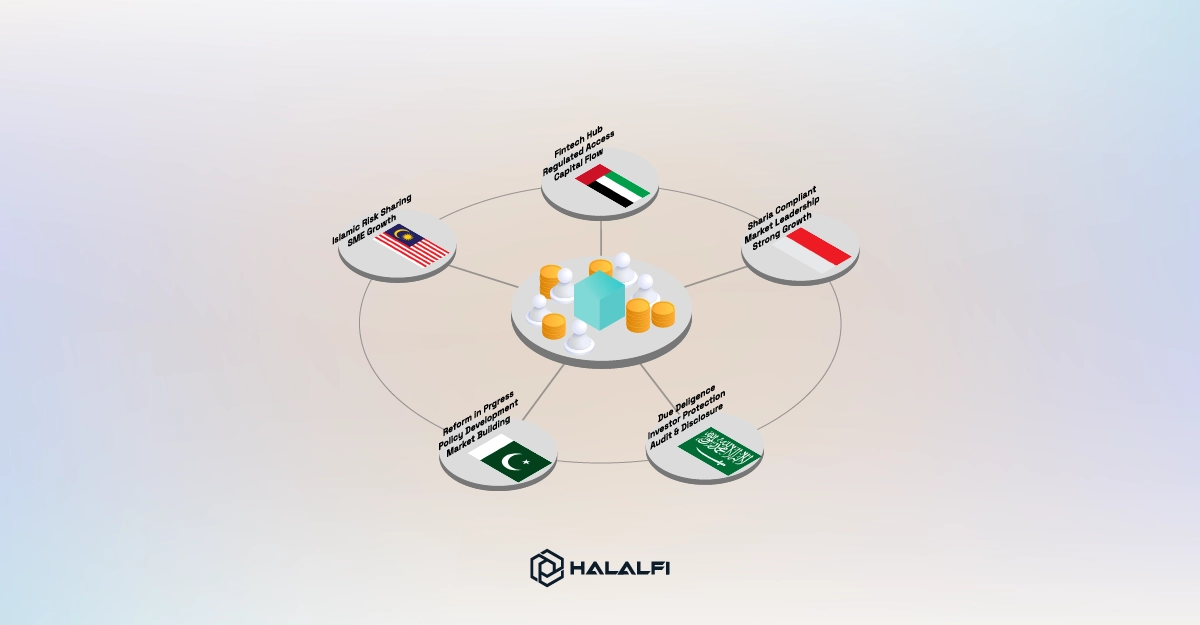
Comparison of Crowdfunding Regulations Across Different Regions
Crowdfunding regulations differ significantly from one market to another. While some jurisdictions focus on investor protection and platform licensing, others prioritize expanding access to finance for small businesses and startups.
The table below highlights how several major regions approach crowdfunding regulation and the opportunities their frameworks create.
Region | What regulators focus on | Opportunity |
Malaysia | ECF, P2P, Islamic risk-sharing | SME and halal finance growth |
Saudi Arabia | Due diligence, audits, disclosure | SME financing under Vision 2030 |
UAE | Licensed platforms in DIFC/ADGM-style hubs | Regional fintech expansion |
Pakistan | Reforming P2P and crowd lending | Early-stage market building |
US | Reg CF portal rules and $5M cap | Community-backed startups |
EU | ECSPR passporting and investor protection | Cross-border SME funding |
Crypto Crowdfunding Regulations
Crypto crowdfunding sounds simple: issue tokens, raise capital, build the project. But does the token act like a security, a utility, a payment asset, or something else?
Europe’s MiCA framework now sets uniform EU rules for many crypto-assets. ESMA says MiCA covers transparency, disclosure, authorization, and supervision for issuers and crypto-asset service providers. It also aims to improve market integrity and consumer awareness.
That does not mean every token raise becomes safe. It means teams must clearly describe rights, avoid misleading promises, and respect local securities rules.
A token that funds a business and offers profit expectations may trigger securities analysis in many countries.
What Smart Investors Should Check Before Joining Any Campaign?
Start with licensing or legal status, then read the disclosure. Look for business history, use of funds, repayment or profit-sharing mechanics, team identity, financial statements, platform fees, default procedures, and exit limits.
For crypto crowdfunding, ask one more question: what rights does the token actually give? Voting rights, fee discounts, revenue exposure, governance, and access rights create different legal and risk profiles. Vague wording usually hides weak thinking.
For halal crowdfunding, check the Sharia structure. Look at how the platform handles concerns about riba, gharar, and maysir.
A serious platform should explain profit-sharing, uncertainty, prohibited sectors, and business screening in plain English.

How Crowdfunding Regulations Shape Trust-Based Platforms?
Crowdfunding regulations exist for one simple reason: trust does not scale on its own. Once money moves from individuals to businesses, regulators step in to ensure disclosures are clear, risks are visible, and platforms don’t turn fundraising into unregulated speculation.
Models like HalalFi position themselves not outside regulation, but inside the direction modern regulation is already moving. It is toward transparency, risk controls, and real-economy financing.
What makes this crowdfunding platform model stand out is the way access is structured. Investors are typically given simplified entry points, while businesses face more rigorous scrutiny.
It aligns with global regulatory trends. Retail investors should be able to participate without requiring deep financial expertise, while issuers bear responsibility for compliance, disclosure, and due diligence.
Conclusion
Crowdfunding regulations do not kill opportunity. Good rules push platforms to disclose, verify, and protect users from the worst kind of financial storytelling.
HalalFi fits this moment because it connects ethical capital with real businesses and avoids the fixed-interest logic many investors reject.
Explore HalalFi’s Projects page, read the terms carefully, and look for opportunities where faith, impact, and profit can move in the same direction.
Frequently Asked Questions
Is crowdfunding regulated?
Yes. Crowdfunding is regulated in many countries, particularly when campaigns involve investments, shares, loans, tokens, or financial returns.
Why do crowdfunding regulations exist?
Crowdfunding regulations exist to protect investors, reduce fraud, and make fundraising more transparent.
Are crowdfunding regulations the same in every country?
No. Each country sets its own rules. Some markets allow equity, debt, and crypto crowdfunding under strict licensing. Others limit who can invest, how much a company can raise, or what platforms can advertise.
Do crowdfunding platforms need a license?
In many countries, yes. Platforms that offer investment-based crowdfunding often need approval from a financial regulator.
What happens if a crowdfunding campaign breaks regulations?
A campaign may face fines, removal from the platform, refund obligations, legal action, or a ban from future fundraising.
How can investors check whether a crowdfunding campaign follows the rules?
Investors should check whether the platform is registered or licensed, read the campaign disclosures, review risk warnings, confirm the business identity, and avoid campaigns that promise guaranteed returns without explaining the legal structure.
Can crypto crowdfunding work legally?
Yes, but only with careful structuring. Teams must check securities, crypto-asset, marketing, AML, tax, and consumer protection rules in each target market. A token label alone does not avoid regulation.