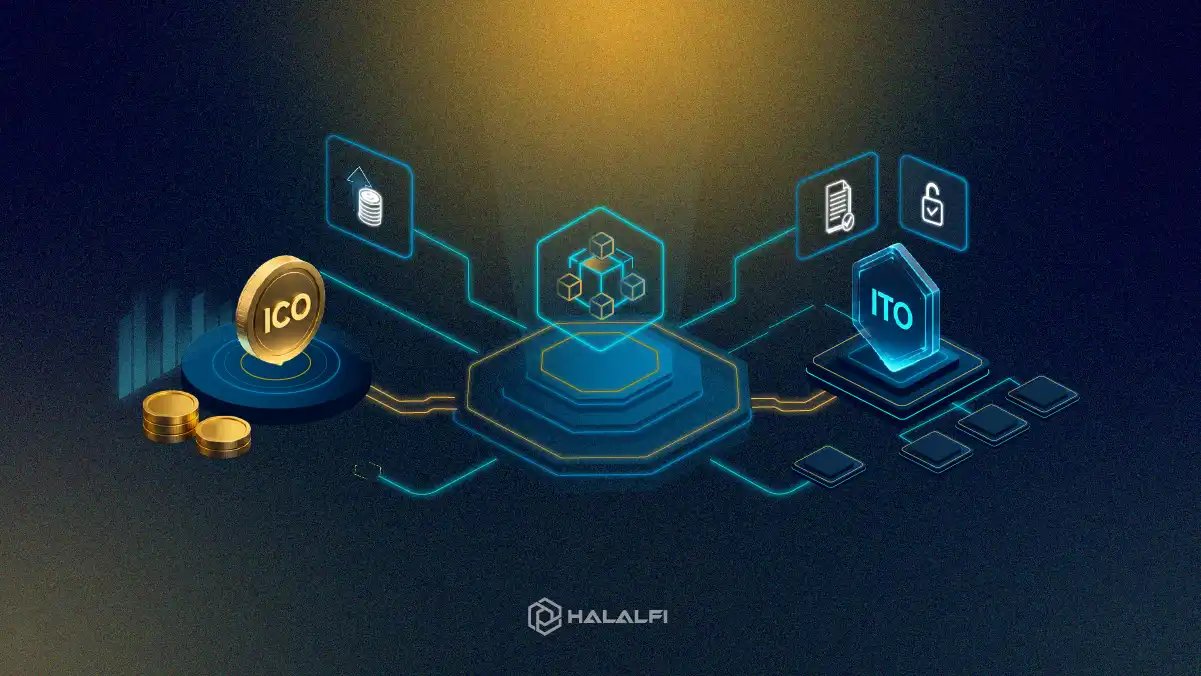
There are crypto terms like ICO, ITO, and IDO. If you are a new user in the crypto world, you might be confused. You think,“ Aren’t these all the same thing?”
But you’re not alone. At first glance, they blur together into one big cloud of jargon. But once you peel back the layers, each one plays a very different role in the world of crypto crowdfunding.
ICOs, ITOs, and IDOs are all ways for blockchain projects to raise money, but how they do it, what they offer, and who they’re for can vary widely.
And if you’re thinking about investing, building, or even exploring peer-to-peer fundraising, understanding these differences isn’t just helpful, it’s essential.
ICOs have been around longer and are widely recognised in the crypto space, but ITOs? Not so much. They’re still relatively under the radar, and that’s exactly why they’re worth paying attention to.
While IDOs are part of this conversation, we won’t go into them here. We’ll cover IDOs in detail in a separate article where we can explain how decentralised launches work.
What is Crypto Fundraising?
When people talk about ICOs or IDOs, they often make it sound purely technical, charts, tokens, liquidity pools… all that stuff. But behind every coin offering, there’s something much more, and it is ambition.
Every project starts with a team saying, “We think we can build something better.”
And every investor, whether they admit it or not, is thinking, “What if this is the next big thing?”
That’s really what makes crypto crowdfunding so powerful. It removes the traditional barriers. You don’t need to be a venture capitalist sitting in Silicon Valley. You could be a student in Kuala Lumpur, a developer in Karachi, or an entrepreneur in Dubai, and still participate.
Consider small communities rally around projects they believe in. Not just financially, but emotionally. Telegram groups are buzzing 24/7, early adopters are helping test products, and even giving feedback that shapes the roadmap. It’s messy sometimes, sure, but it’s also incredibly alive.
What are token lunch methods?
Token launch methods are the different ways a crypto project introduces its token to the public and raises capital.
The most well-known ones include ICOs (Initial Coin Offerings), ITOs (Initial Token Offerings), and IDOs (Initial DEX Offerings).
Each method comes with its own structure and philosophy. ICOs, for example, were the early pioneers, simple, direct, and sometimes a bit too loose when it came to regulation.
Then came ITOs, which aim to bring more clarity and purpose, often focusing on real utility and a more transparent framework for investors. IDOs, on the other hand, shifted things toward decentralization by launching tokens directly on decentralised exchanges.
But here’s the thing: choosing a launch method shapes how people trust and interact with a project. A well-structured token launch can signal credibility, long-term vision, and fairness. A poorly executed plan can fail the project. That’s why newer approaches, like ITOs, are getting more attention. They try to strike a balance between innovation and responsibility, and the crypto space has been needing it for a while now.
What Is an Initial Coin Offering (ICO)?
An Initial Coin Offering (ICO) is one of the earliest and most popular methods of raising funds in the crypto space.
Think of it like this: instead of going to venture capitalists, a startup opens its doors to the public. Anyone can invest by purchasing newly created tokens using cryptocurrencies like Bitcoin or Ethereum.
How ICOs Work?
During an ICO:
A project creates its own cryptocurrency or token
Investors buy these tokens using existing crypto
The project uses the funds to build its platform
Later, if the project succeeds, those tokens may increase in value and get listed on exchanges.
Back in 2017, the ICO boom unfolded; it felt like every other week, there was a new project promising to “change everything.” Some did, many didn’t.
One of the biggest success stories is Ethereum. It raised about $18 million in 2014, a figure that seemed massive at the time. Today, it’s one of the pillars of the entire crypto ecosystem.
Why Investors Like ICOs?
Here are the reasons:
Potential for high returns
Early access to innovative ideas
Simple entry compared to traditional investing
But ICOs also became notorious for:
Scams and fraudulent projects
Lack of regulation
Wild price volatility
That’s why today, investors approach them with a bit more caution.
Is Initial Coin Offering (ICO) legal?
The short answer is that it depends on where you are and how the ICO is structured. In many countries, ICOs aren’t outright banned, but they’re scrutinized.
Regulators often assess whether a token behaves like a security (similar to a stock). If it does, the project must comply with strict financial laws, register with authorities, and disclose key information to investors.
This means you can’t just assume every ICO is safe or legal. Some operate in grey areas, and unfortunately, that’s where scams have historically thrived.
A good rule is to check the project’s transparency, legal disclosures, and compliance with local regulations. If something feels vague or overly hyped, it’s worth pausing to think.
ICO Risks: Compare to ITO Risks
ICOs were the first major wave of crypto fundraising, but their lack of regulation and oversight led to many risky or even fraudulent projects. That’s why they exercise greater caution with investors today.
ITOs are seen as a more structured evolution. They aim to improve transparency and focus more on real token utility, but the concept is still developing, and standards are not fully uniform across the market.
Aspect | ICO Risks | ITO Risks |
Regulation | Often weak or unclear regulation | Usually more structured, but still evolving |
Investor Protection | Low protection, higher scam risk | Slightly better transparency, but not fully protected |
Project Quality | Many low-quality or hype-driven projects | More focus on utility, but still varies |
Transparency | Limited disclosure in many cases | Generally, higher transparency standards |
Market Trust | Reputation damaged by past scams | Improving trust, but still building credibility |
Failed ICO Example: The DAO (2016)
According to CoinMarketCap, one of the most famous ICO failures is The DAO, which initially looked like a breakthrough idea. It raised around $168 million from over 10,000 investors in just a few weeks, making it one of the largest crowdfunding projects at the time.
But things went wrong quickly. A vulnerability in its smart contract code was exploited, resulting in the theft of about $50 million in funds.
This hack destroyed investor confidence, and the project collapsed soon after. Tokens were delisted, and the DAO effectively died within months.
Successful ICO Example: Ethereum (2014)
Based on okx report an example of a successful ICO is Ethereum. It raised about $18.4 million during its ICO in 2014.
Ethereum wasn’t just a coin; it introduced smart contracts, enabling developers to build decentralised applications.
Over time, it became the second-largest cryptocurrency and the foundation for thousands of other blockchain projects and ICOs.
Understanding Initial Token Offering (ITO)
Now let’s talk about ITOs, which sound similar to ICOs but feel quite different in practice.
An Initial Token Offering (ITO) is also a fundraising method. However, instead of purely speculative tokens, ITOs focus on utility.
What Makes ITOs Different?
In an ITO:
Tokens have a specific use within the platform
They may represent access, services, or rights
Investors often care about functionality, not just profit
Imagine a blockchain gaming platform:
You buy tokens
Those tokens let you unlock features or buy in-game assets
Here, the token isn’t just an investment; it’s part of the experience. Some ITOs go even further by tying tokens to real-world assets:
Real estate
Precious metals
Equity
This creates something similar to a tokenised fund, offering greater stability than purely speculative tokens.
Why People Choose ITOs?
Because of:
Clear utility
Stronger long-term use cases
Sometimes more aligned with regulatory frameworks
ITOs feel a bit more “grounded.” They’re about usage.
Failed ITO Example: OneCoin (Token Sale Scam)
According to ALTrady, one of the most notorious token offerings often cited in the context of ICO/ITO-style fundraising is OneCoin.
It marketed itself as a revolutionary cryptocurrency and raised hundreds of millions of dollars from investors worldwide.
But here’s the point: there was no real blockchain behind it. The entire project turned out to be a Ponzi scheme, in which early investors were paid with funds from new participants. Eventually, authorities stepped in, and the project collapsed, leaving massive losses.
Successful ITO Example: Filecoin (FIL)
A strong example of a successful token offering is filecoin, which raised about $233 million in its token sale.
Unlike many failed projects, Filecoin had a clear use case: decentralized data storage. Instead of relying on centralized providers like Amazon or Google, users can rent out unused storage and earn FIL tokens.
Even years after its launch, Filecoin remains active and relevant in the Web3 ecosystem, proving that a token offering can evolve into a real, functioning product.
What Is IDO (Initial DEX Offering)?
If ICOs were the first wave and ITOs refined the idea, IDOs are the modern evolution.
An Initial DEX Offering (IDO) happens on a decentralised exchange (DEX). There is no intermediary and centralised control.
How IDOs Work?
Now you know what is IDO, but how does it work? In IDOs, tokens are launched directly on aDEX.X, Investors buy using crypto or stablecoins, and Liquidity pools enable trading immediately.
So, instead of waiting for a token to be listed somewhere, IDOs often use liquidity pools:
Users provide liquidity
In return, they earn tokens
It’s a more dynamic and decentralised system.
Why IDOs Are Gaining Popularity?
This is the reason:
Higher transparency
Better accessibility
Reduced reliance on centralised platforms
From a user perspective, it feels more “open.” Anyone can participate without jumping through too many hoops.
Why ICOs, ITOs, and IDOs Matter?
We’re at an interesting point right now. The early hype of 2017 has cooled, but the underlying idea hasn’t gone anywhere; in fact, it’s matured.
Today:
Investors are more informed
Projects are more accountable
Regulations are slowly catching up
And here’s the key change: people are no longer just chasing profits. They’re looking for value, utility, and alignment. That’s where models like ITOs and IDOs really shine.
For example, according to the Journal of Central Banking Law and Institutions in Malaysia, Islamic fintech is gaining serious traction. Reports suggest that Shariah-compliant digital finance solutions are growing steadily, with increasing interest in halal crowdfunding platforms that align with ethical investment principles.
Also, Digital Dubai shows that in the UAE, blockchain adoption is expected to contribute billions to the economy, with government-backed initiatives driving innovation.
And in Pakistan, despite regulatory uncertainty, grassroots crypto adoption continues to rise, largely driven by younger, tech-savvy users exploring peer-to-peer fundraising and decentralised tools.
It means coin offerings aren’t just a trend anymore; they’re becoming part of a global financial shift.
ICO vs ITO vs IDO: Key Differences
Let’s put everything side by side for clarity:
Feature | ICO | ITO | IDO |
Purpose | Investment-focused | Utility-focused | Decentralized fundraising |
Platform | Centralized | Centralised / regulated | Decentralized exchange |
Token Type | Speculative | Utility or asset-backed | Utility with liquidity |
Accessibility | Moderate | Moderate | High |
Transparency | Lower | Medium | High |
Risk Level | High | Medium | Variable |
So:
ICO = Investment opportunity
ITO = Functional token use
IDO = Decentralised access
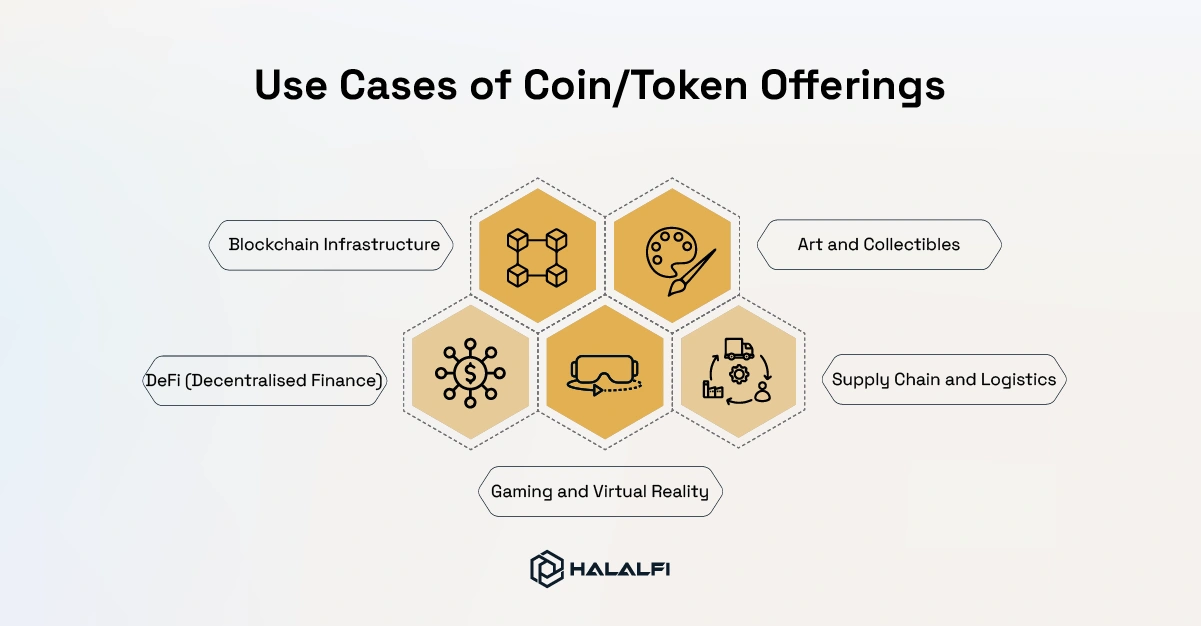
Use Cases of Coin/token Offerings
Coin offerings aren’t just theory; they’re actively shaping industries.
1. Blockchain Infrastructure
Projects use crowdfunding to build:
Scalable networks
Secure systems
Interoperable platforms
2. DeFi (Decentralised Finance)
This is where things exploded:
Lending platforms
Decentralized exchanges
Yield farming ecosystems
3. Gaming and Virtual Reality
Gamers now:
Own digital assets
Trade items using tokens
Participate in virtual economies
4. Supply Chain and Logistics
Tokens help:
Track goods
Improve transparency
Reduce fraud
5. Art and Collectibles
Digital ownership has transformed:
Artwork
NFTs
Collectibles
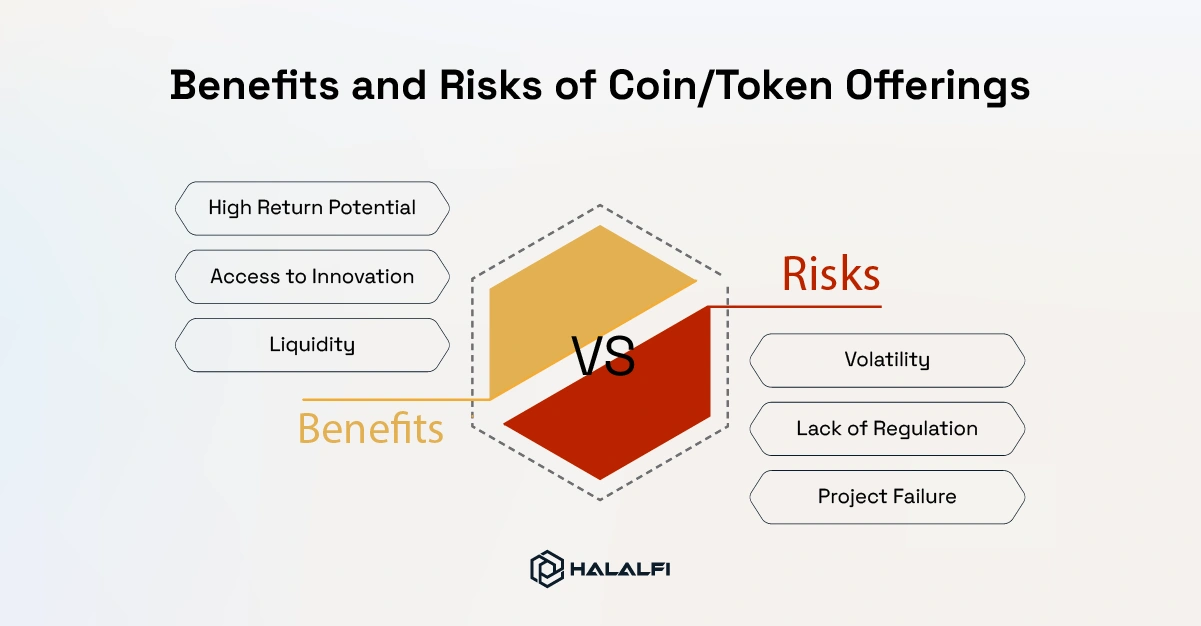
Benefits and Risks of Coin/Token Offerings
This space isn’t all upside-down. There are benefits and risks:
Benefits:
High Return Potential: Early investors can see massive gains. Some tokens have grown 100x or more.
Access to Innovation: You’re investing in ideas before they go mainstream.
Liquidity: Once listed, tokens can be traded easily.
Risks:
Volatility: Prices can swing wildly, sometimes within hours.
Lack of Regulation: Not all projects follow strict rules.
Project Failure: Some ideas simply don’t work out.
There were projects with brilliant whitepapers that disappeared within months. It happens.
How to Choose the Right Coin/Token Offering
Choosing wisely can make all the difference. What to Look For?
Team and Advisors: Experience matters. A strong team often signals credibility.
Roadmap: Clear milestones increase the chances of execution.
Token Economics: Understand supply, demand, and utility.
Community: Active communities often drive success.
Regulatory Compliance: Especially important if you’re exploring halal crowdfunding options.
Regulatory Considerations
This is where things get complicated.
Laws vary by country
Some require accredited investors
KYC and AML checks are common
In Malaysia and the UAE, crypto frameworks are evolving quickly, Saudi Arabia is exploring blockchain integration, and Pakistan is cautiously developing policies
According to Arabnews, Malaysia’s Islamic fintech market is growing at ~15% annually
Wamda reports show that UAE blockchain adoption could contribute one to five per cent to GDP by 2030
Also, according to Arab News, Saudi Arabia is investing heavily in digital infrastructure under Vision 2030
These trends matter, especially for ethical finance models.
Success Stories That Shaped the Market
Some projects truly changed the game:
Ethereum (ICO): $18M raised according to the MEXC report
Binance (ICO): $15M raised
These numbers prove that the model works when executed well. Token offerings democratize access to capital in ways traditional finance never could. That idea has been echoed across the industry, and it’s hard to disagree.
ICO, ITO, IDO in Modern Crowdfunding
Today, these models are part of a broader ecosystem that includes:
Initial exchange offering models
Decentralized fundraising
Ethical finance frameworks
They’re reshaping how we think about funding entirely. Consider someone invested in two projects simultaneously.
One was a flashy ICO with a slick website and big promises
The other was a smaller ITO focused on a niche gaming platform
Guess which one survived? Of course, the gaming platform. Because people actually used it. Tokens weren’t just sitting in wallets; they were being spent, traded, and integrated into the ecosystem.
That’s something many beginners overlook. A token’s real strength often comes from its use case, not marketing.
The Rise of Hybrid Models
Another thing worth mentioning is that these categories (ICO, ITO, IDO) aren’t always rigid anymore. We’re starting to see hybrid approaches:
Projects launching via IDO, then moving to initial exchange offering platforms
Tokens that begin as utility-based but evolve into something closer to a tokenised fund
Communities blending DeFi with traditional crowdfunding models
It’s not as black-and-white as it used to be. That’s a good thing. Innovation tends to happen in the grey areas.
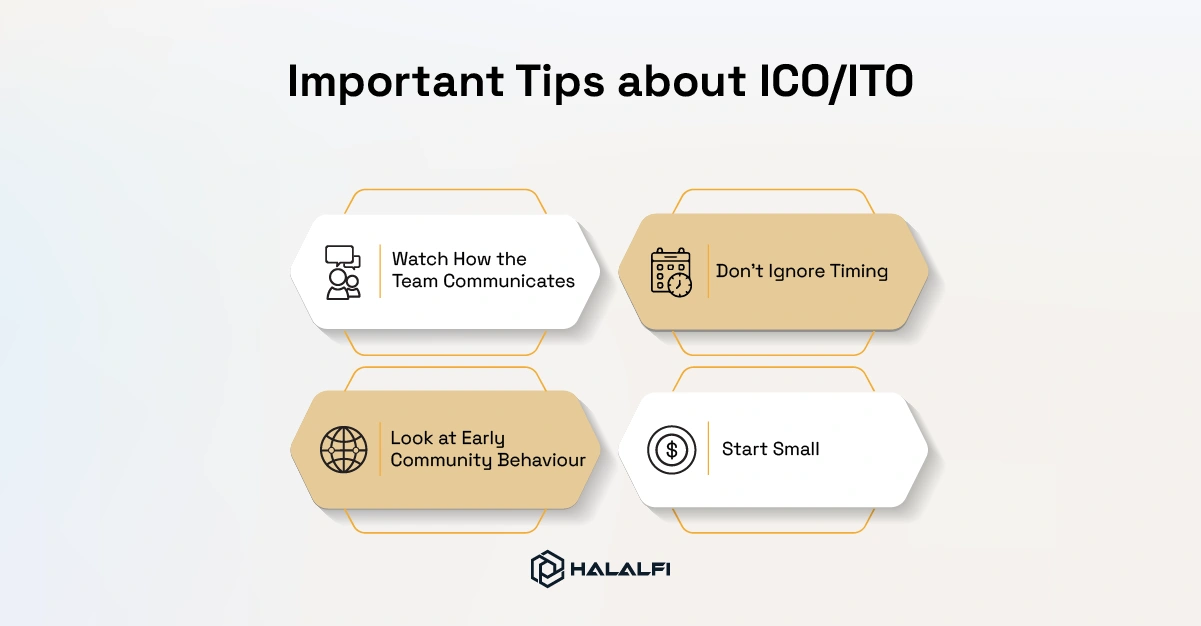
Important Tips about ICO/ITO
You’ll read a lot of advice about checking whitepapers and roadmaps, and that’s important. But here are a few more “real-world” tips:
1. Watch How the Team Communicates
Are they transparent? Do they answer tough questions? Silence is usually a red flag.
2. Look at Early Community Behaviour
If a community is only talking about price, be careful. If they’re discussing product features, that’s a better sign.
3. Don’t Ignore Timing
Even good projects can fail in bad market conditions.
4. Start Small
You don’t need to go all-in. Test the waters first.
Where is HalalFi being useful?
As the space evolves, there’s a growing demand for platforms that combine innovation with ethical finance.
That’s exactly where HalalFi comes in. For investors who care about:
Transparency
Real-world utility
Shariah-compliant structures
HalalFi offers a way to participate in crypto opportunities without compromising on values.
As the space evolves, there’s a growing demand for platforms that combine innovation with ethical finance.
For investors who care about transparency, real-world utility, and Shariah-compliant structures, HalalFi offers a way to explore crypto opportunities without compromising on values.
As the platform develops, HalalFi is expected to introduce its own ITO in the future, something we’ll touch on later in the context of how ITOs can be structured around real utility and ethical principles.
Let’s be real, this matters more than ever. Because, as exciting as this space is, trust is still everything.
Final Thoughts
So, what is ICO/ITO in the bigger picture?
It’s about access, changing who gets to invest, who gets funded, and how ideas come to life. But here’s the thing: knowledge is your biggest advantage. The more you understand:
The differences between ICO, ITO, and IDO
The risks involved
The signals of a strong project
The better your chances of making smart decisions.
If you’re serious about exploring this space, especially through ethical and forward-thinking opportunities, now’s a good time to take the next step.
Check out HalalFi and see how you can be part of the future of crypto crowdfunding, the right way.
Because everybody can invest, be the one who is investing wisely.
ICO/ITO is about giving people access, access to innovation, investment, and participation in something bigger than themselves.
But with opportunity comes responsibility. The smartest investors don’t just chase hype; they evaluate, research, and think long-term.
If you’re exploring ethical, transparent, and forward-thinking opportunities in this space, platforms like HalalFi are working to bridge the gap between innovation and values.
It’s worth taking a closer look, especially if you want your investments to align with both your financial goals and your principles.
Frequently Asked Questions
Can beginners invest in ICOs or IDOs?
Yes, but it’s important to research thoroughly and start small.
Are ITOs safer than ICOs?
They can be, especially if they involve real utility or asset backing.
What makes IDOs more transparent?
They operate on decentralised exchanges, where transactions are visible on the blockchain.
Do all token offerings guarantee returns?
No. In fact, many fail, and risk management is essential.
Is halal crowdfunding compatible with crypto?
It can be, depending on the project's structure and compliance.