For many investors, especially those searching for real halal investment options, it’s not just about returns anymore. It’s about alignment. About knowing your money is building something real, something you can stand behind… not just chasing numbers flashing on a screen.
In this article, we’ll explain how HalalFi stands apart in the world of Crowdfunding, bringing together ethical investment, blockchain transparency, and Sharia-compliant finance into a model that finally makes sense. If you’ve been watching from the sidelines, unsure where to place your trust, this might be the perspective you’ve been looking for.
What Is HalalFi?
Let’s start simple. HalalFi is a Sharia-compliant crowdfunding platform that connects investors with real, cash-flowing businesses. There are no just ideas and speculation; actual operations generate revenue.
But here’s the part that makes people lean in a bit closer:
It replaces fixed interest with performance-based profit-sharing.
That’s a big shift.
Instead of “you’ll earn X% no matter what,” the model becomes:
“You earn when the business earns.”
This aligns with core Islamic finance principles, avoiding riba, reducing uncertainty, and stepping away from speculation-heavy environments often seen in Crypto Crowdfunding.
And the timing couldn’t be more relevant.
According to IMARC Group, the global crowdfunding market reached $20.4 billion in 2025. It’s projected to grow to 52.3 billion through 2034.
Meanwhile, nearly 2 billion Muslims worldwide are seeking halal investment pathways.
There’s demand and growth. But there’s also a gap. HalalFi positions itself right in that gap.
Money Has Direction, And People Are Starting to Notice
Consider someone who works in tech. He says, “I’ve made money investing… but I’m not sure I like how I made it.”
This is important because more people are quietly thinking the same thing.
Money today isn’t neutral. It funds industries, shapes economies, and influences society in ways most of us never see directly. And increasingly, investors, Muslim and non-Muslim alike, are asking:
Is this aligned with my values?
Is this real economic activity?
Or am I just riding speculation waves?
This shift is why ethical investment and Islamic fintech are gaining traction. HalalFi was built around it.
Investing in Speculation vs Real Businesses
We’re living in a strange moment financially.
On one side, you have fast-moving markets: memecoins, leveraged tokens, endless charts.
On the other side, real businesses, shops, logistics companies, and service providers struggle to access fair capital.
That imbalance is… noticeable.
Most traditional platforms focus on:
Price movement
Liquidity
Short-term gains
HalalFi flips that.
It focuses on:
Real businesses
Cash flow
Sustainable growth
That alone already sets it apart in the broader Crowdfunding ecosystem.
How HalalFi Is Different from Other Crowdfunding Platforms
Here is a Clear Comparison, and it’s a difference in philosophy:
Feature | Typical Crowdfunding / Speculative Platforms | HalalFi Approach |
Core Focus | Often centred around trends, market demand, or token performance | Focused on supporting real businesses with measurable cash flow |
Returns | Can be fixed, interest-based, or driven by market speculation | Structured around performance-based profit-sharing models |
Compliance | Varies by platform; not always aligned with specific ethical frameworks | Designed with Shariah considerations in mind, including audit processes |
Transparency | Depends on the platform; information may be limited or delayed | Emphasises transparency through blockchain records and smart contracts |
Risk Handling | Often tied to market volatility and price fluctuations | Greater emphasis on verification, due diligence, and fraud prevention |
Investor Access | Access rules differ; some platforms require identity verification | Aims to be accessible, with fewer entry barriers (depending on jurisdiction) |
Business Requirements | Screening standards vary widely | Applies structured due diligence and business verification processes |
The Role of Blockchain in HalalFi
Let’s talk about something practical: trust. Most investors don’t have time to:
Audit financial statements
Verify founders
Read complex contracts
HalalFi uses blockchain to simplify that. What Blockchain Adds:
Transparent transaction records
Smart contract execution
Automated profit distribution
Verifiable performance tracking
In simple terms: less guessing, more clarity. If you don't know how to use Crypto Crowdfunding responsibly, this is one example.

Dual Audit System: Where HalalFi Gets Serious
This is where HalalFi becomes… strict. And, that’s a good thing.
1. Shariah Audit
Every project undergoes a Shariah audit to ensure:
No interest-based structures
No prohibited industries
Alignment with Sharia law in finance
2. Business Audit
Then comes the practical side:
Existing revenue
Cash flow validation
Operational sustainability
If a business fails, it doesn’t get listed. That’s rare in the crowdfunding world.
Profit Model: No Fixed Returns, Only Real Performance
Most platforms promise something like:
“Earn 12% annually.”
Sounds nice.
But… where does that number come from?
HalalFi removes that promise entirely.
Instead:
Investors share in actual profits
Returns depend on real performance
Risk and reward are aligned
This is a core principle of Islamic finance and has a major departure from typical systems.
Principal Protection Through Guarantors
Now, let’s address the obvious concern:
“What about risk?”
HalalFi introduces something interesting: a Guarantors Marketplace.
Let's see How It Works:
Guarantors are vetted (documents, reserves, credentials)
Businesses can invite guarantors
Investors can opt for coverage
This creates a structure similar to:
Insurance
Surety systems (kafala)
Agency frameworks (wakala)
It doesn’t promise profit, but it strengthens principal protection in investment. That distinction is really good.
Transparency and Reporting During Projects
Another difference of HalalFi with other crowdfunding platforms is Communication.
On many platforms, once you invest… updates slow down. But with HalalFi:
HalalFi Projects provide ongoing reports
Timelines are clearly defined
Performance is visible
It feels less like gambling and more like a partnership.
Accessibility: No KYC for Investors, Strict KYB for Businesses
This one surprises people.
Pros for Investors:
No heavy KYC requirements
Easy participation globally
Pros for Businesses:
Full KYB verification
Identity checks
Documentation review
In other words, HalalFi do:
Easy entry for good capital
Hard entry for risky businesses
And that balance is intentional.
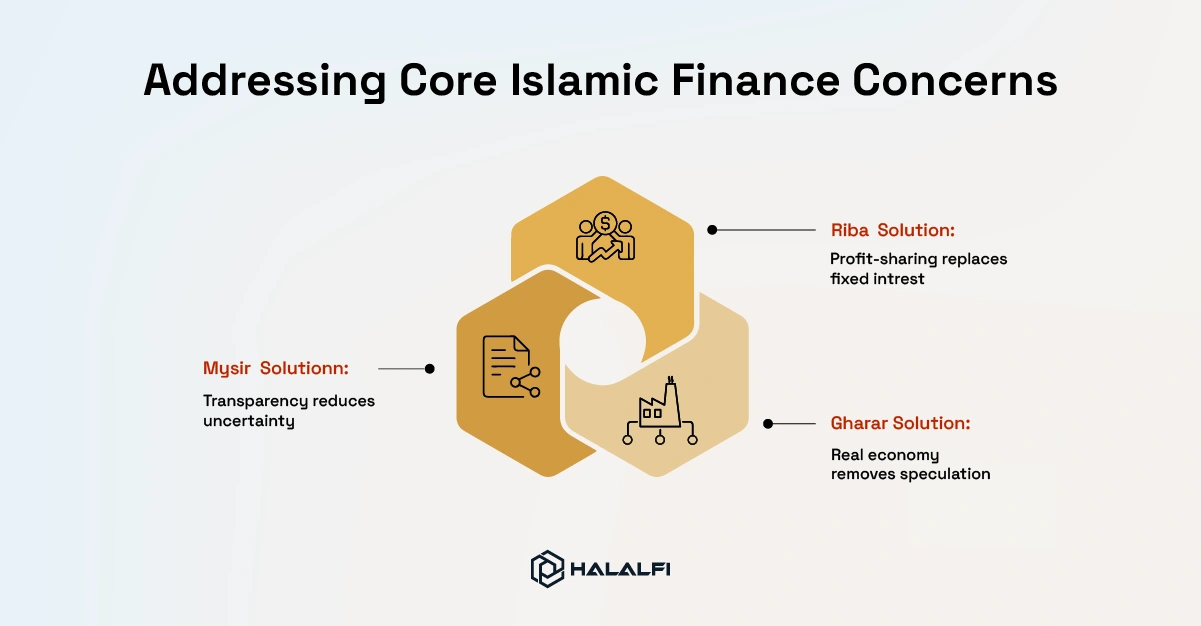
Addressing Core Islamic Finance Concerns
HalalFi is built around three major concerns:
1. Riba (Interest)
Avoided through profit-sharing.
2. Gharar (Uncertainty)
Reduced via:
Clear contracts
audits
blockchain transparency
3. Mysir (Speculation)
Avoided by focusing on real businesses instead of hype-driven markets. This is what makes it genuinely aligned with Sharia-compliant finance, not just branded that way.
How Investors and Businesses See It
Consider A small logistics company founder shared something interesting during a pitch-style conversation:
“We didn’t want a loan. We wanted partners who understand growth takes time.”
On the investor side, a user describes it like this:
“It’s the first time I’ve felt comfortable investing without second-guessing whether it’s halal.”
These perspectives highlight something deeper: confidence.
The Psychology Behind HalalFi: Why Investors Are Shifting
There’s something subtle happening in the investment world right now. It’s not loud like market crashes or viral tokens. It’s quieter and more personal. People are rethinking why they invest.
Consider a small business owner who had previously raised funds through a conventional crowdfunding platform. His campaign succeeded, on paper. He hit his funding goal, attracted attention, and even gained a small online following. But do you think he’d do it the same way again?
This way feels transactional. People were chasing returns, not the business. That’s the gap HalalFi tries to address.
From Transactional to Intentional Investing
Traditional Crowdfunding often operates on momentum and visibility. Campaigns that trend get funded. Those that don’t… fade away.
But HalalFi introduces a different psychological layer: intention. Investors aren’t just asking:
“Will this make money?”
They’re also asking:
“Is this meaningful?”
“Is this aligned with my values?”
That shift matters more than it seems. Because when intention changes, behaviour follows.
HalalFi as Infrastructure, Not Just a Platform
Most people think of platforms as tools. You log in, use them, log out. But HalalFi positions itself differently; it acts more like infrastructure. And infrastructure shapes behaviour.
Think about it:
If a system rewards speculation, people speculate
If a system rewards hype, people chase trends
If a system rewards structure and transparency, people act more responsibly
HalalFi’s design nudges users toward:
Long-term thinking
Real economic participation
Ethical accountability
That’s not accidental. It’s built into the system.
The Role of Community and Trust in HalalFi
In many parts of the world, especially across the Middle East and broader Muslim communities, investment decisions are rarely isolated. They’re social. They involve:
Family opinions
Peer validation
Reputation
This is where HalalFi’s model becomes particularly relevant. By combining:
Shariah audit
Transparent blockchain records
Structured reporting
…it reduces the “social risk” of investing.
Because backing the wrong project isn’t just a financial loss. It can feel like a reputational one, too. HalalFi shifts the narrative from:
“I’m trusting this founder”
To:
“I’m trusting a verified system”
A Closer Look at Risk: What Makes HalalFi Feel Safer?
No investment is risk-free. That’s important to say clearly. But not all risks are equal. In most Crypto Crowdfunding environments, risk comes from:
Volatility
Speculation
Lack of transparency
In HalalFi, the primary focus is different:
Fraud prevention
Business viability
Structural clarity
The introduction of guarantors adds another layer. It’s not just theoretical; it’s risk mitigation.
And here’s something interesting: For many investors, perceived risk matters as much as actual risk. When systems are clear, structured, and supervised, people feel more confident participating.
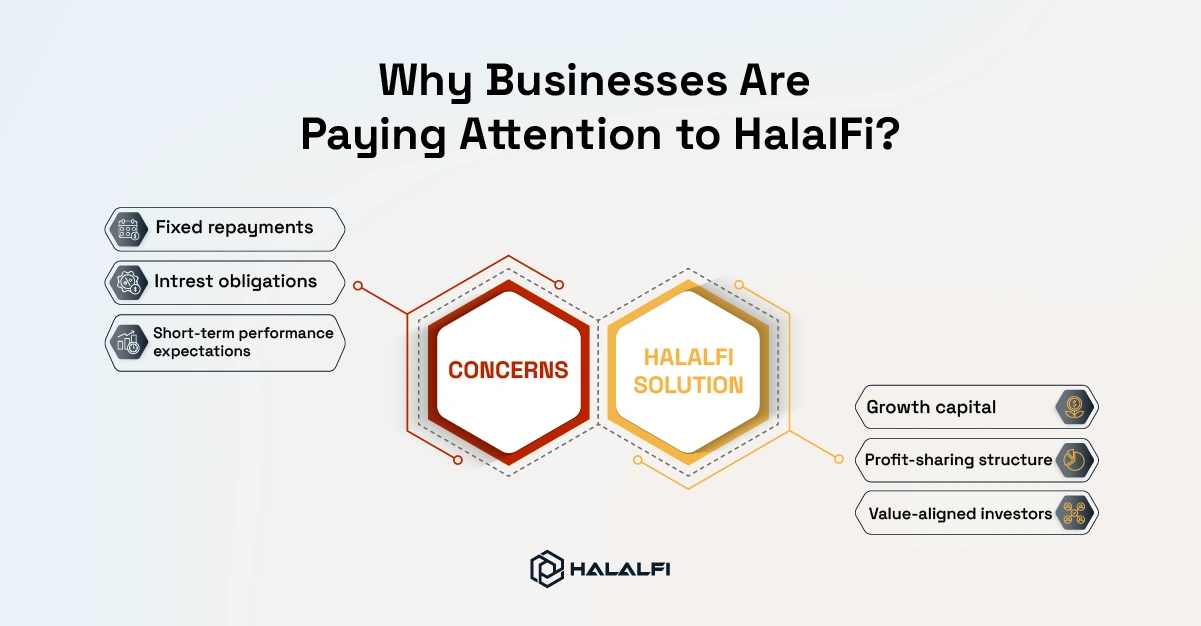
Why Businesses Are Paying Attention to HalalFi
It’s not just investors who benefit. For businesses, HalalFi offers something many founders struggle to find: aligned capital.
Traditional funding often comes with pressure:
Fixed repayments
Interest obligations
Short-term performance expectations
HalalFi changes that dynamic. Instead of debt, businesses access:
Growth capital
Profit-sharing structures
Value-aligned investors
It feels less like borrowing money and more like building something together. That mindset change can influence how businesses grow, make decisions, and manage risk.
Who Actually Audits the Projects?
So the important question is, who is checking these businesses before they appear on the platform? On HalalFi, the audit process is typically structured in two layers:
1. Shariah Audit (Religious Compliance)
Projects are reviewed to ensure they follow Islamic finance principles. This usually means:
There is no interest-based financing (riba)
There is no involvement in prohibited industries
Contracts structured around profit-sharing, not guaranteed returns
2. Business Audit (Commercial Viability)
Beyond compliance, projects are also evaluated as real businesses would be. This includes:
Revenue and cash flow validation
Business model sustainability
Operational track record
What to look for as an investor:
Do projects show real financial data or just projections?
Are there details about how the business actually makes money?
Is there evidence of existing operations (not just plans)?
What Are the Risks for Investors?
No platform, HalalFi included, removes risk. It just changes where that risk comes from. If you’re considering investing, here are the ones that actually matter:
Business Performance Risk: This is the big one. Returns depend entirely on the business's performance. If revenue drops or growth stalls, your returns drop too. In some cases, you may earn little or nothing.
Capital Loss (Even with Structure in Place): While tools like guarantors can reduce risk, they don’t eliminate it. If a business fails and guarantees fall short, part of your principal could be at risk.
Liquidity Risk: Unlike trading tokens or stocks, you typically can’t exit whenever you want. Your money may be tied up until the project cycle ends.
Execution Risk: Even verified businesses can underperform. Management decisions, market changes, or operational issues can affect outcomes. Due diligence helps, but it’s not a crystal ball.
Regulatory Uncertainty: Depending on where you live, rules around crowdfunding and crypto-related platforms can change. That can affect access, withdrawals, or how investments are treated under the law.
HalalFi in the Future of Finance
Zoom out for a second. We’re watching finance evolve in real time.
Traditional systems are being questioned.
Blockchain is reshaping transparency.
Ethical investing is gaining momentum.
HalalFi sits at the intersection of all three. It’s part of a broader movement toward Sharia-compliant finance
inclusive financial systems
real-economy investment models
And while it’s still early, the direction is clear. People don’t just want access to capital anymore. They want aligned access.
Finance is getting faster, which means getting lost. People want:
Transparency
Purpose
Real-world impact
If you check HalalFi documents, you’ll see it tries to bring those back into focus. It’s a serious attempt.
Conclusion
If you’ve ever felt stuck between wanting to grow your money and wanting to stay true to your values… you’re not alone. That tension is real and growing.
How HalalFi is different from other
comes down to this:
It doesn’t force you to choose between profit and principle. It builds a system in which both to coexist.
So here’s the question worth asking yourself: What kind of financial story do you want to be part of?
If you’re ready to explore a platform built on transparency, ethical investment, and real economic impact, take a closer look at HalalFi’s projects and model.
Your next investment doesn’t just have to grow your wealth.
It can reflect who you are.
What is Next?
You are not just casually curious. You’re thinking, evaluating, and maybe even comparing options. That’s a good place to be.
Because the real decision isn’t: “Is HalalFi perfect?”
The real question is: “Does this model make more sense than the alternatives available to me?”
If you value:
Transparency
Ethical investment
Real business exposure
Alignment with Islamic finance principles
then HalalFi offers something worth seriously considering. Take a moment and explore HalalFi’s ecosystem for yourself. Look at the projects, read the structures and understand the model.
Because the best investment decisions are informed, HalalFi aligns with your goals, your values, and your vision for how money should work…
Then maybe this isn’t just another platform. Maybe it’s the beginning of a different way to invest.
Frequently Asked Questions
Is HalalFi only for Muslims?
No, it’s designed for both Muslims and non-Muslims seeking ethical investment opportunities.
Can profits be guaranteed on HalalFi?
No. Profits are performance-based and depend on actual business outcomes.
What types of businesses are listed on HalalFi?
Only real, cash-flowing businesses that pass both Shariah and business audits.
How does HalalFi reduce fraud risk?
Through strict audits, KYB verification, blockchain transparency, and guarantor systems.
Is HalalFi considered part of Islamic fintech?
Yes, it fits within the broader category of Islamic fintech, focusing on Sharia-compliant financial innovation.